
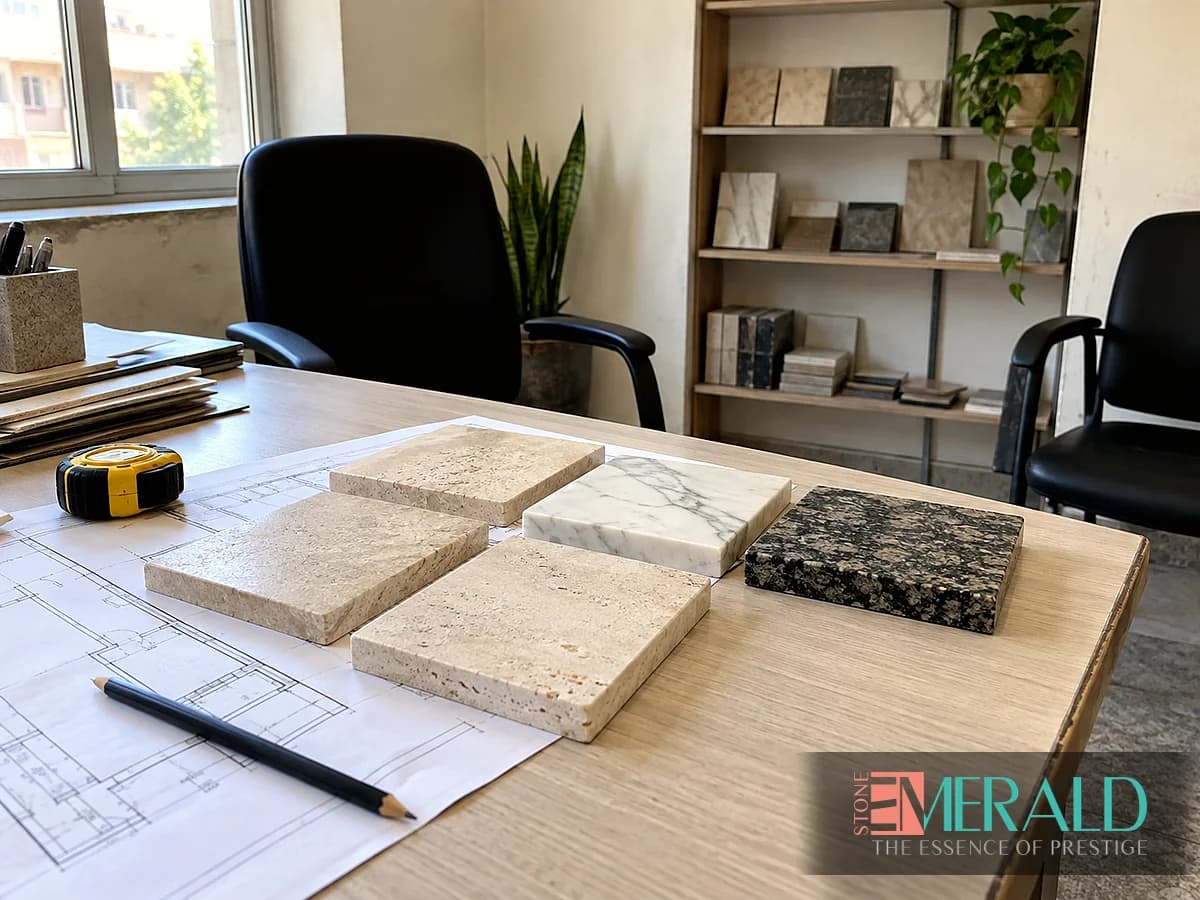
Building stone selection follows four stages: define each zone's application and climate exposure, filter candidates on water absorption, compressive strength, hardness and thickness, review budget and lead time across waste, freight and installation, then approve physical samples on site before quarry, grade, finish and cut direction are fixed in the contract.
Related guide: Stone engineering and consultation
Step one: define application and space analysis
Building stone selection should begin with one question: where will this stone live and under what conditions? Exterior facades, lobby floors, wet interiors, stairs, outdoor paving, and feature walls each demand different thresholds for water absorption, abrasion, slip resistance, and weight. Without that analysis, even premium stone can fail on site.
Tower and villa projects often combine several uses at once: sun-exposed facades, high-traffic floors, and lobbies under artificial light. At Emerald Stone we build a separate requirement matrix per zone so one stone type is not pushed into every location by default.
Once applications are defined, record area quantities, facade height, fixing system, and construction schedule. Those inputs drive thickness, grade, finish, and batch volume decisions and prevent late-stage reversals that derail installation teams. This documentation also helps procurement compare suppliers on equal assumptions and prevents last-minute substitutions that create mismatch during installation.
- Exterior facade: freeze-thaw resistance, controlled absorption, and color consistency at height
- Interior flooring: surface hardness, wear resistance, and underfloor heating compatibility
- Wet areas: low absorption, non-slip finish, and reliable joint waterproofing
- Outdoor paving and stairs: adequate thickness, impact resistance, and local repair options
Technical filtering before aesthetics
After application analysis, unsuitable options drop out on engineering grounds. Water absorption, compressive strength, Mohs hardness, standard thickness, and bulk density are primary filters. Polished marble on a busy ramp or rain-exposed terrace without sealing is high risk no matter how beautiful the slab looks in a showroom.
Climate matters equally. Regions with heavy dew, frequent rain, or wide temperature swings limit high-porosity stone unless resin treatment and specialist jointing are budgeted. Under those conditions Natanz granite or first-grade travertine with the right finish may survive the shortlist while decorative-only options disappear.
At this stage, product spec sheets must align with construction drawings. If the architect or structural engineer has defined a standard, confirm which quarries and grades qualify before warehouse visits. That discipline saves sampling cost and keeps slab viewing focused on viable candidates.
Budget, scheduling, and supply planning
Building stone budget is not price per square meter alone. Cutting waste, freight, storage, sealing, and installation belong in the same spreadsheet. Choosing a scarce stone can delay a tower facade for months. After technical filtering, Emerald Stone typically returns two or three options with transparent pricing bands and realistic lead times.
Large projects need supply split across batches aligned with construction phases. A common failure mode is ordering full quantity without sorting control, which produces facade color drift mid-installation. Our supply plan covers quarry pre-sorting, warehouse inspection, and coordination with the fixing contractor.
When budget is tight, grade adjustments in secondary zones or optimized thickness can restore balance. Cutting quality on the main facade or a high-traffic floor usually multiplies future repair cost. Final decisions should acknowledge that trade-off explicitly and include a maintenance forecast so owners can see the true long-term cost of saving money at procurement stage.
Sampling and final decision on site
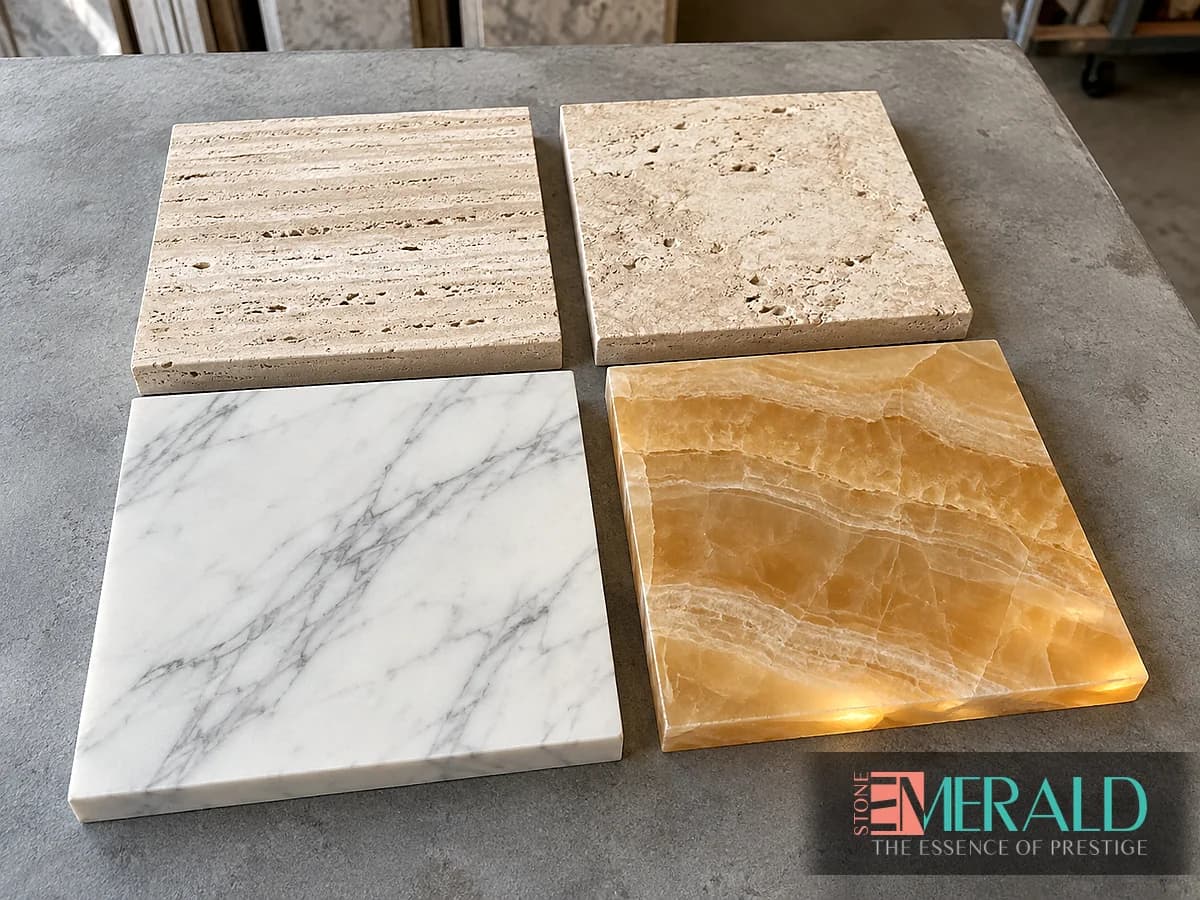
No photograph replaces stone viewed in project lighting. Color shifts under daylight, dusk, and interior lamps. In any serious building stone selection guide, on-site sampling is non-negotiable. We typically bring shortlist pieces to the job so they can be judged beside existing finishes and wall colors.
Warehouse slab visits reveal vein direction, cut orientation, and batch uniformity. On large facades we lay consecutive slabs on the ground to preview wall rhythm and evaluate transitions at corners, openings, and floor breaks. That exercise prevents the visual shock that appears only after fixing is complete and gives the architect confidence before fabrication starts.
Once samples are approved, the contract captures quarry, grade, thickness, finish, cut direction, and exact quantity. Changes after that point hit cost and schedule. Documenting decisions at this gate is what keeps owners, architects, and suppliers aligned through delivery. It also gives site teams a clear acceptance baseline when batches arrive under schedule pressure.
Contract framework for accountable supply
A strong contract framework turns technical decisions into enforceable obligations. For building stone packages, the agreement should identify quarry source, grade definition, thickness tolerance, finish type, and accepted defect limits in measurable language. Vague text like premium cream marble invites arguments at delivery. Emerald Stone recommends attaching an approval sample and a written inspection checklist as contractual references before production begins.
Delivery obligations should be phased and linked to installation milestones. Instead of one broad deadline, each batch needs a date, quantity range, and quality acceptance process so delays or mismatches can be corrected without stopping the whole site. Include a response window for non-conforming material and clear responsibility for freight damage, storage handling, and replacement logistics. This structure protects both the owner and the supplier.
Change control is equally important once the contract is signed. If the design team revises dimensions, cut direction, or finish, the amendment should capture price impact, added lead time, and revised inspection criteria. Without this mechanism, teams fall into informal decisions that later trigger payment conflict. A documented variation process keeps commercial expectations aligned with construction reality.
Climate risk and maintenance planning
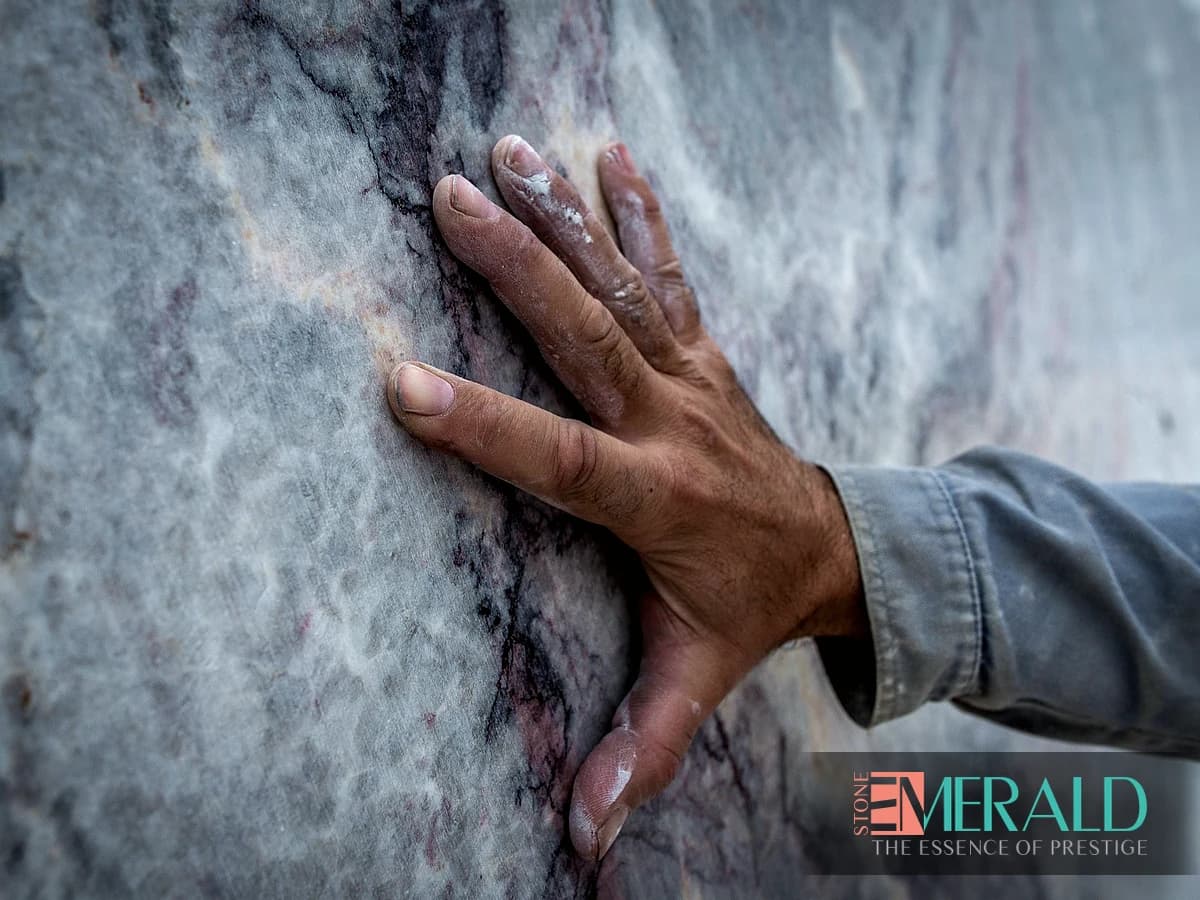
Climate exposure should shape both material choice and maintenance budget from day one. Coastal humidity, dust-heavy dry regions, freeze-thaw cycles, and strong solar gain create different deterioration patterns on facade and paving stone. Selecting material without this map often leads to premature staining, edge decay, or loss of surface finish. The right choice is the one your maintenance team can realistically protect over years.
Maintenance planning must be specific, not generic. Define cleaning frequency, approved chemicals, resealing intervals, and inspection checkpoints for joints and anchors. A stone system with a clear maintenance protocol often outperforms a nominally stronger option that no one services correctly. During selection, ask suppliers to provide a maintenance note tied to the exact finish and application so operations staff inherit actionable guidance.
Warranty terms should align with this maintenance plan. If warranty conditions require periodic sealing or documented cleaning records, those tasks must be budgeted and assigned to responsible parties before handover. Emerald Stone treats maintenance readiness as part of selection quality because long-term appearance depends as much on operation discipline as on quarry quality.
Emerald Stone approach
At Emerald Stone, building stone selection is not a marketing checklist; it is the stone engineering process proven on Farvardin Tower, public-space facades, and residential lobby floors. Our team supports architects and owners from design through batch delivery, recommending options backed by data rather than visual trends alone.
Instead of pushing quick sales, we return a short, defensible shortlist with spec sheets, site samples, and supply timing matched to installation. If you need confident stone choices for a luxury project, start with a free stone engineering consultation. Our process stays involved through delivery so approved quality is maintained on site.
| Stage | Key activity | Deliverable |
|---|---|---|
| 1 | Application and climate analysis | Project technical brief |
| 2 | Specification filtering | Qualified option list |
| 3 | Budget and lead-time review | Two to three proposals |
| 4 | Site and warehouse sampling | Documented final choice |
Related products
Related projects
Frequently asked questions
Where should building stone selection start?
Start by defining each zone: facade, floor, wet interior, or outdoor paving. Then document area, fixing system, and climate exposure. Without that foundation, comparing price or color is meaningless and error rates climb. Emerald Stone completes this brief with you in the first consultation session.
How many stone options are enough for a final decision?
Two or three technically approved options are usually sufficient. More choices slow decisions and extend schedules without adding value. Each option should carry a clear engineering rationale — lower absorption for bathrooms or reduced weight for tall facades. The goal is a quality shortlist, not an endless catalog.
Is on-site stone sampling really necessary?
Almost always. Ambient light changes how color and texture read, and catalog photography misleads. Place samples beside final wall and floor materials and review them at different times of day. That step prevents irreversible cost after installation is complete. It also gives contractors a visual benchmark for acceptance during delivery.
How can I manage budget without sacrificing quality?
Evaluate whole-project cost, not purchase price alone. A higher-priced stone with less waste and simpler fixing can be cheaper overall. Grade shifts in low-visibility zones or optimized thickness can help, but downgrading main facades or busy floors is expensive long term.
What services does Emerald Stone provide for stone selection?
Technical and architectural consultation, application analysis, quarry and grade recommendations, site and warehouse sampling, contractual specifications, and bulk supply scheduling. All services sit inside our stone engineering framework and aim to reduce project risk. We also coordinate with installation teams so approved samples and contract definitions remain consistent through execution.
Free stone engineering consultation
Emerald Stone's engineering team helps you select the right stone for your project scope, budget, and execution details.
Request free consultation