
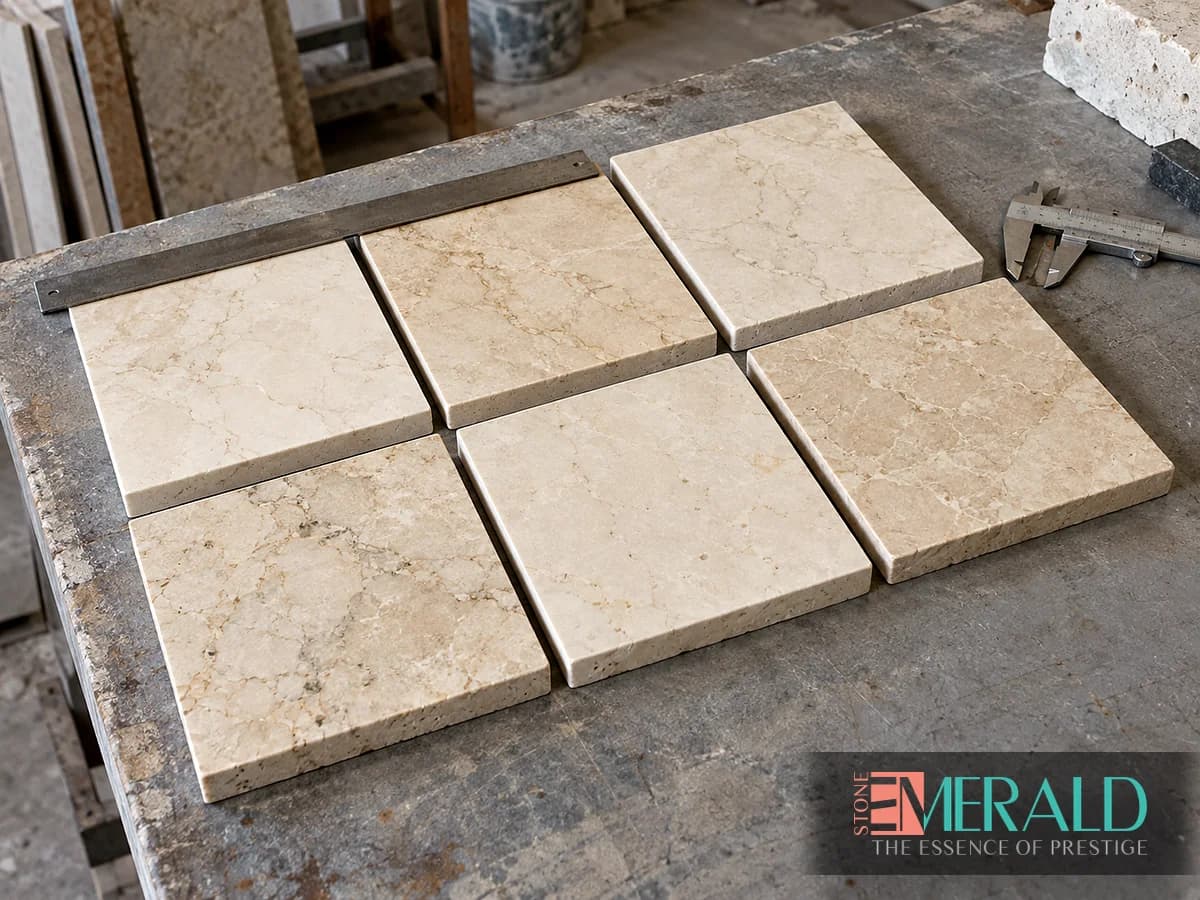
The costliest building stone buying mistakes are choosing from catalog photographs, ignoring the application and climate of each zone, accepting vague grade definitions that allow mixed sorting, and ordering too late to absorb cutting, sorting and freight lead times. Physical samples, written grade criteria and phased delivery prevent all four.
Related guide: Stone engineering and consultation
Buying from catalog photos alone
The most common stone buying mistakes start with social-media images or outdated catalogs. Color shifts with lighting, camera settings, and finish, and the delivered batch may differ from what you approved. Without on-site samples, post-installation disputes are likely. Early visual verification is a low-cost step compared with replacing installed material across large areas.
Even two slabs from one quarry can vary in veining. If uniformity matters on a tower facade, batch sorting must be defined before contract signature. At Emerald Stone, warehouse visits and consecutive slab layouts are standard consultation steps. This process lets teams approve rhythm and color transitions before fabrication locks the final output.
Photo-only decisions hurt small projects too. Replacing installed stone costs multiples of early sampling. Insist on physical samples or a warehouse visit before you sign. One pre-contract review session can remove uncertainty that would otherwise become expensive corrective work during installation.
Ignoring application and climate
Using beautiful stone in the wrong application is a technical stone buying mistake. Polished marble on busy ramps or unsealed travertine on rainy facades fails regardless of price. Aesthetics without engineering fit have short service life. Application-led specification is what protects both appearance and durability over time.
Take project climate seriously: freeze-thaw, acid rain, dust, and direct sun each favor different materials. Stone that works in Tehran may need more surface treatment and maintenance on a coastal site. Climate-aware selection reduces avoidable defects and keeps maintenance plans realistic for operations teams.
Before purchase, list every zone's use and match it to technical specifications. If unsure, use stone engineering consultation to eliminate unfit options before payment. This discipline prevents attractive but unsuitable options from entering contract negotiations. It also shortens approval cycles by keeping all stakeholders focused on technically valid choices.
Vague grading and mixed sorting
Ordering first grade on paper but receiving mixed first and second grade is a recurring market failure. Color and porosity drift across one facade looks inconsistent even with skilled installation. Contracts must define grade, defect tolerance, and inspection method. Without this clarity, acceptance arguments consume time and usually delay downstream site activities.
Sorting groups batches for uniformity. Without it, two zones specified as the same stone look different. Large facades and luxury lobbies need pre-shipment sorting — not workshop surprises after delivery. Sequence labeling during packing further protects visual continuity when installation teams work under tight deadlines.
If pricing looks unusually low, investigate mixed grades or short thickness. Grading transparency prevents hidden replacement cost. A quick pre-contract verification often prevents expensive disputes after delivery and installation starts. It also protects budget assumptions that were set during tender evaluation.

Poor supply timing and execution coordination
Stone delivery delay stops entire facade and flooring programs. Stone buying mistakes include late orders that ignore cutting, sorting, and freight lead times. Tower projects need batches aligned with construction phases. Early release planning keeps installation fronts active and avoids idle labor cost.
Buying full quantity at once without storage planning can damage slabs in the workshop yard. Phased deliveries with labeled specifications work better. Supplier and installer coordination at this stage is critical. Structured storage and release planning protects material quality before fixing begins.
Contracts should clarify delivery dates, defective-batch return terms, and packing liability. Timing ambiguity becomes owner-contractor conflict quickly. Detailed logistics clauses keep corrective actions fast and measurable when schedule pressure increases. They also reduce misunderstandings between procurement teams and site management.

Prevention system before purchase approval
Avoiding stone buying mistakes requires a repeatable pre-purchase workflow, not ad hoc judgments. Use a three-step sequence: define application requirements, approve site samples, and lock measurable contract specifications. Each step should produce a written record so procurement, design, and execution teams make decisions from the same evidence base. This discipline reduces rework risk and accelerates approval cycles on demanding projects.
Application definition should map every zone to performance priorities such as moisture exposure, traffic intensity, cleaning regime, and visual sensitivity. From that map, create minimum technical thresholds that eliminate unfit products early. Shortlisting with clear thresholds prevents endless catalog comparison and keeps stakeholders focused on options that can actually perform under real operating conditions.
Before payment, tie the approved sample and inspection method to the contract. If delivered batches drift from approved grade, tolerance, or color window, the correction path should already be defined. This contractual clarity prevents long disputes after shipment and helps construction teams maintain momentum when issues appear.
Contract clauses that prevent disputes
Stone contracts should use measurable language linked to execution realities. Include quarry source, grade definition, thickness tolerance, finish type, accepted defect ratio, and sample-based acceptance criteria. Broad promises such as premium quality are impossible to enforce during delivery. Clear clauses transform commercial agreements into practical quality controls that site teams can apply consistently.
Delivery terms also need structure. Define phased batch dates, quantity bands, inspection responsibility, and response windows for non-conforming material. Assign freight damage liability and packaging standards so ownership of risk is clear from loading through unloading. These details reduce friction between owner, supplier, and installer when schedule pressure rises.
For high-value scopes, attach warehouse review notes and batch photographs as contractual evidence. When disagreements occur, objective records shorten resolution time and preserve working relationships. Teams that formalize this documentation usually experience fewer stoppages and cleaner handovers because expectations remain aligned from procurement through installation.
Emerald Stone approach
At Emerald Stone, preventing stone buying mistakes starts with technical consultation: application analysis, site samples, contractual grade definitions, and phased supply. Experience on Farvardin Tower and public-space facades shows specification clarity avoids post-delivery disputes. This process supports smoother procurement decisions and more predictable site outcomes.
If you are mid-selection or negotiating a contract, one free stone engineering consultation can reduce risk before payment. We also review your draft clauses and delivery checkpoints so quality expectations stay enforceable during execution. That support continues through batch approval to keep site outcomes aligned with signed specifications.
| Mistake | Consequence | Prevention |
|---|---|---|
| Photo-only purchase | Color mismatch after install | Site sample and warehouse visit |
| Wrong application | Wear, slip, or staining | Technical analysis before purchase |
| Mixed grades | Inconsistent facade | Defined grade and batch inspection |
| Late supply | Stopped construction | Phased supply plan from day one |
Related products
Related projects
Frequently asked questions
What is the most common building stone buying mistake?
Choosing on appearance without application analysis is the top error. Stone perfect for a feature wall may fail on busy floors or wet interiors. Document each zone's use and required specifications, then match them with your supplier before payment. This early mapping usually removes costly mismatches before procurement locks the order.
How do I prevent mixed grades at delivery?
Define grade, defect limits, and inspection method in the contract. Visiting the batch before loading — or sending your representative — is reasonable. Suppliers with transparent sorting reduce color-drift risk. Add approved sample photos to the contract so acceptance checks stay objective at delivery.
Is buying stone online without samples risky?
For serious projects, almost always. Images distort color and texture and real batches vary. At minimum, require physical site samples or warehouse visits. Skipping that step usually leads to replacement cost. Even a short sample review can protect schedule and budget from preventable correction work.
How does stone supply delay affect a project?
Stone delay stops facade and flooring work and raises daily project overhead. Supply planning should align with construction from design phase. Phased orders and clear delivery dates belong in every contract. Coordinated release planning also helps installers sequence labor without costly idle periods.
How does Emerald Stone help avoid buying mistakes?
Through stone engineering consultation, site sampling, contractual grade definitions, pre-shipment sort control, and installer coordination. Our goal is lower financial and execution risk for owners and architects — not quick sales without specs. We keep documentation aligned from sample approval to final batch delivery.
Free stone engineering consultation
Emerald Stone's engineering team helps you select the right stone for your project scope, budget, and execution details.
Request free consultation