
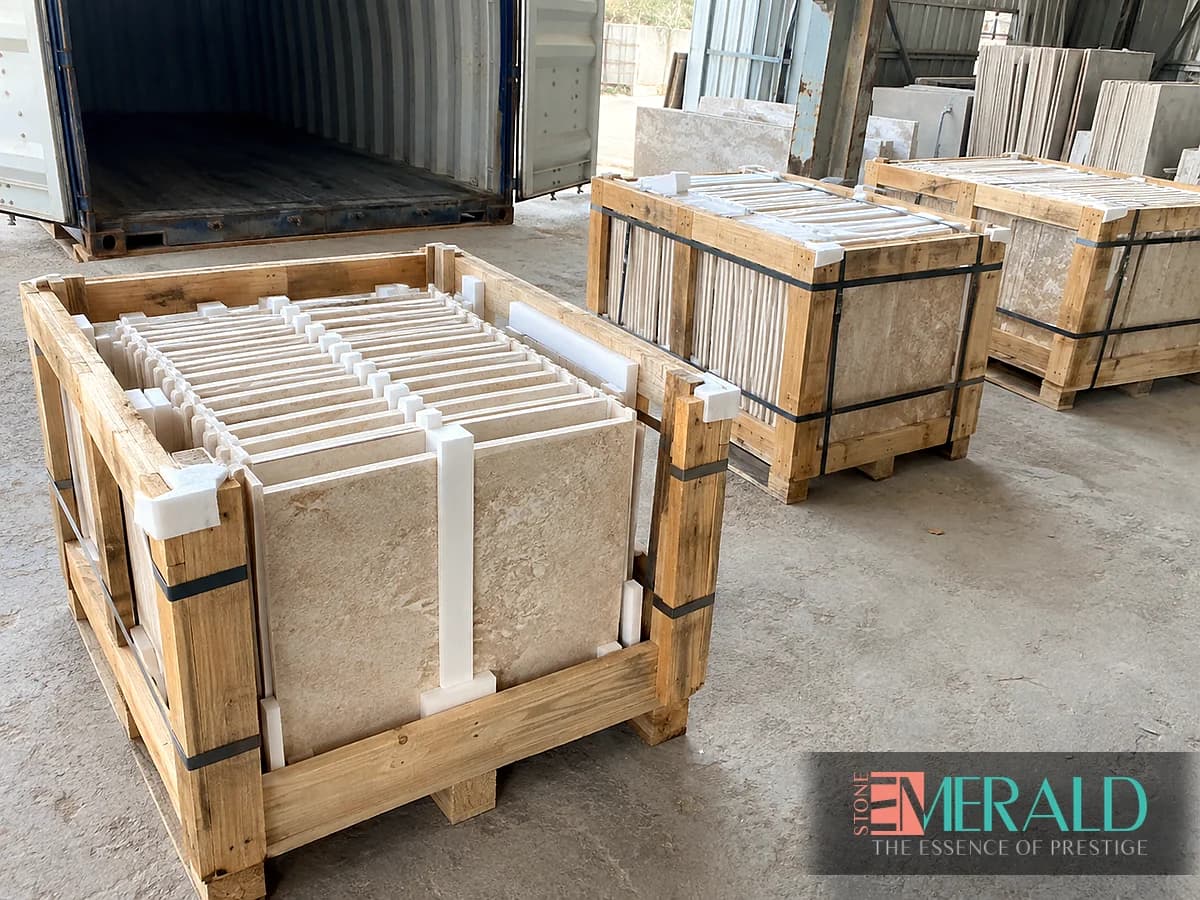
Why specify Iranian natural stone?
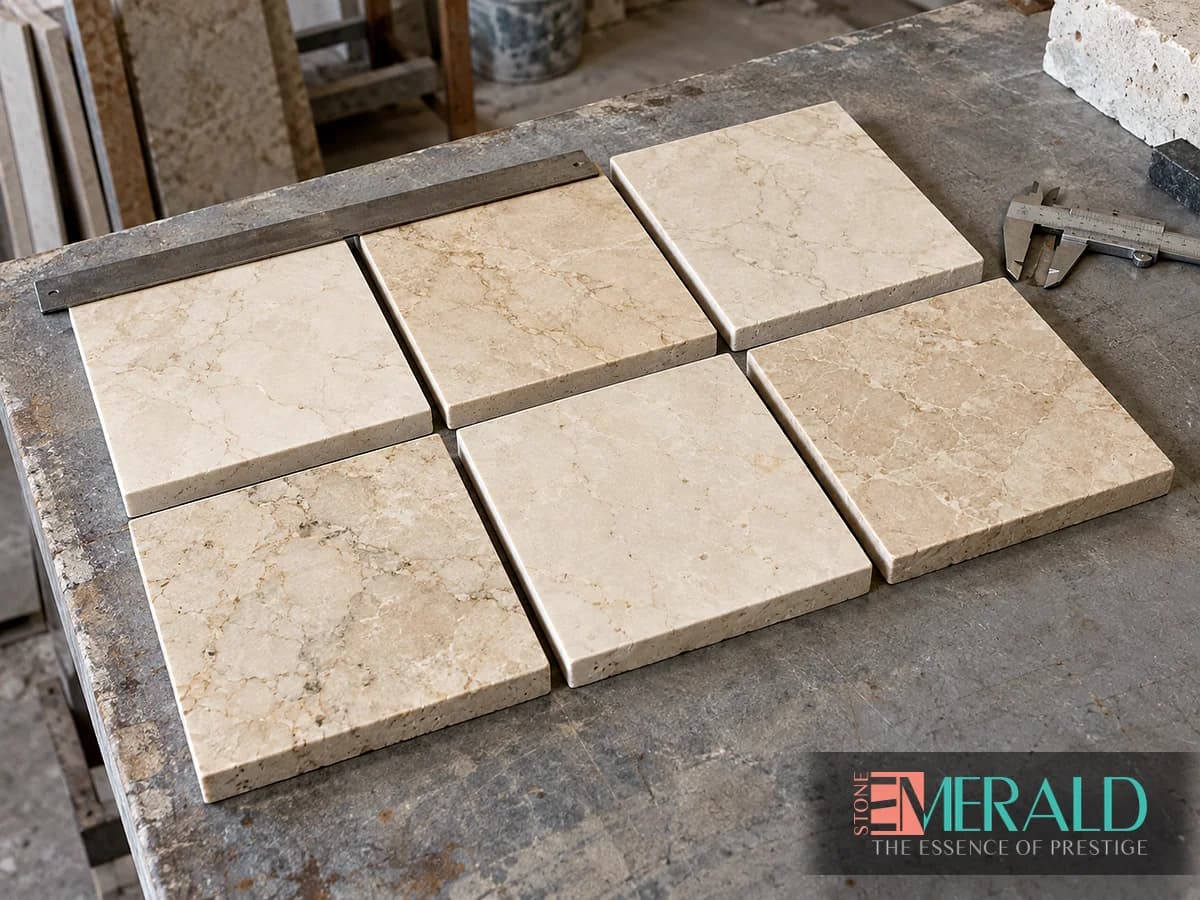
Iran offers a range of travertine, marble, granite and decorative onyx for architectural applications. Confirm the identity and proposed batch rather than selecting by a broad national label. Crystal Silver in Emerald’s catalogue is marble and should not be treated as travertine.
Emerald Stone combines quarry-direct relationships with stone engineering: we do not simply ship containers — we match grade, cut direction, finish, and thickness to your project specification before loading.
International buyers sourcing Iranian natural stone gain access to diverse quarries, competitive FOB pricing, and engineering-led quality control that reduces execution risk on tower and hotel programs.
For distributors and contractors, a reliable Iran stone supplier must offer batch consistency, pre-shipment photos, and realistic lead times — not commodity trading without technical accountability.
- FOB Bandar Abbas quotes include quarry processing, sorting, and port handling
- Pre-shipment slab photos under natural light confirm batch color before loading
- Pricing and response timing depend on the specification, quantity, availability and service scope of the individual enquiry. Separate material, fabrication, packaging, freight and installation when comparing offers, and confirm delivery responsibilities and the period for which the proposal remains valid.
- Third-party inspection through SGS or Bureau Veritas can be arranged on request
Export product range
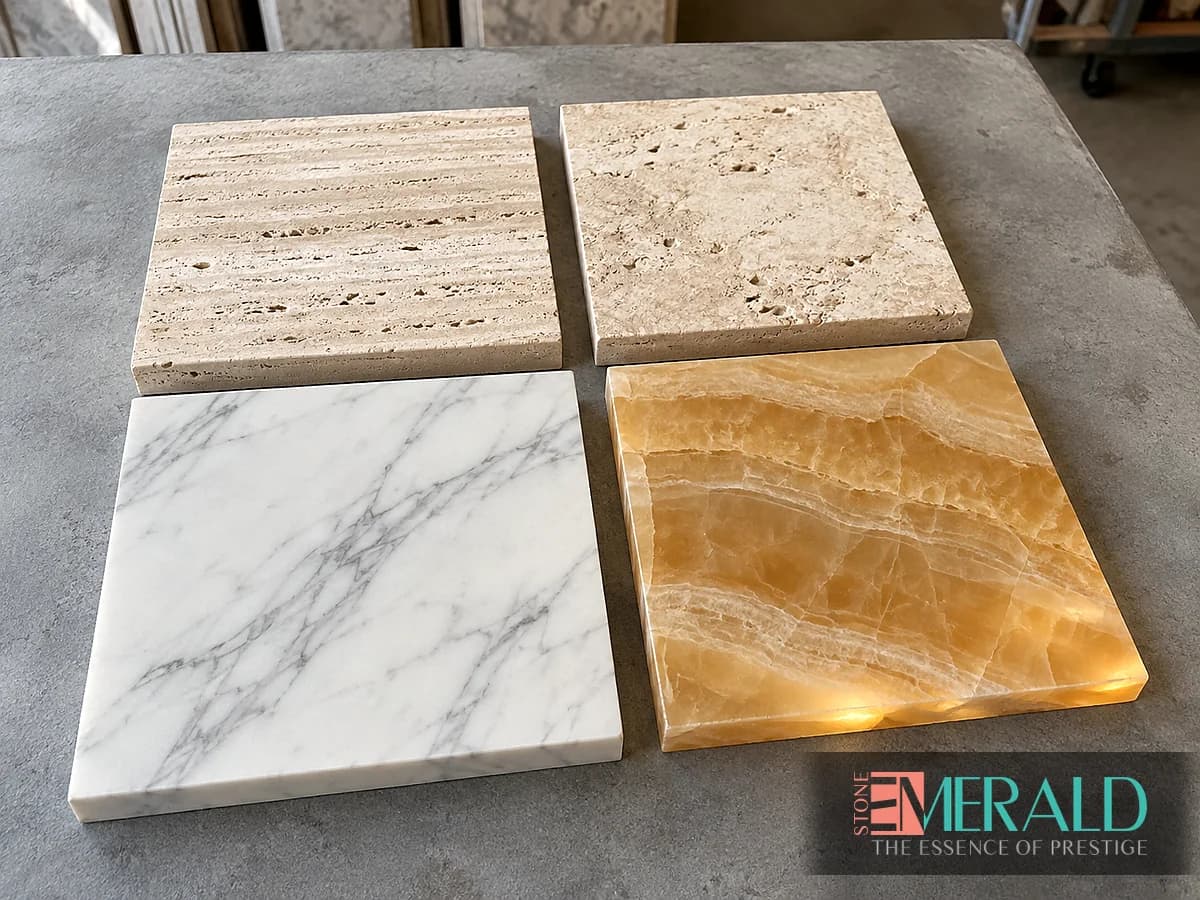
Our export range covers travertine slabs and tiles in vein-cut and cross-cut, marble slabs from Dehbid, Aligoudarz, and Gisou, granite from Natanz and Chayan, and specialty onyx for backlit features.
Requested thickness, finish and format must be checked against the selected material and available processing. State the quantity and any flexibility in dimensions during the enquiry; minimum quantities and special production requirements are confirmed in the individual proposal.
Travertine export forms include standard tiles 60×60 and 60×120 cm, facade slabs, and pavers. Marble export focuses on lobby slabs, bookmatched pairs, and cut-to-size flooring programs.
Granite export supports outdoor flamed finish for landscaping and high-traffic zones. Onyx export includes backlit-ready slabs photographed against light before shipment approval.
- Travertine: blocks, slabs, tiles, pavers
- Marble: slabs, cut-to-size, lobby packages
- Granite: slabs, tiles, outdoor flamed finish
- Onyx: backlit slabs, feature panels

Quality control and sorting
Agree dimensional tolerances, selection range and visible condition criteria in the purchase specification. Confirm which checks will be documented for the proposed batch instead of assuming that one tolerance applies to all formats and orders.
If independent inspection is required, request confirmation of the available provider, scope, timing and cost for that order. No inspection organisation or certificate is implied by this guide.
Pre-shipment approval workflow includes batch photos under natural and artificial light so international buyers confirm color before containers leave Bandar Abbas.
Quality control is not a final gate only — sorting begins at quarry selection and continues through factory processing to bundle packing.
Supply capacity and container loading
Supply quantity and loading arrangements require an assessment of the actual material, dimensions, packing and transport constraints. Confirm the achievable programme for the current order; a general capacity figure cannot establish stock, production availability or a safe loading plan.
Lead times depend on quarry schedule, factory queue, and destination port — we communicate realistic schedules upfront rather than optimistic promises.
For multi-phase tower projects, we recommend lot reservation from a single quarry run to maintain color consistency across construction phases.
Export markets we serve
State the destination and request clearly defined delivery responsibilities. The selected delivery arrangement, named place, included services and required documents must be confirmed in the actual proposal with the parties handling the shipment.
Identify the packing records and destination documents your team requires. Confirm their availability and responsibility for preparation before dispatch, rather than assuming that a general product description includes every document or packaging treatment.
Regional distributors value Persian travertine for facade programs and Persian marble for luxury lobbies — we support both with engineering consultation.
Incoterms, packaging, and logistics
We coordinate freight forwarders or work with your nominated shipping agent. Container loading follows weight distribution and bundle securing best practice.
Partner with Emerald Stone
Emerald Stone is a quarry-direct Iranian natural stone supplier with engineering-led QC, sorting, and export logistics for contractors and distributors worldwide.
Whether you are a distributor, contractor, or developer sourcing Persian travertine, marble, or onyx, our export team provides quarry-direct FOB pricing, samples, and technical support.
Explore the specialist export guides below or request a B2B project quote. Free stone engineering consultation helps match stone grade to your specification before purchase.
The company catalogue presents projects including Pak Residence and Partia Hotel. Use the About page and catalogue to review these examples; the requirements and available services for a new international order still need separate confirmation.
Emerald Stone coordinates FOB Bandar Abbas pricing with pre-shipment slab photos and packing lists for international buyers.
Additional engineering detail
Lead times depend on quarry schedule, factory queue, and destination port — we communicate realistic schedules upfront.
Build a material approval package before comparing suppliers
Begin with the application rather than the export label. A hotel floor, a ventilated facade and a decorative backlit panel place different demands on stone. Write down where the material will be installed, the exposure, the dimensions that are already fixed and the appearance that the architect intends to achieve. Distinguish mandatory requirements from preferences. This allows a supplier to propose relevant alternatives instead of responding to a broad request for a named colour.
Identify the material in a way that can follow the order. Include its commercial name, photographs, source information available from the supplier and a reference to the proposed batch. Local names and translated names are not always used consistently. Where geological identity affects the decision, request suitable material information rather than assuming that a trade category establishes it. The approved description should appear consistently in the sample record, proposal and cutting information.
Decide how samples will be assessed. A small piece helps introduce colour and finish, but it may not represent variation across a large area. Ask for several representative pieces or clear images of the proposed slabs when that is important to the design. Record which aspects have been accepted and which remain subject to further review. Lighting and display settings can change the appearance of a photograph, so a colour-critical decision deserves an agreed method of comparison.
Connect quantity, processing and packing information
State whether the order is for slabs, tiles or pieces cut to a drawing. For cut-to-size work, identify the approved drawing revision and the process for confirming final dimensions. Openings, edge profiles, grain direction and matching requirements can change the usable yield. A quantity based only on installed square metres may not describe the material needed. Ask how the supplier calculated the proposed purchase quantity and which allowances are included.
A packing proposal should be related to the actual dimensions, thickness, mass and handling conditions of the goods. A fixed number of square metres per container is not a reliable rule for every stone or configuration. Ask the parties responsible for transport and loading to confirm the applicable limits and arrangement. The enquiry should identify the destination and available unloading equipment so the proposed packaging can be assessed against the receiving site's needs.
A clear packing list connects packages to their contents. For a complex layout, piece identification should also correspond to the cutting schedule and installation sequence. Agree which photographs or records will be available before dispatch and who will review them. These records help explain what was supplied, but they should not be described as independent inspection unless such a service has actually been arranged for the order. Do not infer an inspection provider or dimensional tolerance from a general website description.
Make remote approval a recorded decision
Choose one current specification as the shared reference. Keep revisions to material, finish, dimensions and quantities visible. If the supplier offers a substitute, compare it with the approved requirements rather than accepting it solely because its name sounds similar. Ask which properties are confirmed, which are based on a sample and which need additional evaluation. The purpose is to make uncertainty explicit before production, when alternatives can still be discussed.
For a phased project, ask how later quantities will be coordinated with the first delivery. Material from the same named source can still vary. Discuss the proposed selection range and whether any batch reservation is available, without assuming that it is automatically included. A staged approval can help the team review what is ready and what is still subject to procurement. Keep each decision connected to the relevant batch and drawing revision.
Inspection scope must be agreed. Quantity, dimensions, finish, edges, visible condition and labels are different checks from laboratory performance testing. A photograph can help document appearance; it cannot establish absorption or flexural strength. If testing is required, identify the sample relationship and applicable method with the project team. If an independent inspection is requested, confirm the provider, scope, timing and cost in the actual proposal before relying on it.
Prepare for receipt and installation
Confirm the receiving address, access conditions, unloading responsibility and planned installation order before dispatch. The team receiving the shipment should know how packages and pieces are identified and which records to retain. Agree how visible damage or a discrepancy will be documented and communicated. These arrangements are part of the individual order and should not be assumed from the material price or a general statement about export services.
At receipt, compare the delivery with the agreed records before mixing pieces into the installation. Keep material identification and maintenance information available to the contractor and building operator. If an issue appears, distinguish a difference in supply from damage during handling or a question about installation; each requires appropriate evidence and review. Avoid deciding the cause from a single image without the relevant context.
Emerald's contact page is the starting point for a project-specific discussion. Send the material brief, destination, approximate quantity and schedule, and identify the documents or approvals your team requires. Availability, processing options, delivery responsibilities and any additional services then need confirmation for that enquiry. This provides a more useful basis for an international purchase than a blanket promise about capacity, transit time, certificates or the number of countries served.
| Stage | Confirm before proceeding |
|---|---|
| Material | Identity, reference sample and available batch |
| Processing | Format, dimensions, finish and drawing revision |
| Inspection | Scope, responsible party and records |
| Packing | Dimensions, mass, identification and handling plan |
| Delivery | Destination, responsibilities, documents and schedule |
Related products
Related projects
Frequently asked questions
Does Emerald Stone export Iranian natural stone worldwide?
Yes — we serve Gulf states, Turkey, Russia, China, Eastern Europe, and other markets with FOB Bandar Abbas or CIF terms. Our export team provides quarry-direct pricing, batch photos, and engineering support for tower and hotel programs. For a precise decision, visit slabs in warehouse or on site and request the batch technical report.
Can I order samples before bulk stone purchase?
Yes — sample boxes and slab photos are standard in our export workflow. Sample approval before production reduces color mismatch risk on large facade and lobby programs. Courier to Gulf states typically takes 5–7 business days. For a precise decision, visit slabs in warehouse or on site and request the batch technical report.
What is minimum order quantity for export?
MOQ varies by stone and form — typically one container or mixed-container program for wholesale buyers. Contact us with specification for exact MOQ, container capacity in square metres, and FOB pricing. For a precise decision, visit slabs in warehouse or on site and request the batch technical report.
How do you ensure color consistency on large export orders?
Batch sorting from single quarry runs with pre-shipment photos for buyer approval. Multi-phase projects can reserve lots at agreed grade and FOB price to maintain consistency across construction phases. For a precise decision, visit slabs in warehouse or on site and request the batch technical report.
What makes Emerald Stone different from stone traders?
Stone engineering approach — grade matching, technical data sheets, QC before loading, and project coordination. We are quarry-direct suppliers, not commodity traders without technical accountability. For a precise decision, visit slabs in warehouse or on site and request the batch technical report.
Free stone engineering consultation
Emerald Stone's engineering team helps you select the right stone for your project scope, budget, and execution details.
Request free consultation