
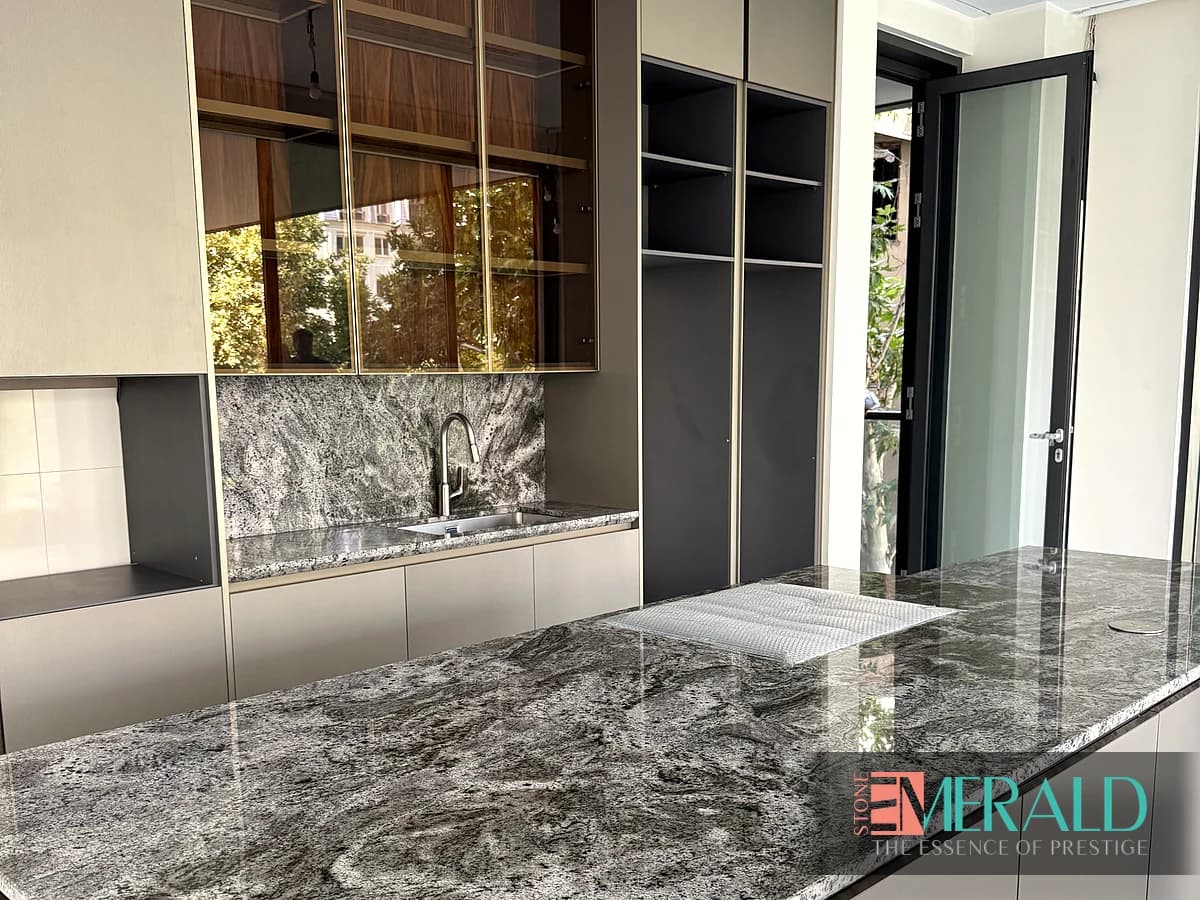
Counter stone choice comes down to use: granite, with high hardness and low absorption, is the safe option for busy and commercial kitchens, while Dehbid and Aligoudarz marble give a cool luxury surface that needs regular sealing and no acidic contact. Three centimetres without a subtop is the residential standard.
Stone countertop options
A stone countertop is the heart of a luxury kitchen and must resist heat, stains, abrasion, and daily cleaning at once. Choosing kitchen counter stone should not rely on color alone; water absorption, surface hardness, slab thickness, and edge profile all determine durability and maintenance cost.
Granite with high hardness and low absorption is a safe choice for busy families and commercial kitchens. Dehbid and Aligoudarz marble delivers a luxurious look and a cool surface for baking but needs regular sealing and protection from acidic contact.
Filled travertine and onyx are less common on counters; travertine suits low-traffic areas and onyx works for display islands or feature walls. At Emerald Stone, counter stone recommendations follow cooking style, household size, and maintenance budget.
Three-centimeter thickness without a subtop is recommended for residential counters; economical projects may use two-centimeter slabs with a plywood or metal subtop. Coordinating the stone supplier with the fabricator before final order prevents slab waste and visible seams at the counter center.
- Documenting stone specs in the supply contract prevents delivery disputes on site
- On-site sampling in natural project daylight is recommended before final order
- Supplier and fabricator coordination determines final countertop quality
- Periodic maintenance after handover noticeably extends stone service life
Granite for kitchen countertops
Natanz granite and black granite are among the most requested counter stones in Iranian projects. Granite's high hardness resists knife scratches and makes it suitable for heavily used kitchens. Placing hot pots on a sealed surface is generally safe.
Granite has limited porosity but still needs annual penetrating sealer. Oil, turmeric, and colored sauces may leave visible marks without sealing. Polished or honed finish affects appearance; honed hides fingerprints better.
Natural veining in granite makes every slab unique; for visual consistency, select multiple slabs from one batch and quarry. Our granite guide covers quarry comparison and grading in detail.
For outdoor or semi-open kitchens, granite is virtually the only durable natural stone option. Engineered quartz may discolor under direct sun; granite performs better in Iran's climate.
- Documenting stone specs in the supply contract prevents delivery disputes on site
- On-site sampling in natural project daylight is recommended before final order
- Supplier and fabricator coordination determines final countertop quality
- Periodic maintenance after handover noticeably extends stone service life
Marble for stone countertops
Marble symbolizes luxury for stone countertops. Dehbid cream and Aligoudarz with gold veining are widely used in modern and classic kitchens. Marble is softer than granite and more sensitive to food acids.
Lemon, vinegar, and acidic cleaners can etch marble and change surface polish. Heavy-cooking households may manage marble with strict care or combine it with a granite cooking zone.
Bookmatched adjacent slabs create dramatic impact on marble islands. Three-centimeter marble without subtop feels more monolithic. Our marble guide provides supplementary quarry and pricing information.
Marble stays cooler than granite — a practical advantage for pastry work. With regular sealing and cutting boards, marble counters last well in residential kitchens.
- Documenting stone specs in the supply contract prevents delivery disputes on site
- On-site sampling in natural project daylight is recommended before final order
- Supplier and fabricator coordination determines final countertop quality
- Periodic maintenance after handover noticeably extends stone service life
Countertop edge profiles
Counter edge profile affects beauty, safety, and corner strength. Eased edges suit modern kitchens and families with children. Beveled and ogee profiles fit classic luxury styles.
A waterfall edge continues stone from the counter surface down the cabinet face with 45-degree miter cuts — very popular on kitchen islands. Correct execution depends on fabricator skill and vein alignment at corners.
Slab thickness limits profile options; two-centimeter slabs offer fewer choices than three-centimeter. Confirm feasibility and cutting cost with your fabricator before selecting a profile.
Thick-edge or laminated-edge details emphasize stone mass but increase slab consumption. For budget projects, a slightly eased edge balances cost and appearance well.
- Documenting stone specs in the supply contract prevents delivery disputes on site
- On-site sampling in natural project daylight is recommended before final order
- Supplier and fabricator coordination determines final countertop quality
- Periodic maintenance after handover noticeably extends stone service life
Sealing and maintaining stone counters
Penetrating sealer is essential for most counter stones. Sealer fills pores and resists oil and liquids. Residential counters typically need resealing once or twice per year.
After installation, avoid heavy use and wet cleaning for 24–48 hours so sealer cures fully. Do not use acidic or abrasive cleaners on sealed stone. Dedicated cutting boards prevent deep scratches.
Travertine and marble absorb more water and need extra care near sinks. Properly sealed granite is easier to maintain. Our granite vs quartz page covers porosity comparison.
A simple water-drop test indicates when resealing is needed; if the drop absorbs within five minutes, schedule new sealer application.
- Documenting stone specs in the supply contract prevents delivery disputes on site
- On-site sampling in natural project daylight is recommended before final order
- Supplier and fabricator coordination determines final countertop quality
- Periodic maintenance after handover noticeably extends stone service life
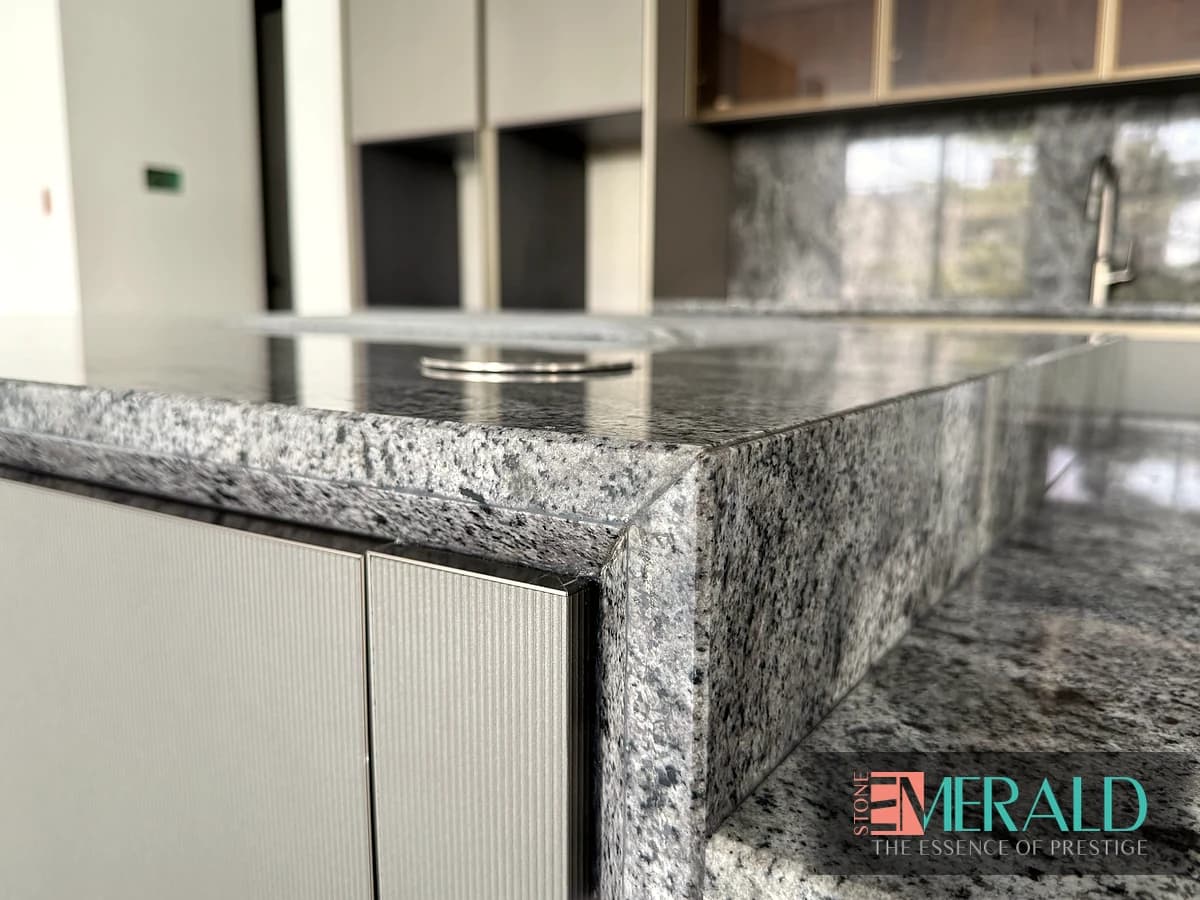
Stone countertop cost
Stone countertop cost combines slab price, fabrication, edge profile, sink cutouts, and installation. First-grade granite sits in the mid-to-high range; Dehbid and Aligoudarz marble are luxury tier.
Large islands with waterfall edges and bookmatch significantly increase slab use and fabrication cost. Templating after final cabinet install prevents dimensional errors. Our building stone price guide shows general ranges.
Comparing price per square meter of slab alone is misleading; cutting waste, special profiles, and cutout count determine final cost. A project quote from Emerald Stone provides a more accurate estimate.
Quality counter stone is a multi-decade investment that raises kitchen value. Using appropriate grade instead of first grade everywhere saves sensibly on large projects.
- Documenting stone specs in the supply contract prevents delivery disputes on site
- On-site sampling in natural project daylight is recommended before final order
- Supplier and fabricator coordination determines final countertop quality
- Periodic maintenance after handover noticeably extends stone service life
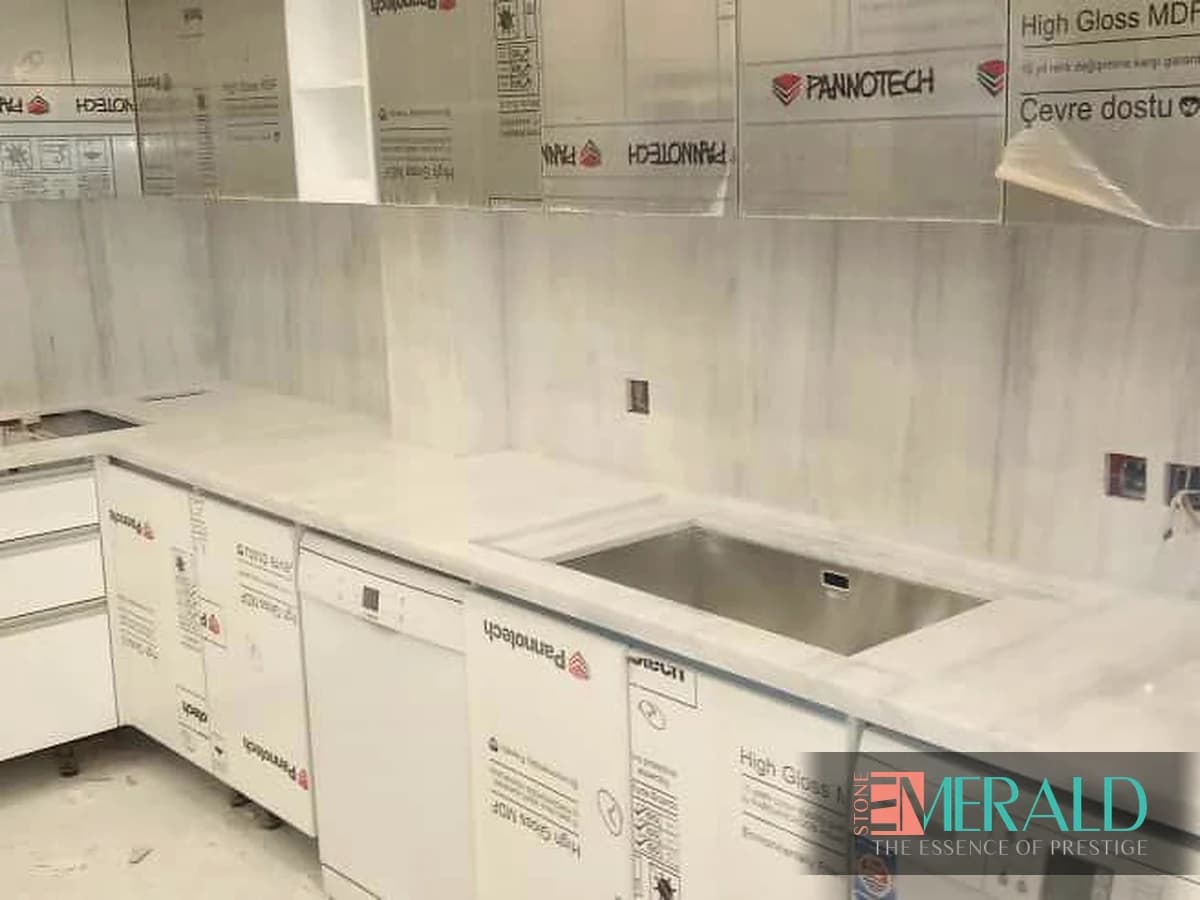
Emerald Stone countertop supply
Emerald Stone supplies stone countertops with a stone-engineering approach — from slab selection and color sorting to fabricator coordination and templating oversight. Natanz granite, Dehbid marble, and Aligoudarz are high-demand lines.
For kitchen islands, we recommend jumbo slabs or bookmatched pairs from one batch so seams do not fall in the sight line. Our technical team advises thickness, edge profile, and sealer type per use case.
Specialist guides on best counter stone, granite vs quartz, and kitchen island stone are linked below. For free stone engineering consultation, complete our contact form.
At Emerald Stone we believe counter stone must be beautiful and aligned with real family lifestyle — not just a catalog sample.
Before final order, review slab samples on site alongside cabinets and flooring; daylight angle shifts counter stone color and texture noticeably, preventing costly specification mistakes.
Coordinating stone supply with the fabricator before final order prevents slab waste, visible center seams, and installation delays.
- Documenting stone specs in the supply contract prevents delivery disputes on site
- On-site sampling in natural project daylight is recommended before final order
- Supplier and fabricator coordination determines final countertop quality
- Periodic maintenance after handover noticeably extends stone service life
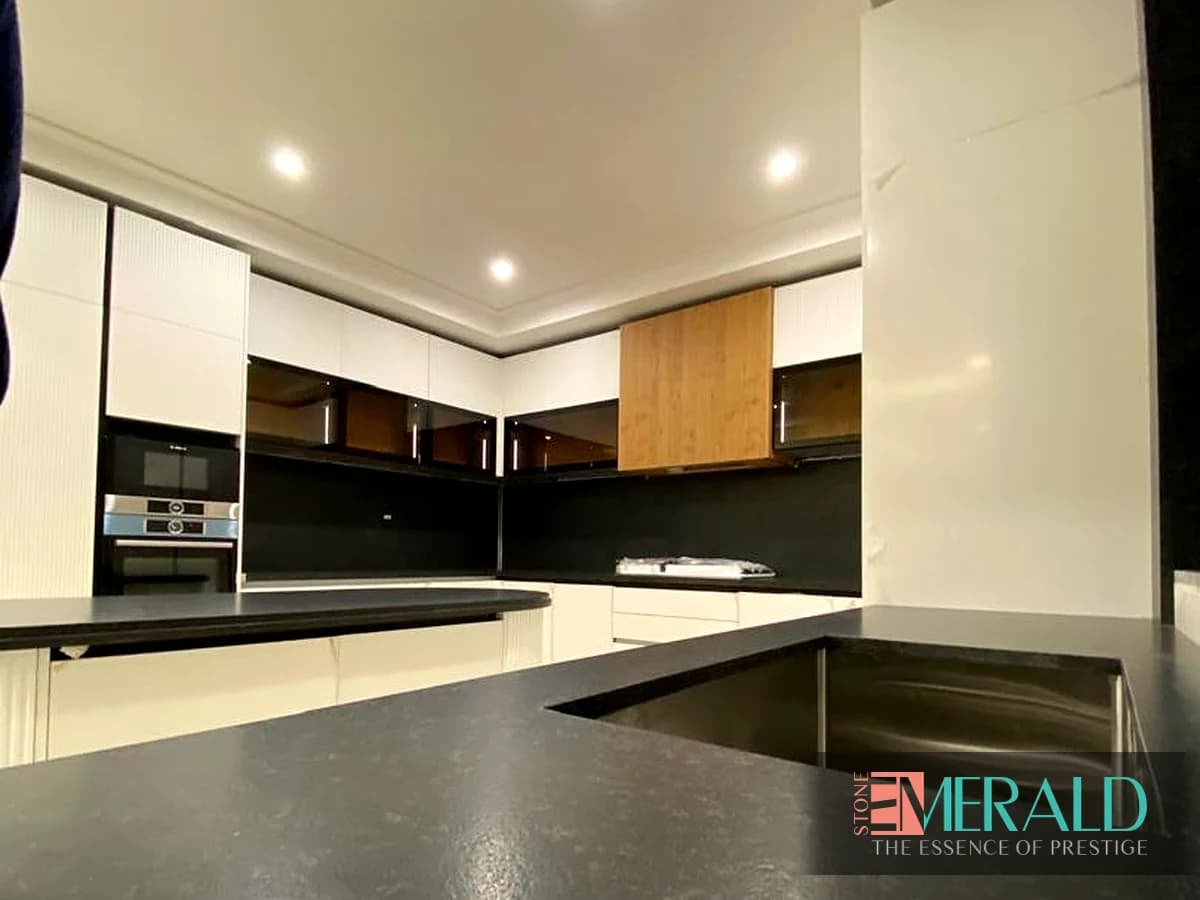
Additional engineering detail
Regular penetrating sealer and dedicated cutting boards noticeably extend stone countertop service life in busy kitchens.
Three-centimeter thickness without subtop is recommended for residential counters; economical projects may use two-centimeter slabs with metal subtop.
At Emerald Stone, counter stone selection follows cooking style, household size, and maintenance budget — not catalog color alone.
Documenting batch grade, thickness, and finish in the supply contract prevents delivery disputes and workshop stoppages.
- Documenting stone specs in the supply contract prevents delivery disputes on site
- On-site sampling in natural project daylight is recommended before final order
- Supplier and fabricator coordination determines final countertop quality
- Periodic maintenance after handover noticeably extends stone service life
Additional engineering detail
For kitchen islands, jumbo slabs or bookmatched pairs from one batch keep seams out of the primary sight line.
Counter edge profile affects corner safety and impact resistance and must align with fabricator capability.
Before final order, review slab samples on site alongside cabinets and flooring; daylight angle shifts counter stone color and texture noticeably, preventing costly specification mistakes.
Coordinating stone supply with the fabricator before final order prevents slab waste, visible center seams, and installation delays.
- Documenting stone specs in the supply contract prevents delivery disputes on site
- On-site sampling in natural project daylight is recommended before final order
- Supplier and fabricator coordination determines final countertop quality
- Periodic maintenance after handover noticeably extends stone service life
Additional engineering detail
Regular penetrating sealer and dedicated cutting boards noticeably extend stone countertop service life in busy kitchens.
Three-centimeter thickness without subtop is recommended for residential counters; economical projects may use two-centimeter slabs with metal subtop.
At Emerald Stone, counter stone selection follows cooking style, household size, and maintenance budget — not catalog color alone.
Documenting batch grade, thickness, and finish in the supply contract prevents delivery disputes and workshop stoppages.
- Documenting stone specs in the supply contract prevents delivery disputes on site
- On-site sampling in natural project daylight is recommended before final order
- Supplier and fabricator coordination determines final countertop quality
- Periodic maintenance after handover noticeably extends stone service life
Additional engineering detail
For kitchen islands, jumbo slabs or bookmatched pairs from one batch keep seams out of the primary sight line.
Counter edge profile affects corner safety and impact resistance and must align with fabricator capability.
Before final order, review slab samples on site alongside cabinets and flooring; daylight angle shifts counter stone color and texture noticeably, preventing costly specification mistakes.
Coordinating stone supply with the fabricator before final order prevents slab waste, visible center seams, and installation delays.
- Documenting stone specs in the supply contract prevents delivery disputes on site
- On-site sampling in natural project daylight is recommended before final order
- Supplier and fabricator coordination determines final countertop quality
- Periodic maintenance after handover noticeably extends stone service life
Additional engineering detail
Regular penetrating sealer and dedicated cutting boards noticeably extend stone countertop service life in busy kitchens.
Three-centimeter thickness without subtop is recommended for residential counters; economical projects may use two-centimeter slabs with metal subtop.
At Emerald Stone, counter stone selection follows cooking style, household size, and maintenance budget — not catalog color alone.
Documenting batch grade, thickness, and finish in the supply contract prevents delivery disputes and workshop stoppages.
- Documenting stone specs in the supply contract prevents delivery disputes on site
- On-site sampling in natural project daylight is recommended before final order
- Supplier and fabricator coordination determines final countertop quality
- Periodic maintenance after handover noticeably extends stone service life
Additional engineering detail
For kitchen islands, jumbo slabs or bookmatched pairs from one batch keep seams out of the primary sight line.
Counter edge profile affects corner safety and impact resistance and must align with fabricator capability.
Before final order, review slab samples on site alongside cabinets and flooring; daylight angle shifts counter stone color and texture noticeably, preventing costly specification mistakes.
Coordinating stone supply with the fabricator before final order prevents slab waste, visible center seams, and installation delays.
- Documenting stone specs in the supply contract prevents delivery disputes on site
- On-site sampling in natural project daylight is recommended before final order
- Supplier and fabricator coordination determines final countertop quality
- Periodic maintenance after handover noticeably extends stone service life
Additional engineering detail
Regular penetrating sealer and dedicated cutting boards noticeably extend stone countertop service life in busy kitchens.
Three-centimeter thickness without subtop is recommended for residential counters; economical projects may use two-centimeter slabs with metal subtop.
At Emerald Stone, counter stone selection follows cooking style, household size, and maintenance budget — not catalog color alone.
Documenting batch grade, thickness, and finish in the supply contract prevents delivery disputes and workshop stoppages.
- Documenting stone specs in the supply contract prevents delivery disputes on site
- On-site sampling in natural project daylight is recommended before final order
- Supplier and fabricator coordination determines final countertop quality
- Periodic maintenance after handover noticeably extends stone service life
Additional engineering detail
For kitchen islands, jumbo slabs or bookmatched pairs from one batch keep seams out of the primary sight line.
Counter edge profile affects corner safety and impact resistance and must align with fabricator capability.
Before final order, review slab samples on site alongside cabinets and flooring; daylight angle shifts counter stone color and texture noticeably, preventing costly specification mistakes.
| Stone | Heat | Stains | Maintenance | Recommendation |
|---|---|---|---|---|
| Natanz granite | Excellent | Good when sealed | Annual sealer | Busy kitchen |
| Dehbid marble | Moderate | Acid sensitive | Regular sealing | Show kitchen |
| Aligoudarz marble | Moderate | Acid sensitive | Regular sealing | Luxury island |
| Filled travertine | Good | Moderate | Periodic sealer | Low-traffic zone |
Related products
Related projects
Frequently asked questions
What is the best stone for kitchen countertops?
For high-traffic kitchens, first-grade Natanz granite with regular sealing is the safest choice. For controlled-traffic luxury projects, Dehbid and Aligoudarz marble deliver unmatched appearance. Final selection must align with cooking style, household size, and maintenance budget.
Is marble suitable for kitchen countertops?
Yes, with strict care. Marble offers a cool surface for baking but is sensitive to food acids. Regular sealing, dedicated cutting boards, and avoidance of acidic cleaners are essential. Combining marble on the island with granite at the cooking zone is a common approach.
What is standard stone countertop thickness?
Three centimetres without subtop is recommended for residential counters. Economical projects may use two-centimetre slabs with metal or plywood subtop. Thickness directly affects edge profile options, overhang support, and corner impact resistance in daily kitchen use.
How often should stone countertops be sealed?
Residential counters typically need penetrating sealer once or twice per year depending on stone type and use intensity. Granite with lower absorption is easier to maintain than marble. A simple water-drop test on the surface indicates when resealing is needed.
What does Emerald Stone offer for countertop supply?
Free technical consultation, slab selection with controlled sorting, fabricator coordination, and templating oversight. Natanz granite, Dehbid marble, and Aligoudarz are high-demand lines. Start with our specialist guides below or submit the contact form for a project shortlist.
Free stone engineering consultation
Emerald Stone's engineering team helps you select the right stone for your project scope, budget, and execution details.
Request free consultation