
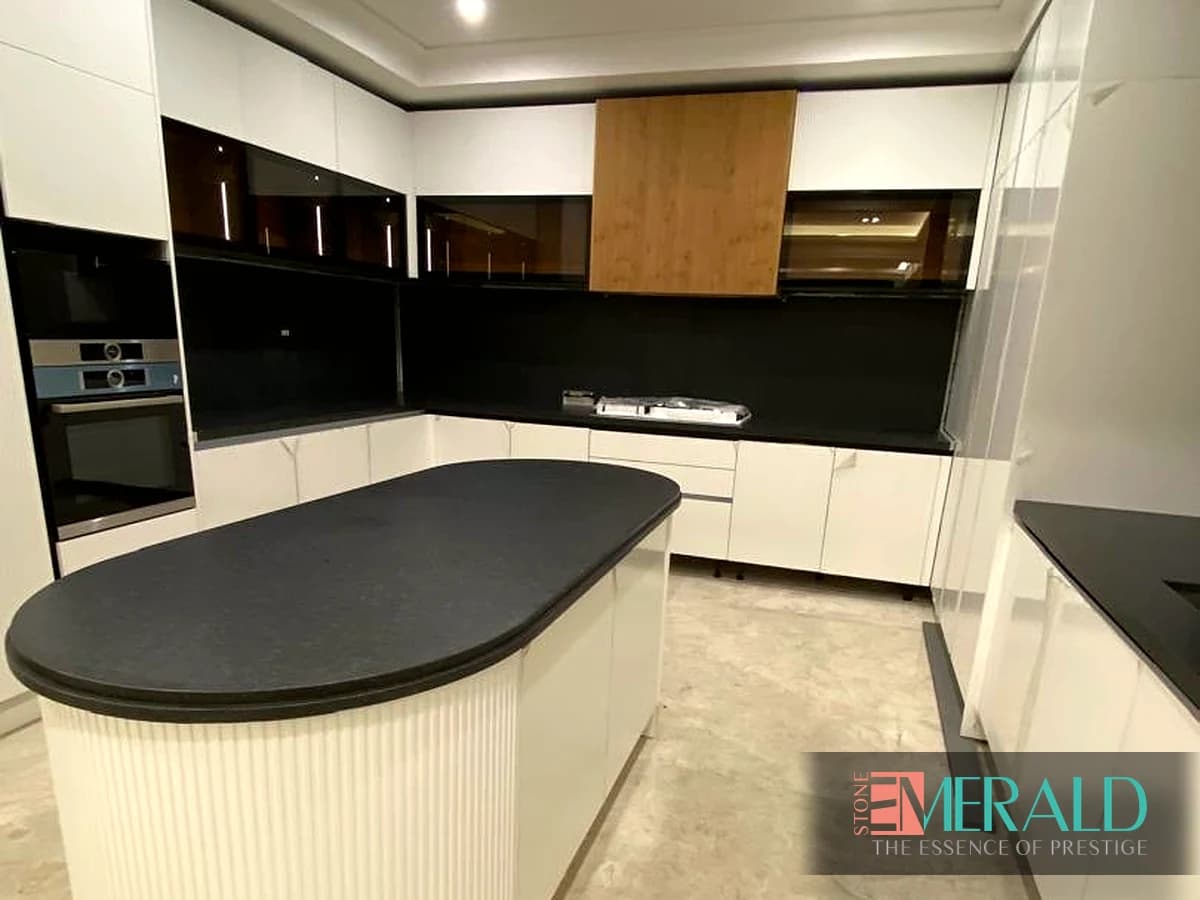
A jumbo slab, or two bookmatched slabs from one batch, keeps the seam out of a kitchen island's primary sight line. Three-centimetre stone is needed where the island carries a seating overhang, and anything beyond 30 cm requires steel support. Waterfall edges use 45-degree miters and add 20 to 40 percent slab consumption.
Related guide: Stone countertop guide
Slab selection for kitchen island stone
Kitchen island stone is the focal point — large slabs or bookmatch matter greatly. The main goal is avoiding a seam at the island center or primary sight line. Jumbo Aligoudarz marble and Natanz granite slabs suit this application.
If the island exceeds one jumbo slab, two bookmatched slabs from one batch create mirror veining. Strict sorting before cutting prevents color mismatch.
Three-centimeter thickness is recommended for islands with seating overhang. Overhangs beyond 30 cm need steel support under the stone.
Island templating happens after final cabinet install and fixed sink/cooktop locations. Changing cabinet dimensions after stone cutting is costly.
- Documenting stone specs in the supply contract prevents delivery disputes on site
- On-site sampling in natural project daylight is recommended before final order
- Supplier and fabricator coordination determines final countertop quality
- Periodic maintenance after handover noticeably extends stone service life
Waterfall edges on kitchen islands
Waterfall edges on kitchen islands continue stone from the top surface down the cabinet side. Correct execution uses 45-degree miters with vein alignment at corners. Aligoudarz and Dehbid marble create spectacular waterfall effects.
Waterfall edges increase slab consumption by 20–40% and cost more than simple edges. In luxury projects, the visual impact justifies the investment.
Uniform granite has fewer vein-matching challenges but less drama than veined marble. Choice depends on interior design style.
Confirm waterfall design with a 3D island layout and vein direction before ordering stone.
- Documenting stone specs in the supply contract prevents delivery disputes on site
- On-site sampling in natural project daylight is recommended before final order
- Supplier and fabricator coordination determines final countertop quality
- Periodic maintenance after handover noticeably extends stone service life
Best stone for kitchen islands
For display islands with low traffic, bookmatched Aligoudarz marble with waterfall edges is ideal. For islands with seating and higher use, honed Natanz granite offers more durability.
Backlit onyx is rare on islands but stunning in boutique projects. Thickness and structural support need extra engineering for onyx.
Island color can match or contrast perimeter counters; a dark island in a white kitchen creates strong focus. On-site samples simplify the decision.
Our stone countertop guide and best counter stone page provide complementary island decision support.
- Documenting stone specs in the supply contract prevents delivery disputes on site
- On-site sampling in natural project daylight is recommended before final order
- Supplier and fabricator coordination determines final countertop quality
- Periodic maintenance after handover noticeably extends stone service life
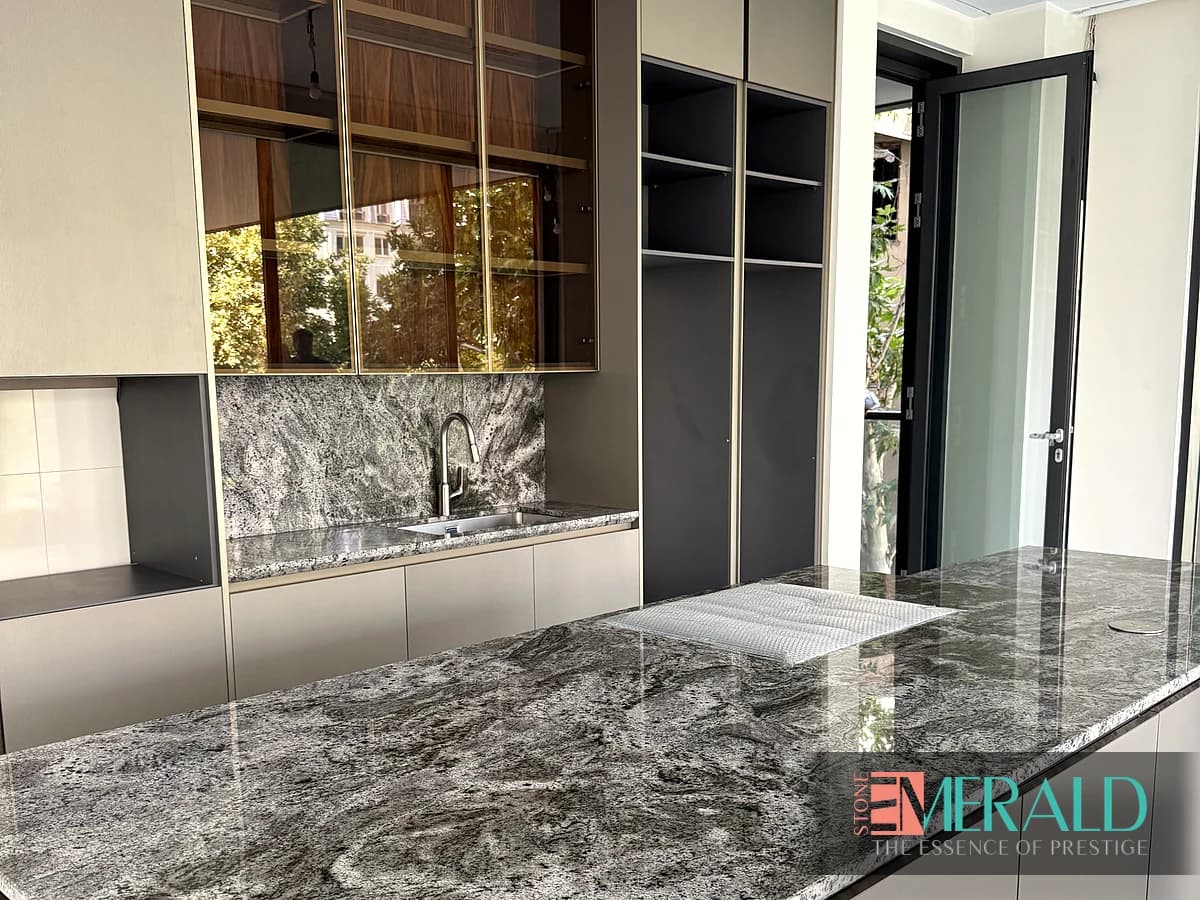
Emerald Stone island approach
Emerald Stone supplies Aligoudarz, Dehbid, and Natanz granite slabs with bookmatch sorting for kitchen islands. Our team reviews island dimensions and proposes optimal slab layout.
Early coordination between stone supply and fabricator improves waterfall quality and delivery time. Luxury villa projects are reference cases for our island work.
Contact Emerald Stone for free stone engineering consultation on kitchen island stone.
Before final order, review slab samples on site alongside cabinets and flooring; daylight angle shifts counter stone color and texture noticeably, preventing costly specification mistakes.
Coordinating stone supply with the fabricator before final order prevents slab waste, visible center seams, and installation delays.
Regular penetrating sealer and dedicated cutting boards noticeably extend stone countertop service life in busy kitchens.
- Documenting stone specs in the supply contract prevents delivery disputes on site
- On-site sampling in natural project daylight is recommended before final order
- Supplier and fabricator coordination determines final countertop quality
- Periodic maintenance after handover noticeably extends stone service life
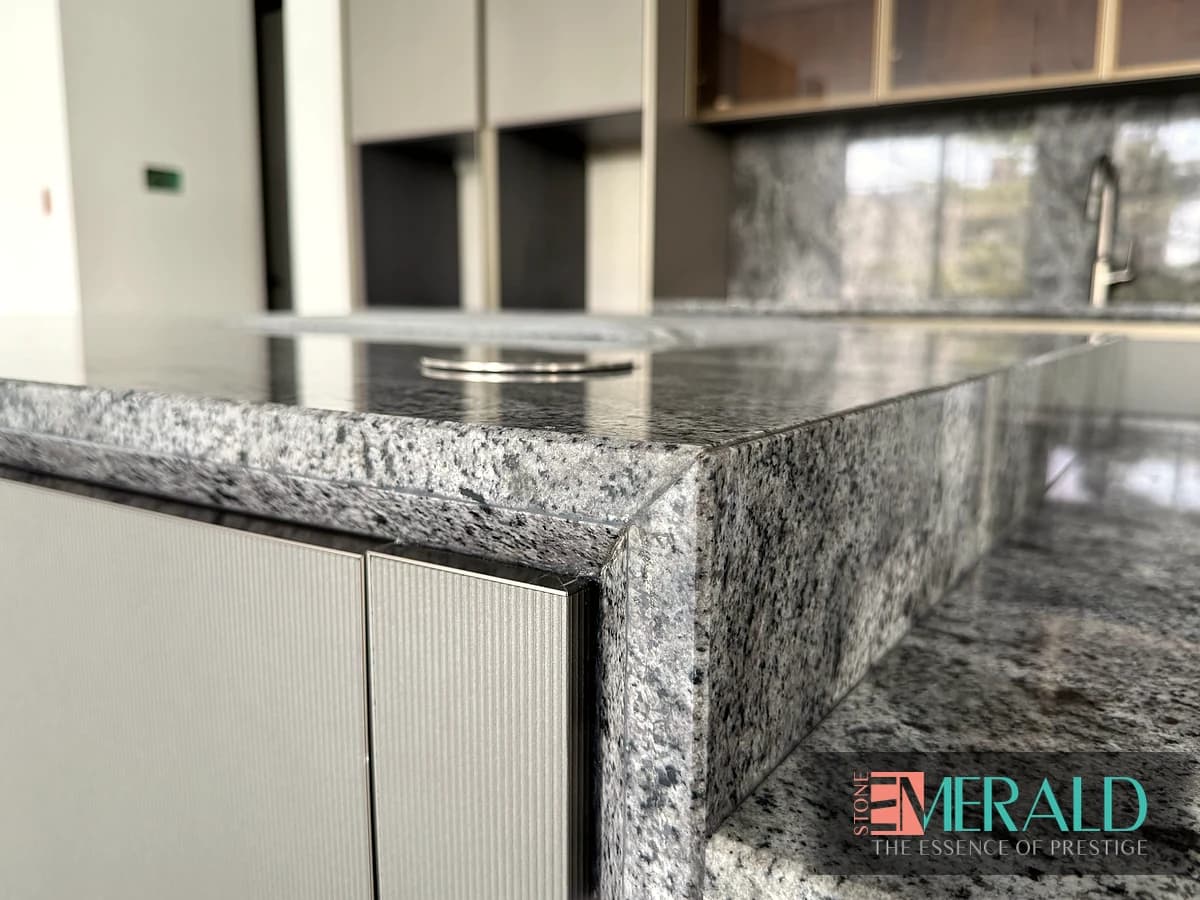
Additional engineering detail
Three-centimeter thickness without subtop is recommended for residential counters; economical projects may use two-centimeter slabs with metal subtop.
At Emerald Stone, counter stone selection follows cooking style, household size, and maintenance budget — not catalog color alone.
Documenting batch grade, thickness, and finish in the supply contract prevents delivery disputes and workshop stoppages.
For kitchen islands, jumbo slabs or bookmatched pairs from one batch keep seams out of the primary sight line.
- Documenting stone specs in the supply contract prevents delivery disputes on site
- On-site sampling in natural project daylight is recommended before final order
- Supplier and fabricator coordination determines final countertop quality
- Periodic maintenance after handover noticeably extends stone service life
Additional engineering detail
Counter edge profile affects corner safety and impact resistance and must align with fabricator capability.
Before final order, review slab samples on site alongside cabinets and flooring; daylight angle shifts counter stone color and texture noticeably, preventing costly specification mistakes.
Coordinating stone supply with the fabricator before final order prevents slab waste, visible center seams, and installation delays.
Regular penetrating sealer and dedicated cutting boards noticeably extend stone countertop service life in busy kitchens.
- Documenting stone specs in the supply contract prevents delivery disputes on site
- On-site sampling in natural project daylight is recommended before final order
- Supplier and fabricator coordination determines final countertop quality
- Periodic maintenance after handover noticeably extends stone service life
Additional engineering detail
Three-centimeter thickness without subtop is recommended for residential counters; economical projects may use two-centimeter slabs with metal subtop.
At Emerald Stone, counter stone selection follows cooking style, household size, and maintenance budget — not catalog color alone.
Documenting batch grade, thickness, and finish in the supply contract prevents delivery disputes and workshop stoppages.
For kitchen islands, jumbo slabs or bookmatched pairs from one batch keep seams out of the primary sight line.
- Documenting stone specs in the supply contract prevents delivery disputes on site
- On-site sampling in natural project daylight is recommended before final order
- Supplier and fabricator coordination determines final countertop quality
- Periodic maintenance after handover noticeably extends stone service life
Additional engineering detail
Counter edge profile affects corner safety and impact resistance and must align with fabricator capability.
Before final order, review slab samples on site alongside cabinets and flooring; daylight angle shifts counter stone color and texture noticeably, preventing costly specification mistakes.
| Style | Stone | Edge | Recommendation |
|---|---|---|---|
| Waterfall | Aligoudarz marble | 45° miter | Luxury |
| Uniform | Natanz granite | Eased | Heavy use |
| Bookmatch | Dehbid marble | Waterfall | Showcase |
Related products
Frequently asked questions
Best stone for kitchen islands?
Bookmatched Aligoudarz marble with waterfall edges suits display islands with low traffic. Honed Natanz granite offers more durability for islands with seating and higher daily use.
How much does a waterfall edge add?
Waterfall edges increase slab consumption by 20–40% and cost more than simple edges. In luxury projects the visual impact justifies the investment.
Is bookmatch recommended for islands?
Yes — bookmatched adjacent slabs from one batch create mirror veining and dramatic impact on marble islands. Strict sorting before cutting is essential.
When should island templating happen?
Templating occurs after final cabinet install and fixed sink and cooktop locations. Changing cabinet dimensions after stone cutting is costly and delays the project.
Free stone engineering consultation
Emerald Stone's engineering team helps you select the right stone for your project scope, budget, and execution details.
Request free consultation