
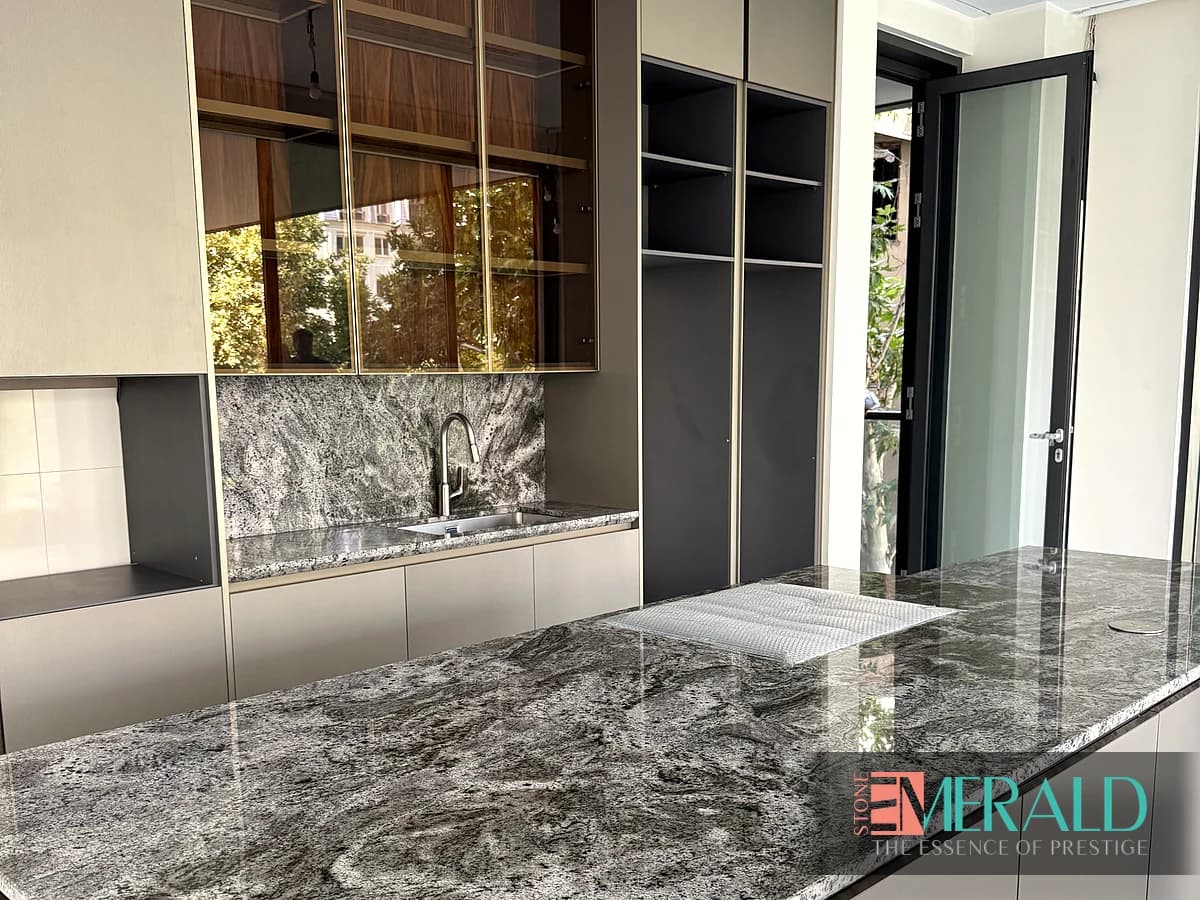
Iran's main granite quarries are Natanz in Isfahan, which yields uniform pearl grey, and Chayan in South Khorasan, with wider color variation. Granite water absorption runs 0.1 to 0.3 percent, well below travertine. Interior floor slabs are typically 2 to 3 cm and facade slabs 2 to 4 cm, with flamed finishes outdoors.
What is granite and why architects specify it
Granite is an intrusive igneous rock formed as magma rich in quartz, feldspar, and mica cooled slowly deep underground. High hardness, favorable density, and very low water absorption make it one of the most durable options for heavy-traffic and outdoor environments.
In Iranian luxury architecture, granite stone is widely used in commercial flooring, tower lobbies, building facades, and kitchen countertops thanks to long service life, abrasion resistance, and colors from pearl grey to deep black.
However, higher weight versus travertine and more demanding fabrication require engineering planning before purchase. At Emerald Stone, dead load, traffic level, and final finish are coordinated with the design team before supply begins.
Before final purchase, review real slabs on site under natural and artificial light so color and texture shifts are visible before installation. Recording quarry, grade, and finish in the supply contract reduces return risk and workshop delay.
Batch technical reports covering absorption, compressive strength, and surface quality help architects decide confidently. Emerald Stone attaches these reports on sensitive scopes.
On large projects, professional sorting and approved layout planning start at design phase. Emerald Stone provides batch technical reports and execution coordination alongside free stone engineering consultation.
Color consistency on luxury projects requires professional sorting and consecutive slabs from one batch. Catalog photos alone without physical viewing carry high mismatch risk.
Periodic sealing, proper jointing, and neutral cleaning extend visual service life in wet and high-traffic zones. Document these routines in the handover manual from day one.
Stone price comparisons must use matching quality, thickness, and finish. Total ownership cost includes material, installation, sealing, and maintenance—not unit price alone.
Application drives stone choice more than aesthetics alone. Heavy-traffic floors, exterior facades, kitchen counters, and feature walls each need different quarry, grade, and finish specifications.
Iranian granites: Natanz, Chayan, and black variants
Iran holds quality granite reserves across several provinces, led by the Natanz quarry in Isfahan and Chayan in South Khorasan. Natanz granite with uniform grey-to-pearl tones is among the most specified floor and facade stones in domestic projects.
Chayan granite offers greater color variation — grey, cream, and dark veining — suited to landscaping, entry steps, and semi-exterior floors. Iranian black granite types are increasingly specified for kitchen counters, modern facades, and high-contrast luxury floors.
The main differences between quarry products are color consistency, crystal density, and slab fabrication quality. Engineered supply means precise sorting, thickness control, and color matching on large projects — covered in our Natanz and black granite clusters.
Slab thickness must align with substrate design, fixing system, and structural dead load. In busy areas, honed or flamed finishes usually deliver more stable appearance than polish and simplify maintenance.
Outdoors, flamed or bush-hammered textures improve slip resistance. One to two percent drainage slope and expansion joints are mandatory for correct landscaping stone execution.
Aligning architect, owner, and stone contractor before the final order prevents site stoppages. Phased delivery also reduces temporary workshop storage cost.
For feature walls and backlit panels, slab thickness and translucency must coordinate with lighting design from the start. Mockups before final execution are recommended on luxury scopes.
For accurate quotes, prepare area, thickness, finish, delivery point, and schedule. Warehouse slab viewing before financial commitment keeps delivered quality aligned with pro-forma pricing.
Before final purchase, review real slabs on site under natural and artificial light so color and texture shifts are visible before installation. Recording quarry, grade, and finish in the supply contract reduces return risk and workshop delay.
Batch technical reports covering absorption, compressive strength, and surface quality help architects decide confidently. Emerald Stone attaches these reports on sensitive scopes.
- Natanz granite: uniform pearl grey, lobby and modern facade
- Chayan granite: high color variation, floor and landscaping
- Black granite: strong visual contrast, counter and facade
- Outdoor granite: flamed finish for slip resistance
Technical specifications of granite stone
Granite water absorption typically runs 0.1–0.3%, placing it in the low-absorption category. High compressive strength and surface hardness make it ideal for busy corridors, commercial halls, and entry stairs.
Scratch, stain, and short-term heat resistance are key kitchen and service-area advantages. However, joints and polished surfaces in wet zones benefit from periodic sealing to preserve visual quality.
Standard slab thickness is 2–3 cm for interior floors and 2–4 cm for facades. On heavy-duty projects, dead-load calculation and appropriate fixing systems are mandatory before purchase.
On large projects, professional sorting and approved layout planning start at design phase. Emerald Stone provides batch technical reports and execution coordination alongside free stone engineering consultation.
Color consistency on luxury projects requires professional sorting and consecutive slabs from one batch. Catalog photos alone without physical viewing carry high mismatch risk.
Periodic sealing, proper jointing, and neutral cleaning extend visual service life in wet and high-traffic zones. Document these routines in the handover manual from day one.
Stone price comparisons must use matching quality, thickness, and finish. Total ownership cost includes material, installation, sealing, and maintenance—not unit price alone.
Application drives stone choice more than aesthetics alone. Heavy-traffic floors, exterior facades, kitchen counters, and feature walls each need different quarry, grade, and finish specifications.
Slab thickness must align with substrate design, fixing system, and structural dead load. In busy areas, honed or flamed finishes usually deliver more stable appearance than polish and simplify maintenance.
Outdoors, flamed or bush-hammered textures improve slip resistance. One to two percent drainage slope and expansion joints are mandatory for correct landscaping stone execution.
Common granite stone applications
Lobby and commercial flooring, building facades, interior and exterior stairs, kitchen countertops, and landscaping are primary granite applications. In luxury residential towers, light lobby granite paired with dark counter stone creates a balanced modern palette.
For outdoor use, flamed or bush-hammered granite is Iran's best natural choice — the textured surface improves slip resistance and freeze-thaw performance. Our outdoor granite cluster covers finish selection and drainage slopes.
On facades, granite's weight and anchoring requirements must align with shop drawings and wind-load calculations. Emerald Stone coordinates thickness, fixing method, and joint design with architects and contractors.
Aligning architect, owner, and stone contractor before the final order prevents site stoppages. Phased delivery also reduces temporary workshop storage cost.
For feature walls and backlit panels, slab thickness and translucency must coordinate with lighting design from the start. Mockups before final execution are recommended on luxury scopes.
For accurate quotes, prepare area, thickness, finish, delivery point, and schedule. Warehouse slab viewing before financial commitment keeps delivered quality aligned with pro-forma pricing.
Before final purchase, review real slabs on site under natural and artificial light so color and texture shifts are visible before installation. Recording quarry, grade, and finish in the supply contract reduces return risk and workshop delay.
Batch technical reports covering absorption, compressive strength, and surface quality help architects decide confidently. Emerald Stone attaches these reports on sensitive scopes.
On large projects, professional sorting and approved layout planning start at design phase. Emerald Stone provides batch technical reports and execution coordination alongside free stone engineering consultation.
Color consistency on luxury projects requires professional sorting and consecutive slabs from one batch. Catalog photos alone without physical viewing carry high mismatch risk.
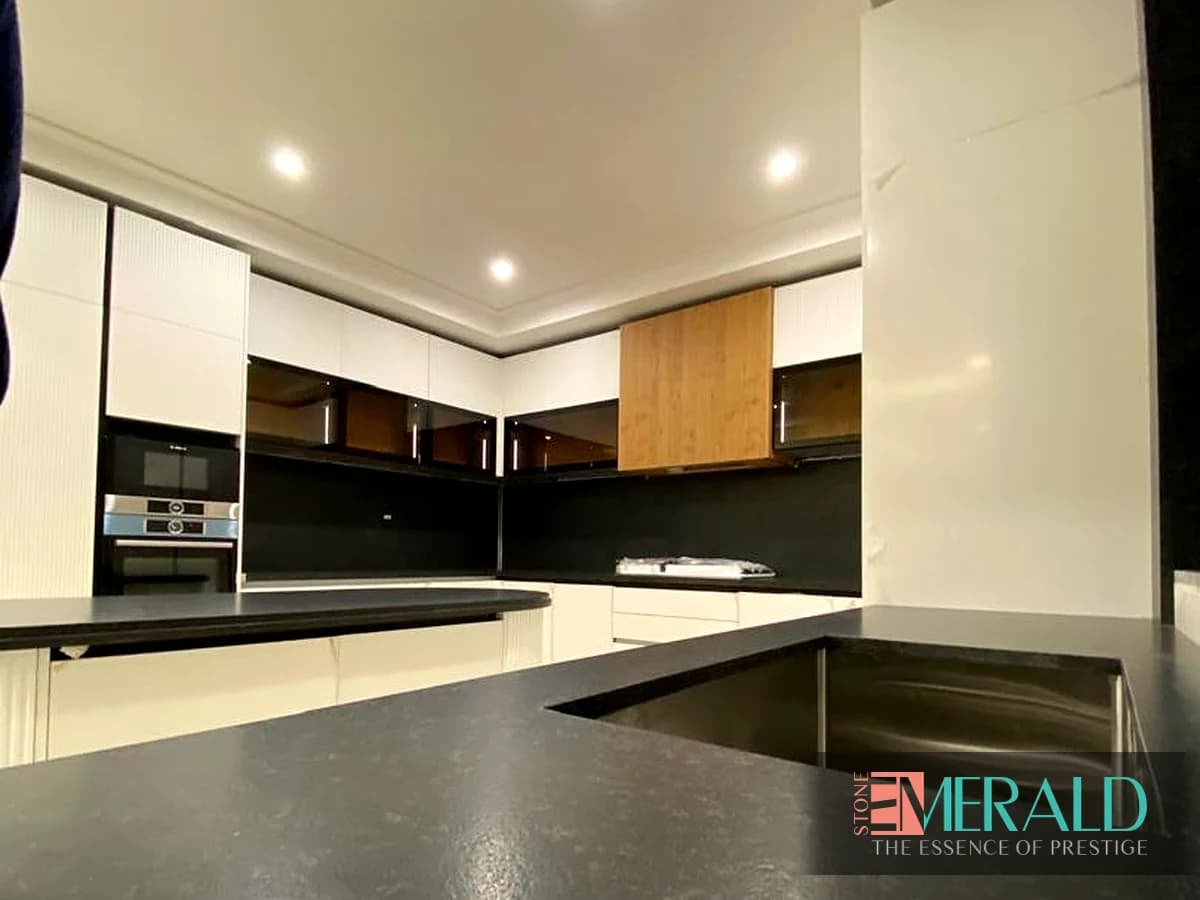
Granite vs travertine, marble, and engineered stone
Granite is harder and less absorbent than travertine and marble, performing better under heavy traffic and outdoors. Travertine is lighter and more economical for classic facades but less abrasion- and stain-resistant.
Marble offers greater visual refinement but is more vulnerable outdoors and in acidic environments. Versus engineered quartz and solid surface, granite delivers unique natural patterning and better heat resistance but needs periodic sealing and tighter sorting.
Application drives final choice: economical classic facades favor travertine; luxury lobbies use light marble or granite; heavy-traffic floors and landscaping demand granite; uniform countertop aesthetics may favor engineered stone. See our granite vs engineered cluster for detail.
Periodic sealing, proper jointing, and neutral cleaning extend visual service life in wet and high-traffic zones. Document these routines in the handover manual from day one.
Stone price comparisons must use matching quality, thickness, and finish. Total ownership cost includes material, installation, sealing, and maintenance—not unit price alone.
Application drives stone choice more than aesthetics alone. Heavy-traffic floors, exterior facades, kitchen counters, and feature walls each need different quarry, grade, and finish specifications.
Slab thickness must align with substrate design, fixing system, and structural dead load. In busy areas, honed or flamed finishes usually deliver more stable appearance than polish and simplify maintenance.
Outdoors, flamed or bush-hammered textures improve slip resistance. One to two percent drainage slope and expansion joints are mandatory for correct landscaping stone execution.
Aligning architect, owner, and stone contractor before the final order prevents site stoppages. Phased delivery also reduces temporary workshop storage cost.
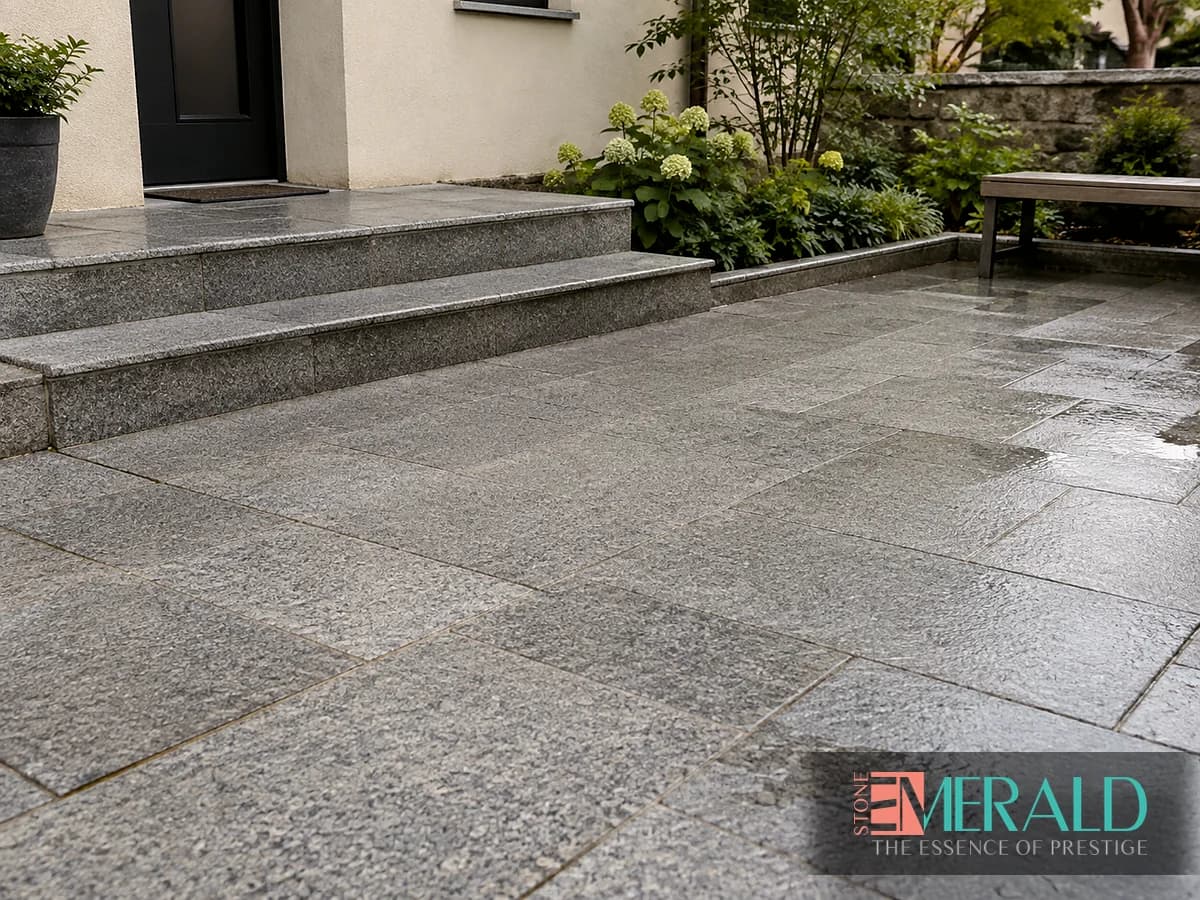
Granite finishes: polished, honed, flamed, and brushed
Polished finish creates mirror-like sheen — ideal for lobbies, counters, and interior feature walls. Honed or matte finishes show fewer scratches and fingerprints, recommended for busy floors.
Flamed finish applies direct heat to create a rough, slip-resistant texture — the standard for landscaping, exterior steps, and pool decks. Brushed finish sits between polished and honed, suited to corridors and semi-commercial spaces.
Finish choice must align with traffic, lighting, and design intent. Polished granite becomes slippery when wet outdoors — specify flamed or bush-hammered textures for open-air use.
For accurate quotes, prepare area, thickness, finish, delivery point, and schedule. Warehouse slab viewing before financial commitment keeps delivered quality aligned with pro-forma pricing.
Before final purchase, review real slabs on site under natural and artificial light so color and texture shifts are visible before installation. Recording quarry, grade, and finish in the supply contract reduces return risk and workshop delay.
Batch technical reports covering absorption, compressive strength, and surface quality help architects decide confidently. Emerald Stone attaches these reports on sensitive scopes.
On large projects, professional sorting and approved layout planning start at design phase. Emerald Stone provides batch technical reports and execution coordination alongside free stone engineering consultation.
Color consistency on luxury projects requires professional sorting and consecutive slabs from one batch. Catalog photos alone without physical viewing carry high mismatch risk.
Periodic sealing, proper jointing, and neutral cleaning extend visual service life in wet and high-traffic zones. Document these routines in the handover manual from day one.
Engineering criteria for granite selection
Before buying granite stone, evaluate four parameters: traffic level, interior vs exterior exposure, required finish, and project budget. Shopping-center floors demand first grade with low absorption and honed or brushed surfaces.
Color consistency is critical on large projects — view real slabs on site under natural and artificial light. Fine surface fissures are common in natural granite; structural cracks must be rejected during sorting.
Execution coordination on joints, slopes, and adhesive or mortar type starts at design phase. Emerald Stone offers warehouse slab viewing, sampling, and technical consultation for architects and developers.
Application drives stone choice more than aesthetics alone. Heavy-traffic floors, exterior facades, kitchen counters, and feature walls each need different quarry, grade, and finish specifications.
Slab thickness must align with substrate design, fixing system, and structural dead load. In busy areas, honed or flamed finishes usually deliver more stable appearance than polish and simplify maintenance.
Outdoors, flamed or bush-hammered textures improve slip resistance. One to two percent drainage slope and expansion joints are mandatory for correct landscaping stone execution.
Aligning architect, owner, and stone contractor before the final order prevents site stoppages. Phased delivery also reduces temporary workshop storage cost.
For feature walls and backlit panels, slab thickness and translucency must coordinate with lighting design from the start. Mockups before final execution are recommended on luxury scopes.
For accurate quotes, prepare area, thickness, finish, delivery point, and schedule. Warehouse slab viewing before financial commitment keeps delivered quality aligned with pro-forma pricing.
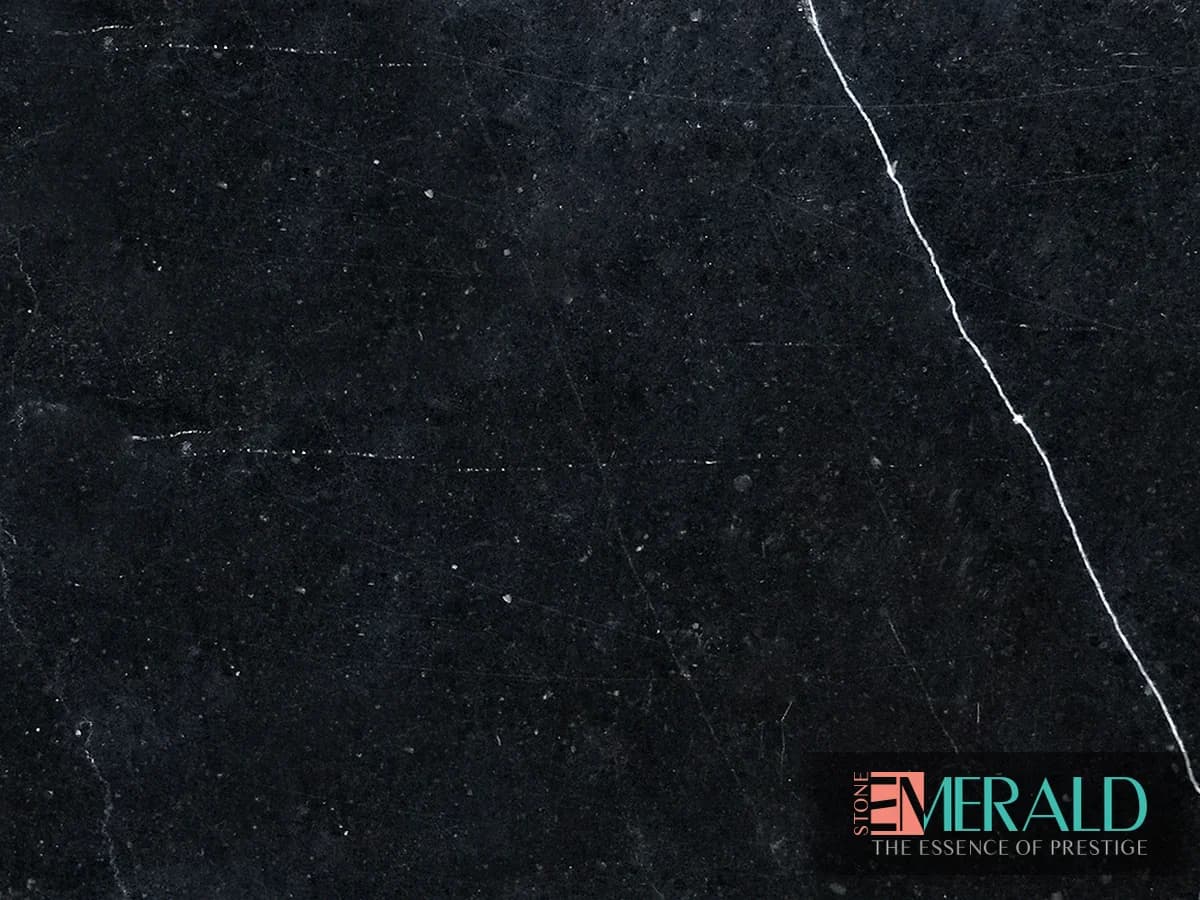
Granite supply at Emerald Stone
Our stone engineering process for granite covers application analysis, quarry and grade recommendation, sorting control, logistics, and execution coordination — reducing financial and technical project risk.
Natanz and Chayan granite are core supply lines with varied thickness and finish options for facade, floor, and landscaping projects. Contact us for pricing, stone type selection, or comparison with engineered alternatives.
Specialist granite guides below cover each topic in depth. For expert consultation and real slab viewing, use the contact button at the bottom of this page.
| Parameter | Granite | Travertine | Marble |
|---|---|---|---|
| Water absorption | 0.1–0.3% | 1–3% | 0.1–0.5% |
| Abrasion resistance | Very high | Medium | Medium |
| Outdoor suitability | Excellent | Good | With caution |
| Heavy-traffic floor | Excellent | With resin | Yes |
| Relative weight | High | Medium | Medium |
Related products
Related projects
Frequently asked questions
Which Iranian granite is best for lobby and commercial floors?
Natanz granite with uniform pearl-grey tone is the most popular lobby and commercial floor choice. Chayan granite suits projects needing greater color variation. Final selection depends on traffic level, finish, and budget. Before final purchase, review real slabs on site under natural and artificial light so color and texture shifts are visible before installation. Recording quarry, grade, and finish in the supply contract reduces return risk and workshop delay.
Is granite stone suitable for building facades?
Yes — granite resists weathering and temperature swings well on facades. Stone weight and standard anchoring must be included in structural calculations. Slabs of 2–3 cm with proper joint sealing are typically recommended. Before final purchase, review real slabs on site under natural and artificial light so color and texture shifts are visible before installation. Recording quarry, grade, and finish in the supply contract reduces return risk and workshop delay.
What drives granite stone pricing?
Quarry origin, color uniformity, slab thickness, finish type, order volume, and logistics are primary pricing drivers. Black granite and large uniform slabs usually sit in a higher price tier. Before final purchase, review real slabs on site under natural and artificial light so color and texture shifts are visible before installation. Recording quarry, grade, and finish in the supply contract reduces return risk and workshop delay.
How does granite differ from engineered stone?
Granite is natural with unique patterning and superior heat resistance but needs periodic sealing. Engineered stone offers more uniform appearance and easier maintenance but performs less well under direct heat and heavy impact. Before final purchase, review real slabs on site under natural and artificial light so color and texture shifts are visible before installation. Recording quarry, grade, and finish in the supply contract reduces return risk and workshop delay.
Which granite finish works best outdoors?
Flamed or bush-hammered finishes are best for landscaping and exterior steps — the rough texture improves slip resistance. Polished granite becomes slippery in rain and is not recommended for open-air use. Before final purchase, review real slabs on site under natural and artificial light so color and texture shifts are visible before installation. Recording quarry, grade, and finish in the supply contract reduces return risk and workshop delay.
What does Emerald Stone provide for granite projects?
Technical and architectural consultation, quarry and grade selection, bulk Natanz and Chayan supply, sorting control, and execution coordination under our stone engineering model. Slab viewing and sampling are available. Before final purchase, review real slabs on site under natural and artificial light so color and texture shifts are visible before installation. Recording quarry, grade, and finish in the supply contract reduces return risk and workshop delay.
Free stone engineering consultation
Emerald Stone's engineering team helps you select the right stone for your project scope, budget, and execution details.
Request free consultation