
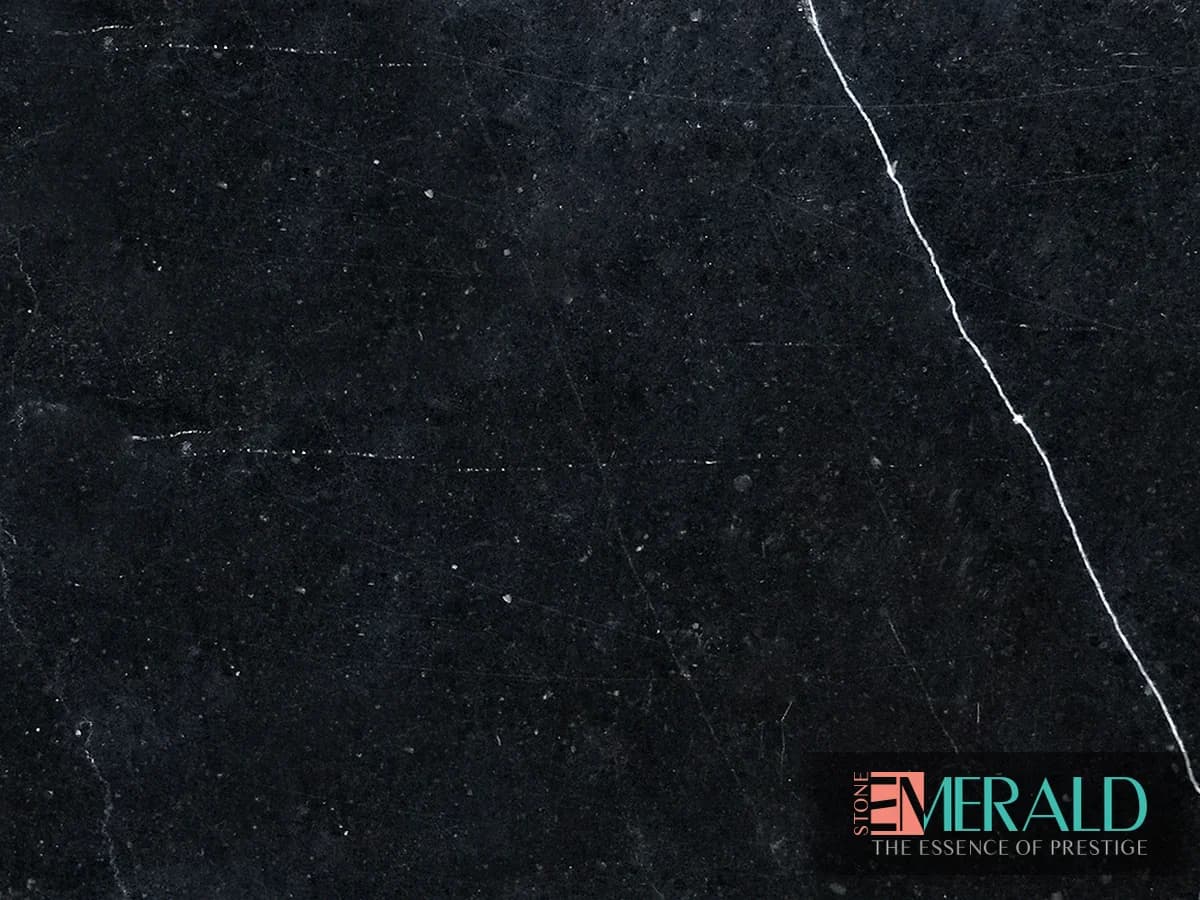
Natanz granite is quarried near Natanz in Isfahan province and reads as a uniform grey-to-pearl stone with water absorption below 0.2 percent. It is supplied in 2, 3, and 4 cm thicknesses for lobby floors, stairs, and facades. Honed or brushed finishes suit busy areas; flamed suits exterior steps.
Related guide: Complete granite stone guide
What is Natanz granite and why is it popular?
Natanz granite is quarried near Natanz city in Isfahan province, known for uniform grey-to-pearl coloring. High crystal density, low water absorption, and excellent fabricability make it a staple in luxury interior projects.
In Iran's stone market, Natanz name often signals consistent domestic granite quality. Architects specify it for tower lobbies, commercial floors, and modern facades for durability and professional appearance.
Product differences lie in color consistency, cut quality, and slab thickness. Purchasing without viewing real slabs risks color mismatch on large projects.
Before final purchase, review real slabs on site under natural and artificial light so color and texture shifts are visible before installation. Recording quarry, grade, and finish in the supply contract reduces return risk and workshop delay.
Periodic sealing, proper jointing, and neutral cleaning extend visual service life in wet and high-traffic zones. Document these routines in the handover manual from day one.
Outdoors, flamed or bush-hammered textures improve slip resistance. One to two percent drainage slope and expansion joints are mandatory for correct landscaping stone execution.
Before final purchase, review real slabs on site under natural and artificial light so color and texture shifts are visible before installation. Recording quarry, grade, and finish in the supply contract reduces return risk and workshop delay.
Periodic sealing, proper jointing, and neutral cleaning extend visual service life in wet and high-traffic zones. Document these routines in the handover manual from day one.
Outdoors, flamed or bush-hammered textures improve slip resistance. One to two percent drainage slope and expansion joints are mandatory for correct landscaping stone execution.
Technical specifications of Natanz granite
Natanz granite water absorption is typically below 0.2%, suitable for high-traffic and semi-wet areas. High compressive strength and surface hardness handle daily abrasion well.
Common thicknesses are 2, 3, and 4 cm for floors, stairs, and facades. Large uniform facade slabs require more careful logistics and installation planning.
Polished, honed, and brushed finishes are most common. For landscaping and exterior steps, flamed treatment on the same stone is recommended.
Slab thickness must align with substrate design, fixing system, and structural dead load. In busy areas, honed or flamed finishes usually deliver more stable appearance than polish and simplify maintenance.
For accurate quotes, prepare area, thickness, finish, delivery point, and schedule. Warehouse slab viewing before financial commitment keeps delivered quality aligned with pro-forma pricing.
Color consistency on luxury projects requires professional sorting and consecutive slabs from one batch. Catalog photos alone without physical viewing carry high mismatch risk.
Slab thickness must align with substrate design, fixing system, and structural dead load. In busy areas, honed or flamed finishes usually deliver more stable appearance than polish and simplify maintenance.
For accurate quotes, prepare area, thickness, finish, delivery point, and schedule. Warehouse slab viewing before financial commitment keeps delivered quality aligned with pro-forma pricing.
Natanz granite applications in projects
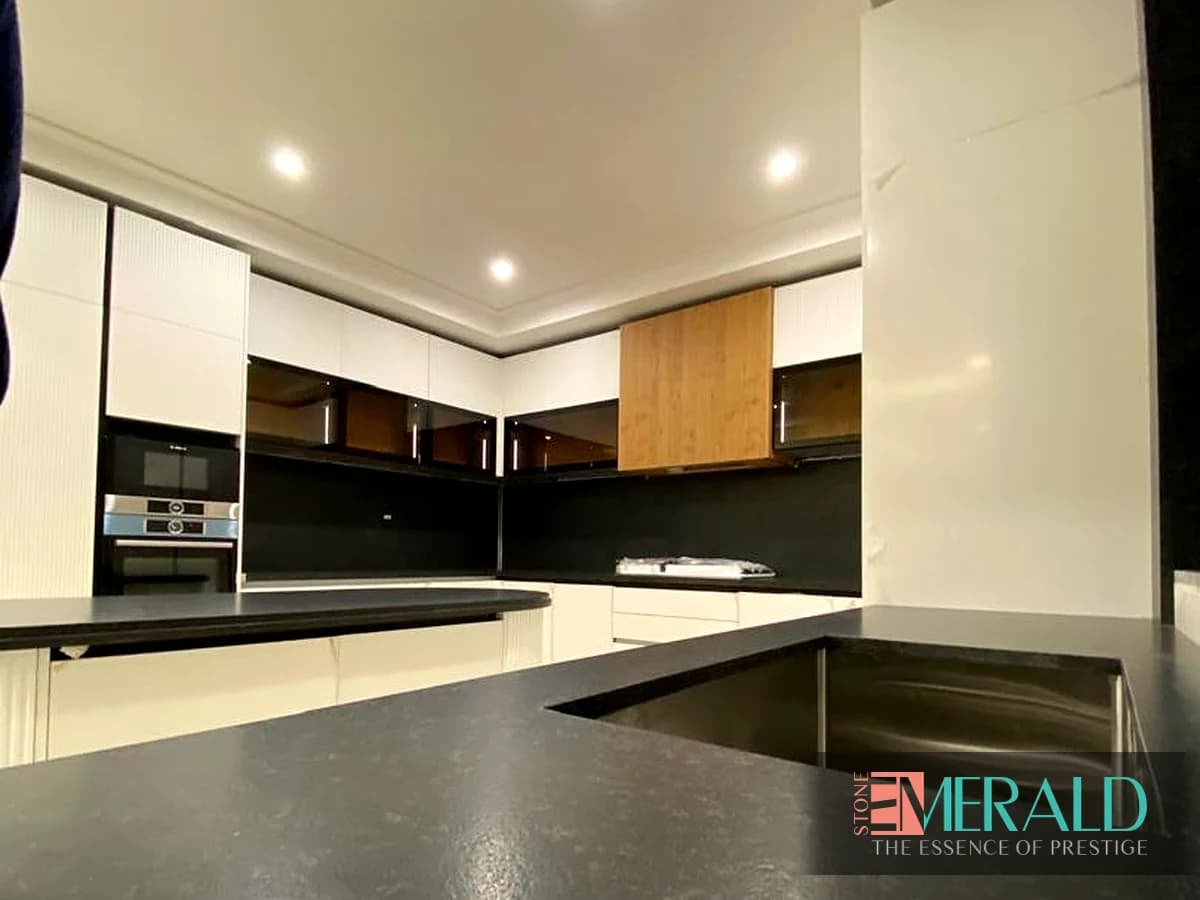
Lobby and corridor floors, modern building facades, interior stairs, kitchen counters, and feature walls are primary Natanz uses. In towers like Farvardin, light stone with linear lighting creates a premium effect.
For shopping-center floors, Natanz with honed or brushed finish and proper joints outlasts softer stones visually. On kitchen counters, short-term heat resistance is a key advantage.
On facades, slab thickness must match anchoring systems and wind-load calculations. Emerald Stone's engineering team reviews facade drawings and fixing details during supply.
On large projects, professional sorting and approved layout planning start at design phase. Emerald Stone provides batch technical reports and execution coordination alongside free stone engineering consultation.
Application drives stone choice more than aesthetics alone. Heavy-traffic floors, exterior facades, kitchen counters, and feature walls each need different quarry, grade, and finish specifications.
For feature walls and backlit panels, slab thickness and translucency must coordinate with lighting design from the start. Mockups before final execution are recommended on luxury scopes.
On large projects, professional sorting and approved layout planning start at design phase. Emerald Stone provides batch technical reports and execution coordination alongside free stone engineering consultation.
Application drives stone choice more than aesthetics alone. Heavy-traffic floors, exterior facades, kitchen counters, and feature walls each need different quarry, grade, and finish specifications.
Natanz granite vs Chayan granite
Natanz offers more uniform pearl-grey color — better when visual consistency is critical. Chayan granite shows greater color and vein variation, suited to landscaping and more naturalistic schemes.
Technically, both are hard igneous stones with similar abrasion performance. Price differences usually reflect color uniformity, thickness, and order volume rather than quarry name alone.
On mixed projects, Natanz often serves interiors and lobbies while Chayan covers landscaping and exterior steps — balancing aesthetics and budget.
Aligning architect, owner, and stone contractor before the final order prevents site stoppages. Phased delivery also reduces temporary workshop storage cost.
Batch technical reports covering absorption, compressive strength, and surface quality help architects decide confidently. Emerald Stone attaches these reports on sensitive scopes.
Stone price comparisons must use matching quality, thickness, and finish. Total ownership cost includes material, installation, sealing, and maintenance—not unit price alone.
Aligning architect, owner, and stone contractor before the final order prevents site stoppages. Phased delivery also reduces temporary workshop storage cost.
Batch technical reports covering absorption, compressive strength, and surface quality help architects decide confidently. Emerald Stone attaches these reports on sensitive scopes.
Natanz granite supply at Emerald Stone
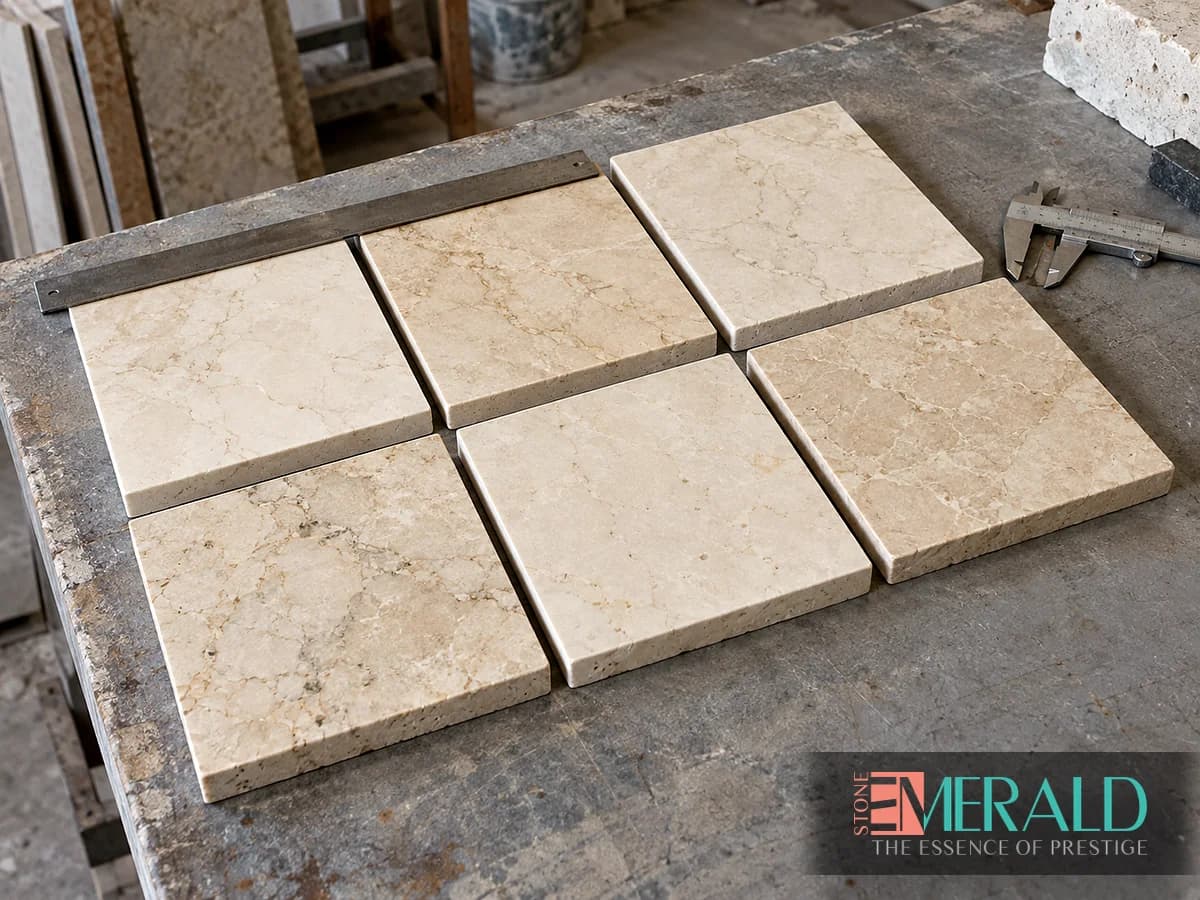
Emerald Stone supplies Natanz granite with controlled sorting, varied thicknesses, and warehouse slab viewing. Technical consultation covers finish, thickness, and logistics scaled to your project.
For current Natanz granite pricing, send required volume and technical specs. Our team provides price ranges and delivery timing based on stock and quarry orders.
| Feature | Value | Recommended use |
|---|---|---|
| Color | Grey–pearl | Lobby, facade, floor |
| Water absorption | Below 0.2% | High-traffic areas |
| Common thickness | 2–3 cm | Floor and facade |
| Finishes | Polished, honed, flamed | Interior and outdoor |
Related products
Related projects
Frequently asked questions
Is Natanz granite suitable for lobby floors?
Yes — Natanz granite is among the best lobby floor choices thanks to high hardness and low absorption. Honed or brushed finishes are recommended in busy areas to reduce visible scratching. Before final purchase, review real slabs on site under natural and artificial light so color and texture shifts are visible before installation. Recording quarry, grade, and finish in the supply contract reduces return risk and workshop delay.
What does Natanz granite cost?
Pricing depends on thickness, finish, color uniformity, and order volume. See our granite pricing cluster or request a direct quote from Emerald Stone for current ranges. Before final purchase, review real slabs on site under natural and artificial light so color and texture shifts are visible before installation. Recording quarry, grade, and finish in the supply contract reduces return risk and workshop delay.
How does Natanz differ from Chayan granite?
Natanz is more uniform and pearl-grey — better for consistent lobbies and facades. Chayan offers more color variation, suited to landscaping and naturalistic designs. Before final purchase, review real slabs on site under natural and artificial light so color and texture shifts are visible before installation. Recording quarry, grade, and finish in the supply contract reduces return risk and workshop delay.
Can Natanz granite be used on facades?
Yes — with 2–3 cm thickness and standard anchoring it performs very well on facades. Dead-load calculation and proper joint sealing during installation are essential. Before final purchase, review real slabs on site under natural and artificial light so color and texture shifts are visible before installation. Recording quarry, grade, and finish in the supply contract reduces return risk and workshop delay.
How do I verify Natanz granite quality when buying?
View real slabs on site under natural light. Color consistency, absence of structural cracks, and surface finish quality are primary first-grade sorting criteria. Before final purchase, review real slabs on site under natural and artificial light so color and texture shifts are visible before installation. Recording quarry, grade, and finish in the supply contract reduces return risk and workshop delay.
Free stone engineering consultation
Emerald Stone's engineering team helps you select the right stone for your project scope, budget, and execution details.
Request free consultation