
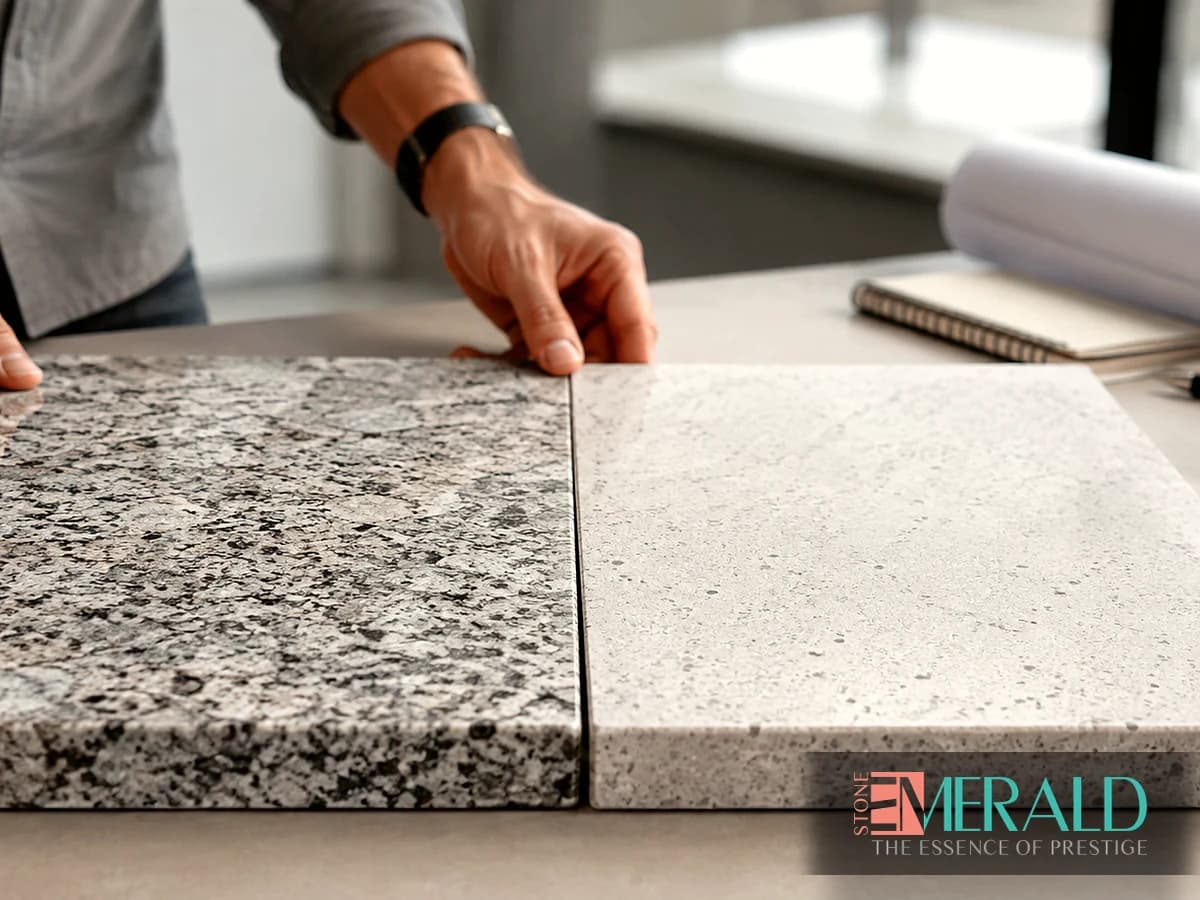
Natural granite and engineered quartz differ mainly in structure and upkeep. Granite is igneous stone with unique patterning, high surface hardness, and better direct-heat resistance, but it needs periodic sealing. Engineered stone binds crushed stone with resin for uniform, non-porous surfaces that clean easily yet tolerate heat and heavy impact less well. Floors and facades favor granite.
Related guide: Complete granite stone guide
Natural granite vs engineered stone
Granite is natural igneous stone with unique patterning and high physical durability. Engineered stone combines crushed stone fragments and resin under pressure for more uniform appearance.
In global markets, quartz and solid surface are common engineered options for kitchen counters. Choice between granite and engineered stone should follow application, budget, and maintenance priorities.
As a natural stone supplier, Emerald Stone recommends Natanz and Chayan granite when natural durability and unique visual identity are priorities.
Before final purchase, review real slabs on site under natural and artificial light so color and texture shifts are visible before installation. Recording quarry, grade, and finish in the supply contract reduces return risk and workshop delay.
Periodic sealing, proper jointing, and neutral cleaning extend visual service life in wet and high-traffic zones. Document these routines in the handover manual from day one.
Outdoors, flamed or bush-hammered textures improve slip resistance. One to two percent drainage slope and expansion joints are mandatory for correct landscaping stone execution.
Before final purchase, review real slabs on site under natural and artificial light so color and texture shifts are visible before installation. Recording quarry, grade, and finish in the supply contract reduces return risk and workshop delay.
Periodic sealing, proper jointing, and neutral cleaning extend visual service life in wet and high-traffic zones. Document these routines in the handover manual from day one.
Outdoors, flamed or bush-hammered textures improve slip resistance. One to two percent drainage slope and expansion joints are mandatory for correct landscaping stone execution.
Advantages of natural granite
High heat resistance, surface hardness, and multi-decade service life are granite's core advantages. Each slab carries a unique natural pattern adding value in luxury projects.
Granite outperforms many engineered products against daily scratches and impacts. For heavily used professional kitchens, this matters significantly.
With periodic sealing, granite retains its appearance for years. Maintenance cost exceeds engineered stone, but longer service life balances total ownership cost.
Slab thickness must align with substrate design, fixing system, and structural dead load. In busy areas, honed or flamed finishes usually deliver more stable appearance than polish and simplify maintenance.
For accurate quotes, prepare area, thickness, finish, delivery point, and schedule. Warehouse slab viewing before financial commitment keeps delivered quality aligned with pro-forma pricing.
Color consistency on luxury projects requires professional sorting and consecutive slabs from one batch. Catalog photos alone without physical viewing carry high mismatch risk.
Slab thickness must align with substrate design, fixing system, and structural dead load. In busy areas, honed or flamed finishes usually deliver more stable appearance than polish and simplify maintenance.
For accurate quotes, prepare area, thickness, finish, delivery point, and schedule. Warehouse slab viewing before financial commitment keeps delivered quality aligned with pro-forma pricing.
Color consistency on luxury projects requires professional sorting and consecutive slabs from one batch. Catalog photos alone without physical viewing carry high mismatch risk.
Advantages of engineered stone
Engineered stone offers predictable, uniform appearance and typically needs less regular sealing. Wide color range and imitation of rare stones are design advantages.
Daily maintenance is simpler — typical kitchen stains clean with mild detergent. For minimum-maintenance priorities, engineered stone is attractive.
However, direct heat resistance and heavy impact performance in some brands lag behind granite. Hot cookware without trivets is not recommended.
On large projects, professional sorting and approved layout planning start at design phase. Emerald Stone provides batch technical reports and execution coordination alongside free stone engineering consultation.
Application drives stone choice more than aesthetics alone. Heavy-traffic floors, exterior facades, kitchen counters, and feature walls each need different quarry, grade, and finish specifications.
For feature walls and backlit panels, slab thickness and translucency must coordinate with lighting design from the start. Mockups before final execution are recommended on luxury scopes.
On large projects, professional sorting and approved layout planning start at design phase. Emerald Stone provides batch technical reports and execution coordination alongside free stone engineering consultation.
Application drives stone choice more than aesthetics alone. Heavy-traffic floors, exterior facades, kitchen counters, and feature walls each need different quarry, grade, and finish specifications.
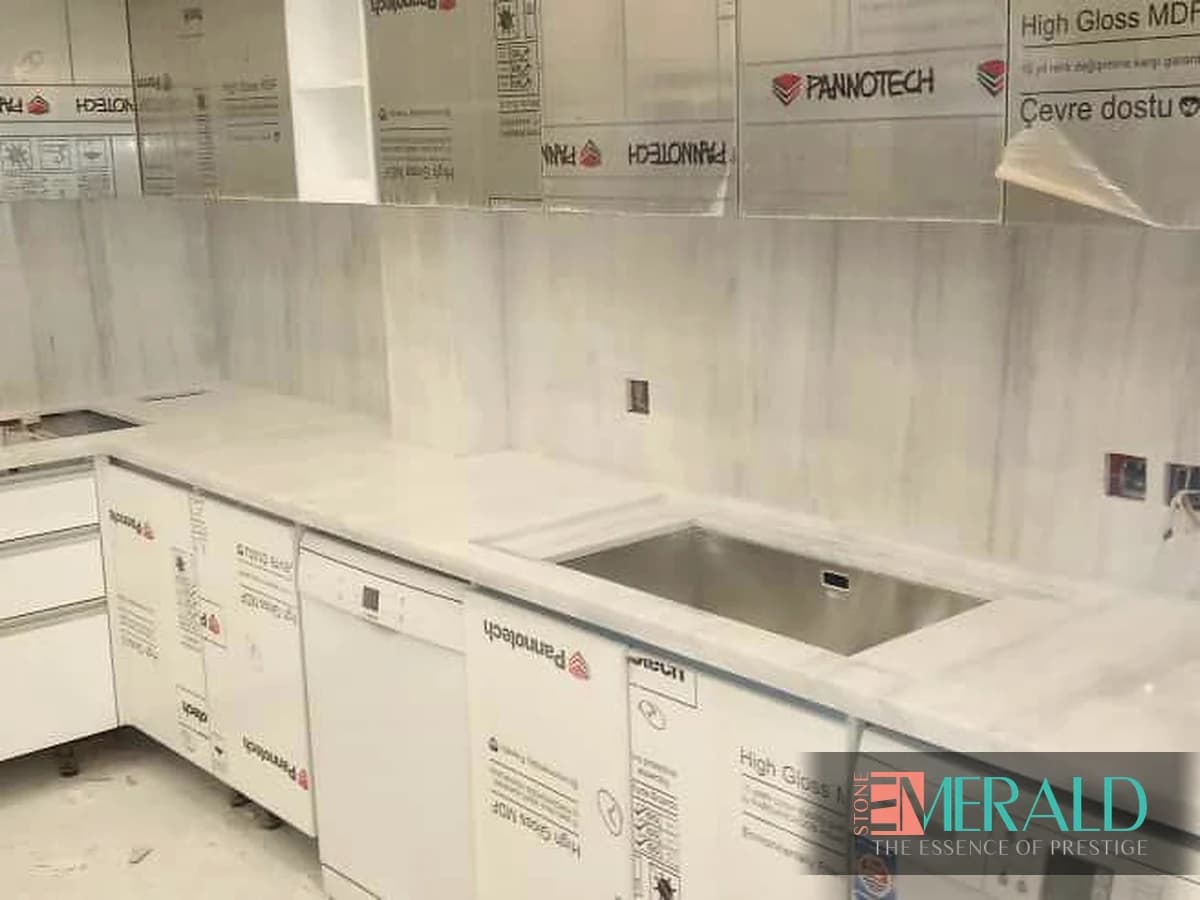
Which option suits your project?
For professional cooking kitchens prioritizing durability, natural granite is the safer choice. For uniform appearance and easy maintenance, engineered stone is logical.
On floors and facades, natural granite performs better — engineered stone is rarely specified for these uses. Our countertop pillar covers kitchen applications in depth.
Emerald Stone consultation reviews budget, application, and coordination with other project materials for the best engineering decision.
Aligning architect, owner, and stone contractor before the final order prevents site stoppages. Phased delivery also reduces temporary workshop storage cost.
Batch technical reports covering absorption, compressive strength, and surface quality help architects decide confidently. Emerald Stone attaches these reports on sensitive scopes.
Stone price comparisons must use matching quality, thickness, and finish. Total ownership cost includes material, installation, sealing, and maintenance—not unit price alone.
Aligning architect, owner, and stone contractor before the final order prevents site stoppages. Phased delivery also reduces temporary workshop storage cost.
Batch technical reports covering absorption, compressive strength, and surface quality help architects decide confidently. Emerald Stone attaches these reports on sensitive scopes.
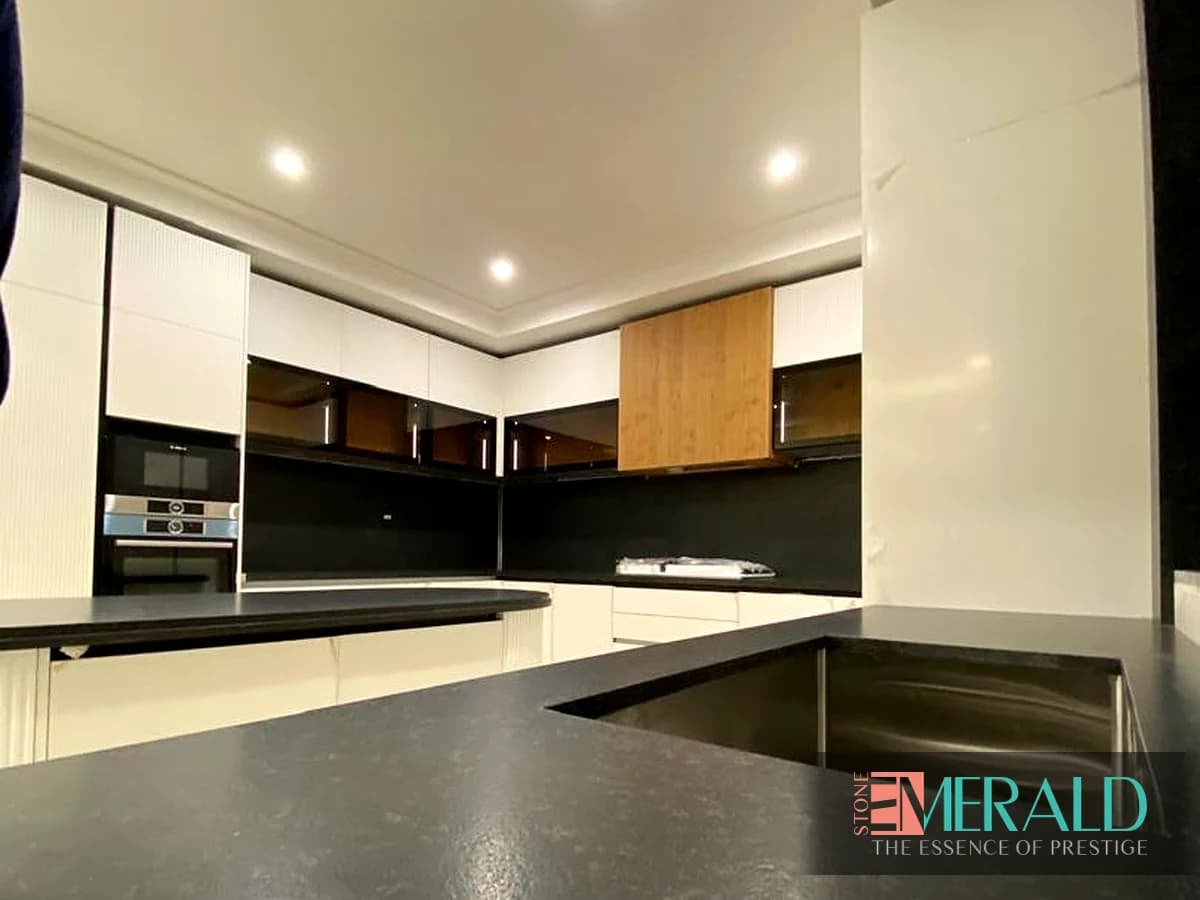
Emerald Stone perspective
We focus on natural stone, supplying Natanz and Chayan granite for counters, floors, and facades. If engineered stone better fits your brief, we say so honestly.
For practical comparison, visit granite slabs and review completed project references. Contact our stone engineering team for free consultation.
We also document thickness, finish, and lot number on every pro-forma invoice so specification disputes can be resolved quickly if delivery conditions change.
| Criterion | Natural granite | Engineered stone |
|---|---|---|
| Visual pattern | Unique, natural | Uniform, repeatable |
| Heat resistance | High | Medium |
| Maintenance | Periodic sealing | Easier |
| Structural durability | Very high | Good |
| Facade and floor use | Excellent | Limited |
Related products
Frequently asked questions
Is granite more durable than engineered stone?
Structurally and thermally, natural granite performs better. Engineered stone wins on daily maintenance and visual uniformity. Application determines the right choice. Before final purchase, review real slabs on site under natural and artificial light so color and texture shifts are visible before installation. Recording quarry, grade, and finish in the supply contract reduces return risk and workshop delay.
Which option stains less?
Engineered stone is typically non-porous from resin binding and stains less. Properly sealed granite performs similarly against everyday spills. Before final purchase, review real slabs on site under natural and artificial light so color and texture shifts are visible before installation. Recording quarry, grade, and finish in the supply contract reduces return risk and workshop delay.
Does Emerald Stone sell engineered stone?
No — we focus on natural stone and stone engineering. We supply granite, travertine, marble, and onyx, and honestly guide you when another material fits better. Before final purchase, review real slabs on site under natural and artificial light so color and texture shifts are visible before installation. Recording quarry, grade, and finish in the supply contract reduces return risk and workshop delay.
Which is better for kitchen countertops?
Heavy cooking kitchens: granite. Uniform look and easy care: engineered stone. See our granite vs quartz countertop cluster for more detail. Before final purchase, review real slabs on site under natural and artificial light so color and texture shifts are visible before installation. Recording quarry, grade, and finish in the supply contract reduces return risk and workshop delay.
How does granite pricing compare to engineered stone?
At comparable tiers, prices can be similar. Total cost should include sealing, repair, and service life — not just initial per-square-meter price. Before final purchase, review real slabs on site under natural and artificial light so color and texture shifts are visible before installation. Recording quarry, grade, and finish in the supply contract reduces return risk and workshop delay.
Free stone engineering consultation
Emerald Stone's engineering team helps you select the right stone for your project scope, budget, and execution details.
Request free consultation