
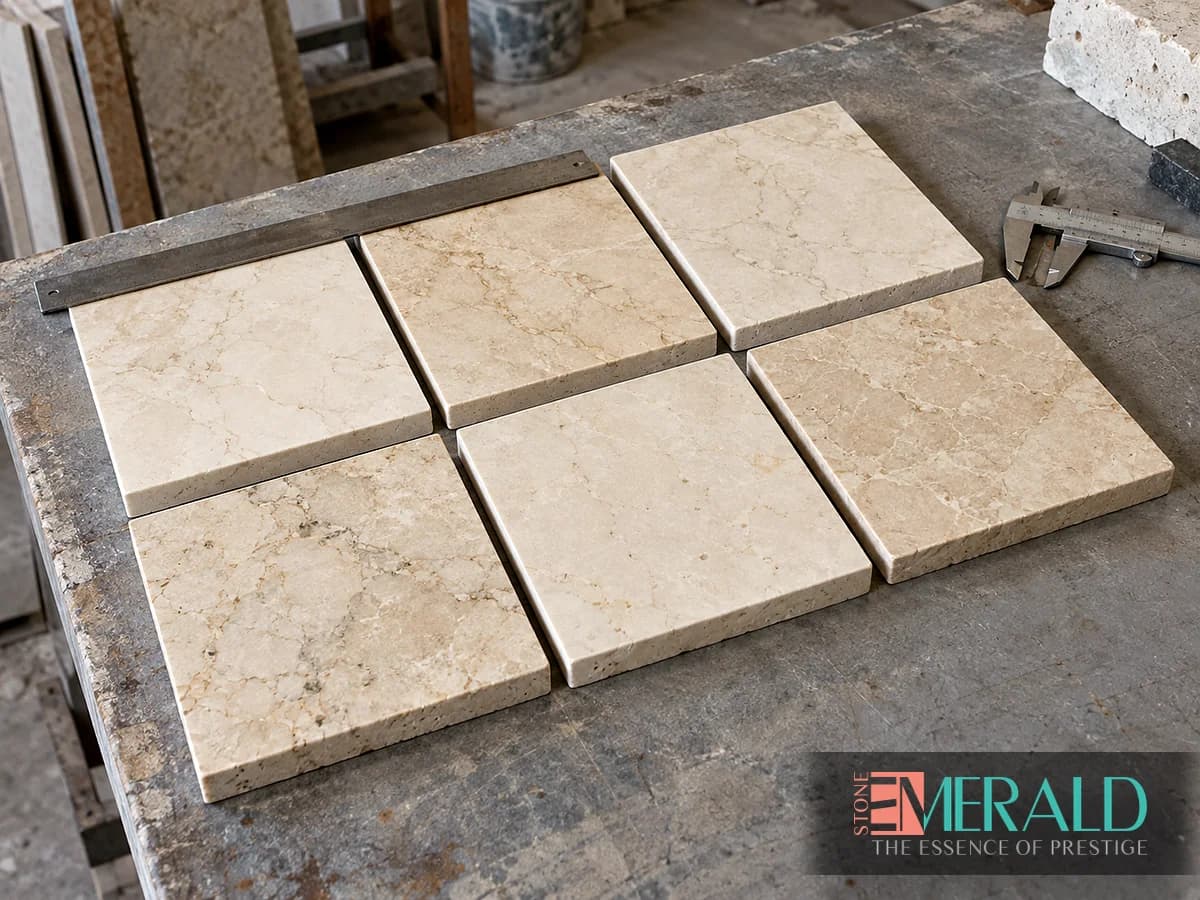
Iranian stone is sold in five sort tiers: Super, Momtaz, first grade, second grade and Pichi. Moving up the ladder means less tonal drift, fewer unwanted veins and a larger continuous defect-free area. No written standard defines these tiers, so they shift between quarries and sellers and must be tied to an approved sample.
Related guide: Stone engineering and consultation
What first and second grade mean
Stone grading usually reflects color uniformity, surface defects, visible cracks, and match to the approved sample. First grade carries minimum color drift and minimum defects — suited to main facades, luxury lobbies, and signature zones. Second grade accepts more vein variation and often serves secondary areas.
Grade definition must be written in the contract, not left to verbal negotiation. Two suppliers may mean different things by first grade. At Emerald Stone, project orders include an inspection sheet with measurable criteria. This clarity helps owners evaluate deliveries objectively instead of debating subjective interpretations on site.
Grading does not judge inherent beauty; it sets defect tolerance for a defined use. Second grade in the right location can be economical and sound, but it is not a substitute for first grade on a primary facade. When this distinction is documented early, procurement and installation teams can plan quality expectations without costly late corrections.
Super, Momtaz, S1, S2 and Pichi: the sort ladder explained
In the Iranian market, sorting is a commercial ladder rather than a national standard. Output of one variety from one quarry is normally split into five tiers: Super, Momtaz, first grade, second grade and Pichi. Each tier accepts a different level of tonal drift, unwanted vein density, hairline cracking and continuous defect-free area.
Super is the top selection from any quarry: the most consistent tone, the fewest intrusive veins and the largest unbroken sound surface. Momtaz sits one step below and tolerates very slight tonal variation or limited veining. First grade still suits a primary facade but carries more variation. Second grade goes to low-visibility zones, and Pichi — named for the twisting, turning vein pattern that characterises it — is set aside for small components and budget applications.
The part that rarely appears in a quotation: for a fixed variety, the sort tier is usually the single largest determinant of price, larger than the quarry name. Comparing two offers on the stone name alone is therefore meaningless. Until both quotations state the tier and reference a sample, the two numbers are not comparable.
Because none of these tiers has an agreed written definition, their meaning shifts between quarries and between sellers: one supplier's Momtaz can be another's first grade. Export documents add codes such as S1, S1-A, S1-B, Momtaz, Super and Pichi, none of which any body defines, and each exporter applies them their own way. The Turkish trade uses sınıf in the same loose fashion, so the ambiguity survives translation.
The practical defence is straightforward: tie the tier to a physical approved sample and to written acceptance criteria. State in the contract what tonal difference, what hairline crack length and what proportion of intrusive veining is acceptable. Once the criteria are numeric, the name of the tier stops mattering.
Sorting and batch uniformity
Sorting groups slabs and pieces by color, vein, and texture so one batch reads consistently on one building zone. Without sorting, even first-grade stone can look uneven on a single wall. Large facades and bookmatched layouts need pre-shipment sorting. Labeled bundles also help installers maintain intended sequencing during fast-paced site operations.
Luxury scopes sometimes sort by cut direction so vein flow continues across floors. That demands warehouse visits and careful planning. Suppliers must know which phase needs which color tone. Without that planning, visual continuity breaks and correction costs rise during installation.
Emerald Stone performs sort control in the warehouse before dispatch so installers receive labeled bundles with clear specifications. That shortens fixing time and reduces color conflict on site. It also improves sequencing accuracy when multiple teams install in parallel zones.
Export grade and quality control
Export grade typically enforces stricter thickness, flatness, dimensions, and packing standards. Export stone must survive freight and unloading while matching the approved sample at destination. This higher control level reduces rejection risk and protects project timelines in cross-border deliveries. It also gives clients stronger confidence in consistency across repeated batch shipments.
Grading quality control includes visual inspection, thickness measurement, sample absorption testing, and batch documentation. On international projects, batch numbers and slab photos stay in the contract file. These records support faster approvals and objective issue resolution if discrepancies appear at destination.
Even domestically, export-grade standards can benchmark demanding tower and hotel work. Grade transparency prevents disputes at customs or on the job. Applying these standards early helps teams maintain consistent outcomes on high-visibility architectural surfaces. It also improves confidence when different batches are delivered across long schedules.
How grade affects price and execution
Stone grading directly moves price: first grade with tight sorting often costs 15–40% more than second grade from the same quarry, depending on color rarity. Saving grade without a zone plan can exceed replacement and delay cost. Whole-life budgeting should therefore include rework and schedule risk, not purchase rate alone.
On site, mixed grades slow installation as fixers shuffle pieces for visual match. That labor tax is expensive on large projects. Define grade per zone in drawings from the start. Clear zoning allows procurement and installers to work faster with fewer acceptance conflicts.
Budget-limited projects often blend first grade on primary facades and second on secondary zones. Document that strategy with the architect and in technical specs to avoid delivery ambiguity. Clear documentation keeps procurement aligned with design priorities and reduces avoidable reclassification on site.
Inspection protocol for delivered grades
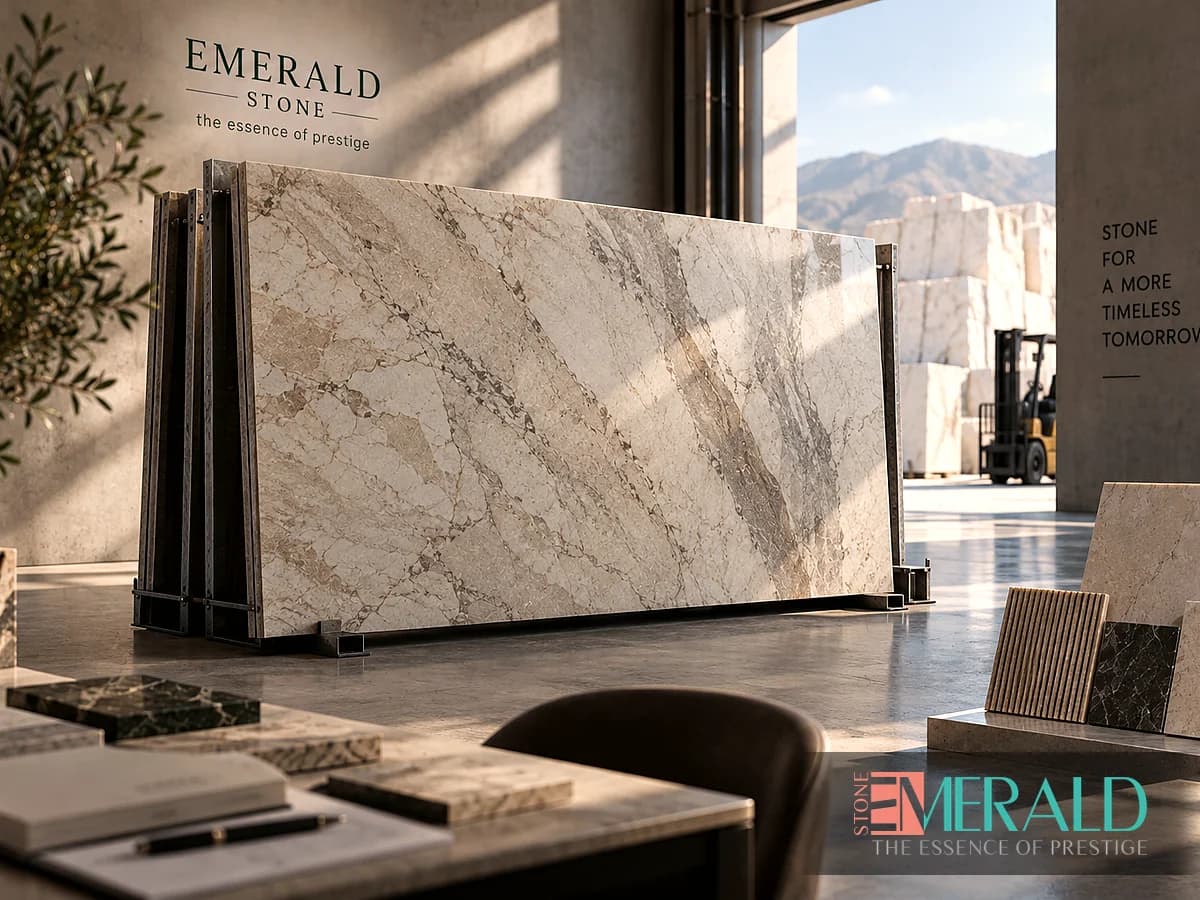
A grade inspection protocol should be defined before shipment so acceptance is evidence-based rather than subjective. The protocol should specify sample size, color tolerance approach, defect classification, thickness checks, and photo documentation rules. With a shared method, owners and suppliers can resolve acceptance decisions quickly and fairly, even on complex multi-batch projects.
For major developments, perform inspections at two checkpoints: warehouse pre-loading and site unloading. Pre-loading inspection catches grading drift before freight cost is committed, while unloading inspection verifies transport damage and labeling integrity. Signed records from both stages create a reliable quality trail that supports transparent communication among consultants, contractors, and suppliers.
When disagreements happen, protocol records become the neutral reference. Objective measurements and documented images reduce emotional disputes and shorten resolution time. Teams that maintain this inspection discipline usually protect schedule continuity better because corrective actions are triggered early, before installation fronts are fully dependent on incoming batches.
Grade strategy for bookmatch designs
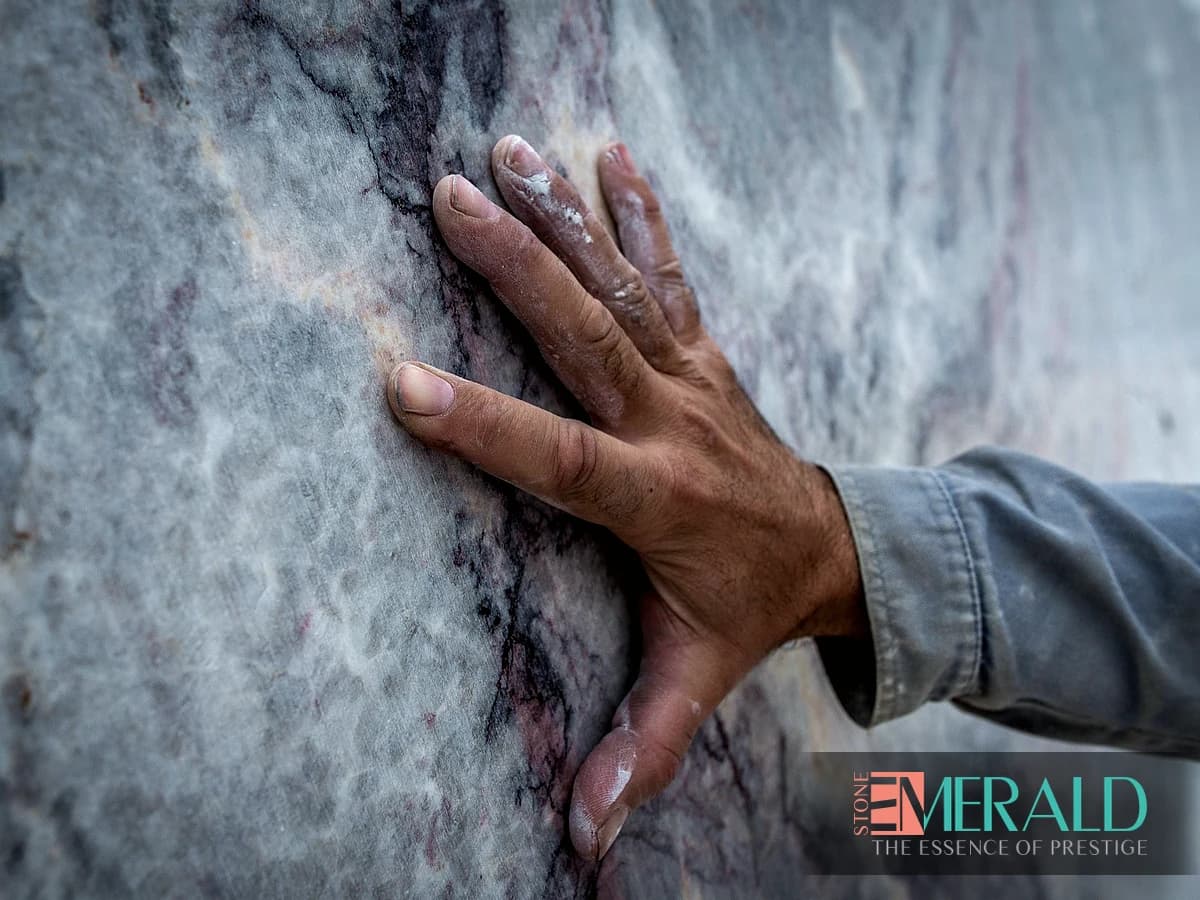
Bookmatch and continuous-vein walls demand tighter grading control than standard surfaces. Small color shifts or vein interruptions become obvious when mirrored patterns are intended as focal elements. For these applications, suppliers should reserve closely matched slabs from the same visual family and track orientation carefully through cutting and packing.
A warehouse layout review before final release is essential for bookmatch scopes. Architects and suppliers should verify sequence, panel joints, and symmetry under realistic lighting, then lock bundle codes for each wall zone. This planning prevents last-minute scrambling at site, where replacing one mismatched slab can delay multiple downstream trades.
Although higher grade selection can increase material cost, it usually protects design value and reduces rework. Budget planning should therefore separate signature walls from secondary zones so investment is concentrated where visual impact is highest. This targeted strategy balances aesthetics, quality, and cost with far greater precision.
Emerald Stone approach
At Emerald Stone, stone grading is part of stone engineering: contractual grade definition, batch inspection, labeled sorting, and alignment with the architect's approved sample. Dehbid cream, Aligoudarz marble, and Kashmar travertine are available in defined grades for catalog and project supply. This system keeps delivery quality predictable across long procurement programs.
To define the right grade for your scope or inspect a batch before contract, request a free stone engineering consultation. We also help teams build inspection checkpoints so approved grading is preserved from warehouse to installation. That continuity reduces mismatch risk between approved samples and delivered materials.
| Sort tier | Code seen on documents | Dominant acceptance criterion | Typical use |
|---|---|---|---|
| Super | Super | Most consistent tone the quarry produces, no intrusive veining, largest unbroken sound surface | Signature walls, lobbies, bookmatch |
| Momtaz | Momtaz | Very slight tonal variation, limited and controlled veining, no open cracks | Primary facades on luxury scopes |
| First grade | S1 / S1-A | Low and predictable tonal drift, no open cracks | Main facade, high-traffic flooring |
| Second grade | S1-B / S2 | Wider tone and vein variation, limited surface defects accepted | Low-visibility zones, light wells, back-of-house |
| Pichi | Pichi | Twisting vein direction, tone unpredictable piece to piece | Small components, budget applications |
Related products
Related projects
Frequently asked questions
What is the difference between Super, Momtaz and first grade?
They are the top three rungs of a single quarry's sort ladder. Super has the most consistent tone and the largest unbroken sound surface; Momtaz accepts very slight tonal variation and limited veining; first grade carries more variation but still suits a primary facade. No written standard defines any of them, so one supplier's Momtaz can be another's first grade. Always tie the tier to an approved sample.
What does Pichi mean and where is it used?
Pichi is the lowest sort tier, named for its twisting, turning vein pattern. Tone is unpredictable from piece to piece and the continuous sound surface is small. It is unsuitable for a primary facade or any surface where consistency matters, but it is a sensible low-cost choice for small components, back-of-house areas and budget applications.
What does the code S1 or Momtaz mean on an export quotation?
They are trade codes that Iranian exporters print on price lists, and no body defines them. S1 usually corresponds to first grade, Momtaz to the Momtaz tier and Super to the quarry's top selection — but two exporters can apply the same code to materially different criteria. Never accept the code alone: ask for an approved sample and written acceptance criteria.
What is first-grade stone?
First-grade stone shows minimum color variation, minimum surface defects, and closest match to the contract-approved sample. The definition must be written: which cracks are acceptable and how much vein drift is allowed. Without contractual language, first grade is only a sales label.
What does stone sorting mean?
Sorting groups slabs and pieces within a batch by color and texture for consistent installation. Large facades and pattern matching need pre-shipment sorting. Without it, even first grade can look uneven on one wall. Labeled sequencing also helps installers keep visual continuity during fast installation phases.
Can first and second grade mix in one project?
Yes — if drawings and contracts state which zones are first grade and which are second. Undisclosed mixing is a common dispute source. Smart grade blending can manage budget without harming the main facade. The key is documenting acceptance criteria for each zone before batch approval.
How does stone grading affect price?
First grade with tight sorting costs more because classification waste rises. Wrong grade savings on a primary facade can multiply replacement and delay expense. Price grading decisions alongside installation risk. A whole-life cost view usually supports selective premium grading on visible signature zones.
How does Emerald Stone guarantee grade?
Through written grade definitions, batch inspection, labeled sorting, and optional pre-loading visits. The architect's approved sample is the delivery benchmark. That process is proven on tower and public facade projects. We also document each batch release to keep quality traceable through final handover.
Free stone engineering consultation
Emerald Stone's engineering team helps you select the right stone for your project scope, budget, and execution details.
Request free consultation