
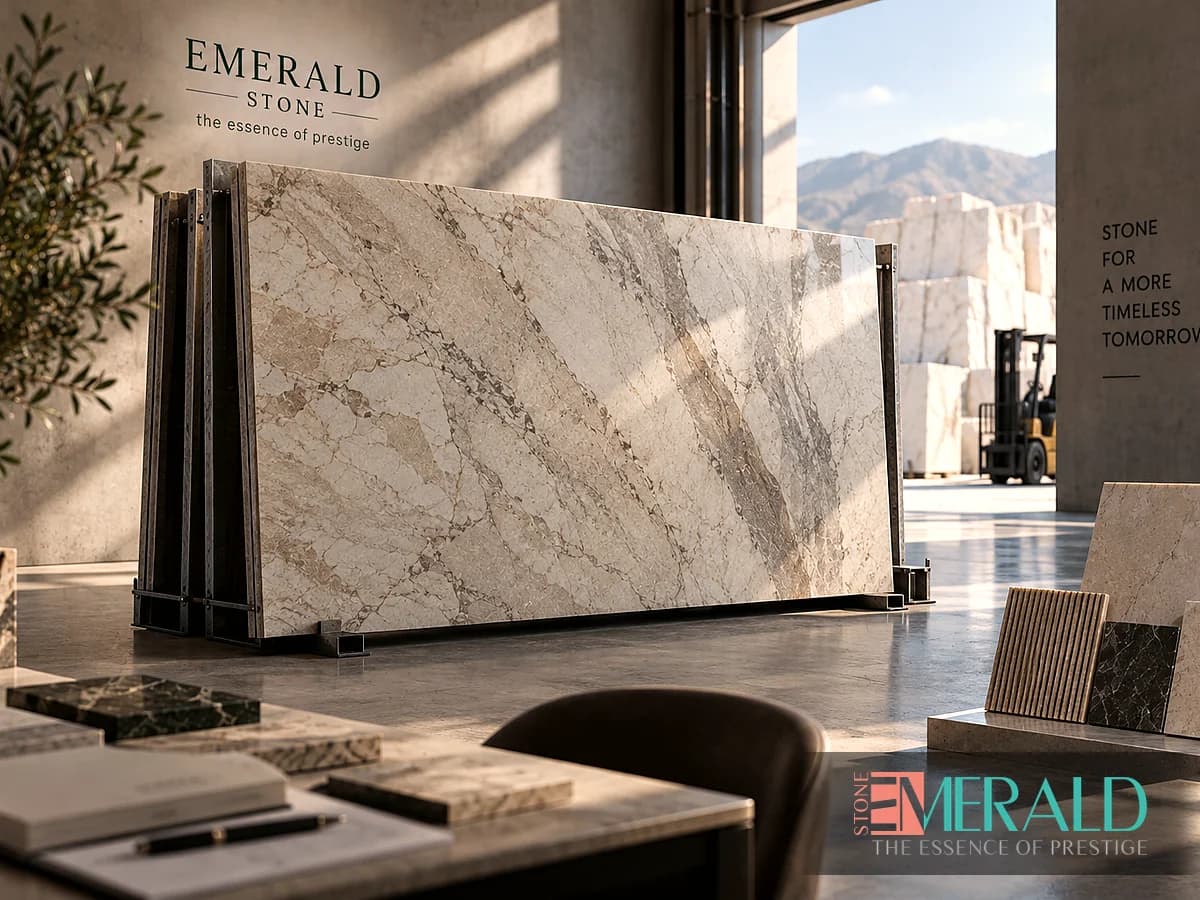
A stone slab is a single large panel cut from a raw quarry block, typically 2 or 3 centimeters thick and several meters wide. Stone tile is smaller and often 1 to 2 centimeters thick, so slabs display continuous veining with far fewer joints but cost more to freight and install.
Related guide: Stone engineering and consultation
Stone slab definition and production
A stone slab is a large, relatively thin piece cut from raw quarry blocks. Typical thickness is 2 or 3 cm with multi-meter dimensions. Unlike small units, slabs display continuous veining and fewer visible joints. This format is preferred when architects need broad uninterrupted surfaces with premium visual continuity.
Production covers block extraction, diamond-wire cutting, honing or polishing, and thickness quality control. Slab quality depends on flatness, thickness uniformity, and absence of structural cracks. Emerald Stone inspects slabs before loading. Consistent inspection protects installation accuracy and reduces corrective cutting at site.
In Iran, marble, travertine, and granite slabs dominate luxury lobbies, premium floors, and feature walls. Choosing slabs requires understanding application, site crane capacity, and installer capability. Early coordination on handling and logistics is essential to avoid damage and schedule disruption during delivery and installation.
Stone slab vs tile and stone paving
Stone tile is smaller — often 1–2 cm thick — with more joints in the finished surface. Slabs create fewer joints and a more seamless look but cost more to freight and install. Choosing between them should include both visual goals and practical handling constraints on site.
Stone paving often uses smaller or irregular pieces in special patterns — distinct from standard slabs. Slabs suit modern projects where joint reduction and continuous vein display matter. Paving formats remain useful where flexible layout and lower lifting demand are priorities.
Slab-versus-tile decisions should reflect budget, schedule, workshop tooling, and architectural intent. Combining slabs in primary zones with tile in secondary areas is a common economic strategy. This hybrid approach can preserve premium visual impact while controlling overall installation cost. It also gives contractors more flexibility to sequence works across zones with different complexity.
Thickness, size, and pattern matching
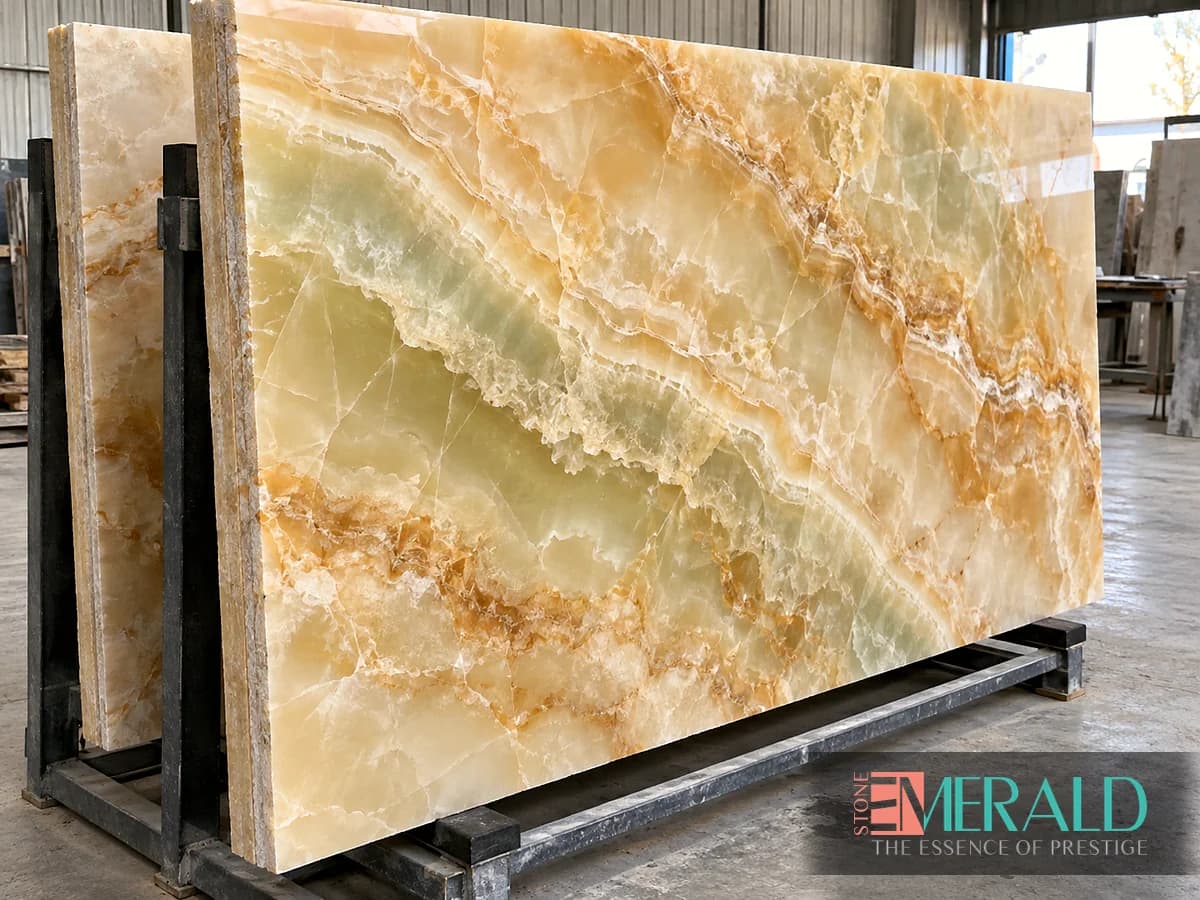
Common interior floor slab thickness is 2 cm; facades often run 2–3 cm. Thinner slabs raise breakage risk during handling. Contracts should state nominal thickness and acceptable tolerance. Pre-shipment measurements are essential to catch thickness drift before material reaches installation crews.
Pattern matching cuts adjacent slabs so veins form mirror or continuous images. That requires careful selection within one batch and warehouse planning. Bookmatched lobby walls create striking visual impact. Sequence control during packing ensures this intended pattern is preserved during site installation.
Maximum available size depends on quarry cutting equipment and freight limits. Confirm practical slab dimensions with suppliers before finalizing drawings to avoid construction stops. Early confirmation prevents redesign and protects schedule certainty during procurement and installation. It also helps workshops prepare cutting layouts with fewer last-minute adjustments.
Common slab applications in luxury projects
Hotel and residential tower lobbies use marble or granite slabs in polished or honed finishes for seamless luxury. Facades use travertine or granite slabs with controlled joint layouts for contemporary envelopes. Each application should balance visual impact with slip, maintenance, and durability requirements.
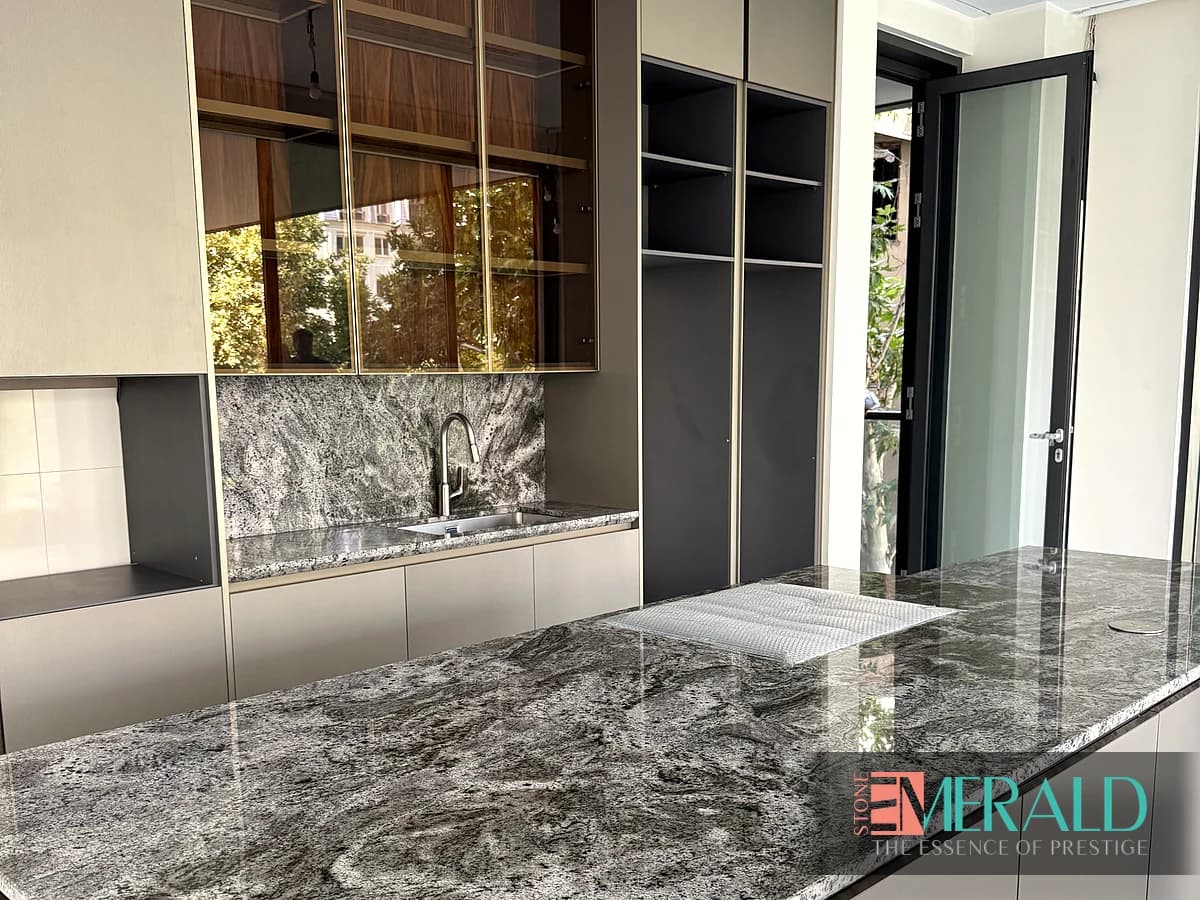
Feature walls, kitchen counters, and elevator cladding are other slab applications. Each use demands matching technical specs — absorption and hardness — to environment. Correct pairing of specification and location reduces maintenance effort and preserves long-term appearance. This approach is especially important where cleaning regimes differ across building zones.
Emerald Stone's residential lobby flooring and public-space facade illustrate real-scale slab execution. Visiting those projects or our slab warehouse supports confident decisions. Real references help teams evaluate finish behavior and visual continuity before final procurement. They also clarify how selected finishes perform under actual maintenance conditions.
Handling and installation safety for slabs
Because slabs are large and heavy, handling strategy must be defined before material leaves the warehouse. Protective frames, certified lifting tools, suction devices, and trained crews are essential to prevent edge damage and hidden cracks. A single mishandled panel can disrupt sequencing across multiple zones, so logistics planning is not optional on slab-driven projects.
Site preparation matters as much as transport. Teams should map unloading paths, verify crane or hoist capacity, and clear movement corridors before delivery arrives. Installers also need clear guidance on lifting points and temporary storage angles so stress is distributed correctly. These controls reduce breakage risk and protect worker safety during high-pressure installation windows.
Installation quality depends on substrate readiness and accurate cutting support. Uneven bases, rushed trimming, or incorrect adhesive use can compromise even premium slabs. A disciplined method statement that combines safety rules with technical tolerances helps teams deliver both visual continuity and long-term performance.
Cost factors beyond slab purchase price
Slab cost should be evaluated as a full system, not a material unit rate. Grade, thickness, finish, sorting intensity, transport distance, and lifting complexity all influence final expenditure. Projects that focus only on initial purchase price often face unexpected spending during installation, especially when large-format handling requirements were underestimated.
Large slabs can reduce joint count and improve visual quality, but they also require specialized equipment and experienced labor. In many cases this higher execution cost is justified by design value; in others, a hybrid strategy using slabs in focal zones and smaller formats elsewhere is more efficient. The right choice depends on project priorities and budget discipline.
A reliable estimate should include procurement, installation, maintenance, and potential replacement risk. Sometimes a higher-priced but more stable slab option delivers better lifecycle value than a cheaper batch with inconsistent quality. Technical consultation helps quantify these trade-offs before contracts are signed.
Emerald Stone approach
At Emerald Stone, stone slabs ship with grade control, sorting, and warehouse viewing options. Aligoudarz marble, Dehbid cream, Natanz granite, and Kashmar travertine are available as architectural slabs. Our workflow keeps sample approval, handling planning, and delivery sequencing connected through execution. This integrated process helps maintain quality consistency from selection to final fixing.
If your project needs bookmatched slabs or defined technical specifications, request a free stone engineering consultation. We guide teams through sample approval, handling planning, and phased delivery so slab quality remains consistent through installation. This support reduces uncertainty from design phase to final on-site fixing.
| Feature | Slab | Tile |
|---|---|---|
| Typical size | Large (multi-meter) | Smaller |
| Joint count | Low | Higher |
| Installation cost | Higher | Lower |
| Luxury suitability | Excellent | Good with more joints |
Related products
Related projects
Frequently asked questions
What is a stone slab?
A stone slab is a large, relatively thin piece cut from a quarry block, commonly 2 or 3 cm thick. Slabs produce fewer joints than tile and display continuous veining in luxury projects. Quality depends on surface flatness and thickness uniformity across the batch.
What is the difference between slabs and stone tile?
Slabs are larger with fewer joints and higher freight and installation cost. Tile is smaller, more jointed, and often more economical. The choice reflects architectural intent, budget, and workshop capability. Signature lobby zones usually favor slabs. Mixed strategies can also balance visual impact and cost across different project areas.
What is standard stone slab thickness?
Interior floors commonly use 2 cm; facades often 2–3 cm. Thinner material raises handling breakage risk. Contracts should state exact thickness and tolerance to prevent level problems during installation. Pre-shipment measurement checks are useful to catch tolerance drift before site work begins.
How does bookmatch pattern matching work?
Adjacent slabs from one batch are cut so veins form mirror or continuous images. That requires warehouse visits and tight sorting. For signature walls and luxury lobbies, bookmatch planning starts at supply stage — not after delivery. Sequence coding during packing helps installers preserve the intended visual flow on site.
Can I visit Emerald Stone's slab warehouse?
Yes — with prior coordination you can review vein direction and batch uniformity and plan bookmatch layouts. Warehouse visits help architects and owners make confident pre-contract decisions on large-format stone. They also support practical planning for handling, packing, and phased delivery.
Free stone engineering consultation
Emerald Stone's engineering team helps you select the right stone for your project scope, budget, and execution details.
Request free consultation