
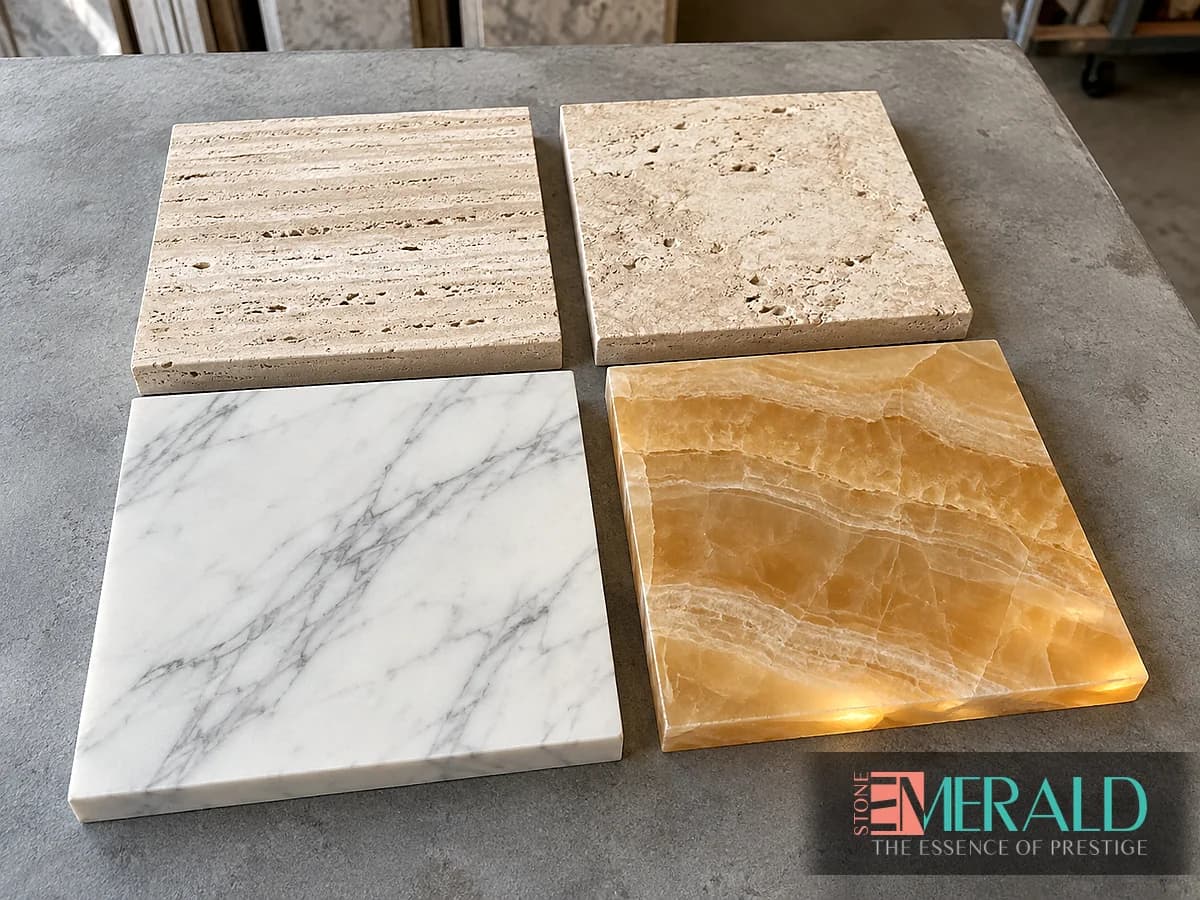
Travertine is a porous sedimentary limestone; marble is metamorphic, denser and finer-crystalline. Water absorption is one to three percent for travertine against 0.1 to 0.5 percent for marble. Travertine therefore suits exterior facades and freeze-thaw exposure, while marble suits polished lobby floors, stairs and wet areas. Tower projects commonly combine both.
Related guide: Complete travertine stone guide
Structural differences between travertine and marble
Travertine is a sedimentary stone with natural porosity and micro-voids formed by hot spring water. Marble is metamorphic with finer crystals and higher density, created when limestone undergoes pressure and heat.
Travertine water absorption typically runs 1–3%; marble ranges 0.1–0.5%. This gap matters on facades and in wet zones. Travertine requires more sealing attention.
Visually, travertine shows porous, matte texture; marble yields smoother surfaces capable of high polish. Both commonly appear in cream-to-white ranges.
On tower projects, combining Kashmar cream travertine facades with Dehbid marble lobbies is the most common approach to balancing cost and aesthetics.
For price comparison, see our travertine stone pricing and marble pricing clusters.
On tower projects, combining Kashmar cream travertine facades with Dehbid marble lobbies is the most common approach to balancing cost and aesthetics.
Post-installation travertine facade care — sealing cycles and annual washing — is covered in our travertine maintenance guide regardless of which limestone type is specified.
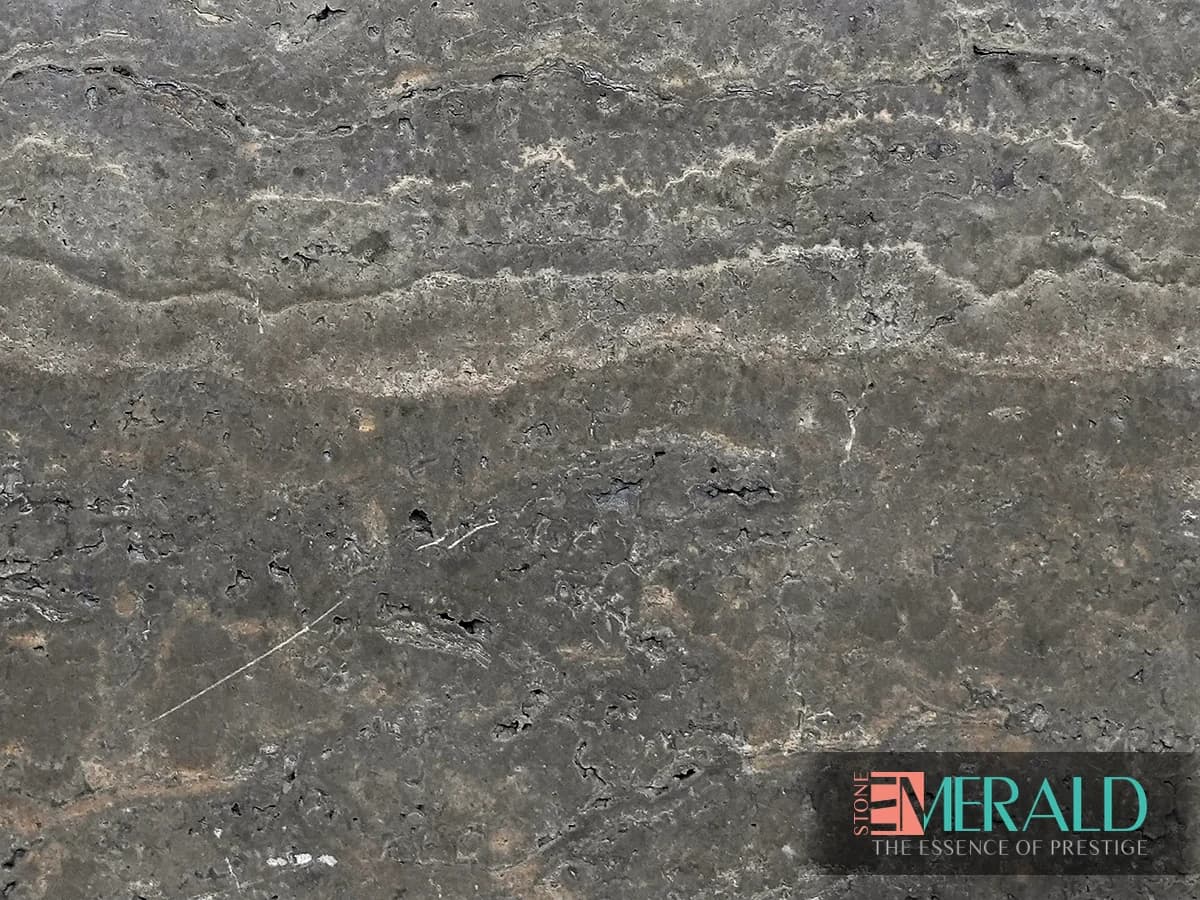
Exterior and facade applications
Travertine dominates Iranian building facades far more than marble. Balanced weight, mortar compatibility, and better freeze-thaw cycle performance make it the preferred exterior choice.
Marble can be used on facades but demands high grade, precise sealing, and proper joint design. In humid, rainy climates, unsealed marble may stain or suffer surface degradation.
On towers and tall buildings, Kashmar cream or Hajiabad white travertine are standard choices. Marble appears more often on lobbies and interior faces of luxury buildings.
In Iran's dry central climate, sealed travertine facades deliver more stable outdoor performance than polished marble without dedicated exterior waterproofing design.
Facade selection details appear in our travertine facade stone guide; maintenance protocols are in our travertine maintenance guide.
On north-facing envelopes in high-rainfall zones, sealed white or cream travertine delivers more stable outdoor performance than polished marble without dedicated exterior joint design.
Crystal silver travertine facades on commercial towers pair well with travertine maintenance protocols reviewed in our silver travertine guide for urban modern envelopes.
Lobby, flooring, and interior use
Dehbid, Aligoudarz, and Giso marble are among the most requested options for lobbies, reception floors, and interior stairs. Polished surfaces and lower absorption simplify floor maintenance.
Travertine also serves lobby walls and interior surfaces, especially with honed or resin finishes. For high-traffic floors, marble and first-grade resin-treated travertine are comparable.
In wet areas such as bathrooms, properly sealed marble performs better. Travertine in showers and pools is recommended only with strong resin and periodic maintenance.
For lobby walls, honed cream or white travertine offers an economical marble alternative. Our cream and white travertine guides provide further detail.
For interior stairs, marble with anti-slip nosing offers greater safety than matte travertine on step edges.
Many Tehran tower projects pair Kashmar cream travertine lobby walls with Dehbid marble flooring — a combination that balances facade and interior budgets without sacrificing visual quality on arrival spaces.
Interior corridor flooring in second-grade marble with first-grade travertine on the main lobby wall is a common cost-control approach reviewed in our travertine stone pricing and marble pricing clusters.
- Exterior facade: travertine (cream, white, silver)
- Luxury lobby: Dehbid or Aligoudarz marble
- High-traffic floor: marble or resin-treated travertine
- Interior stairs: marble with anti-slip nosing
- Lobby wall: honed cream or white travertine
- Wet areas: marble with precise sealing
Which stone should your project specify?
If building facade with balanced budget is the priority, travertine is the logical choice. If luxury lobby and glossy interior floors lead, marble has the edge.
Many tower projects combine both: travertine on the exterior envelope and marble in lobbies and interior levels. This approach balances cost and aesthetics.
Emerald Stone supplies both stones with engineered sorting and recommends optimal combinations based on project drawings in consultation.
On Emerald Stone's residential lobby project, marble flooring paired with Kashmar cream travertine walls demonstrates this successful combined approach.
When budget is tight but both stones are needed, first-grade travertine facade with second-grade marble on interior corridors is a common tower combination.
Vein-cut travertine on exterior envelopes paired with polished marble lobby floors is the industry standard on many Tehran residential towers reviewed in our facade and cut guides.
For villa projects specifying both stones, Kashmar cream travertine exterior with marble interior flooring balances warmth outside and gloss inside effectively.
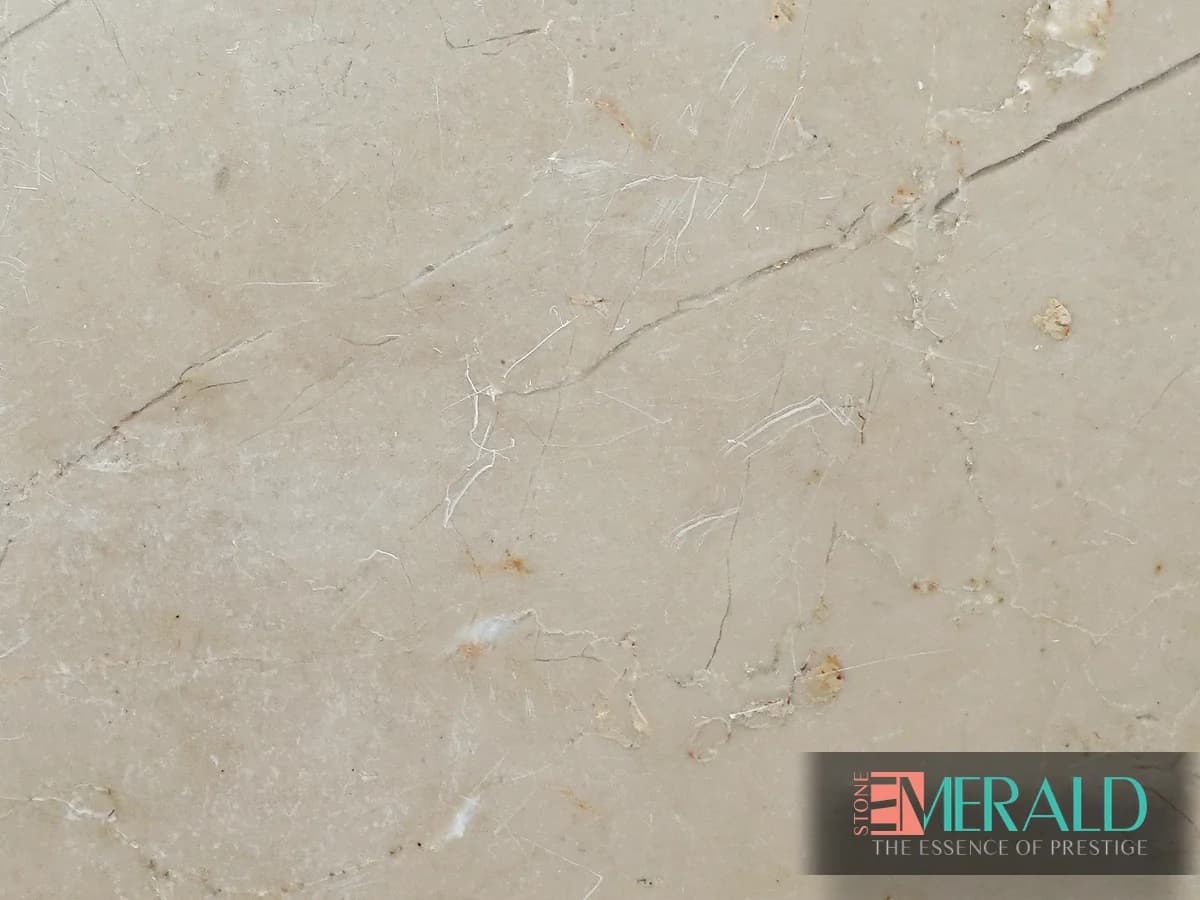
Travertine or marble consultation at Emerald Stone
Emerald Stone's engineering team recommends travertine, marble, or a combination based on application, climate, budget, and architectural style.
We supply Kashmar cream and crystal silver travertine for facades, and Dehbid marble for lobbies. Both stones can be viewed in a single consultation session.
For final decisions, contact Emerald Stone or see the complete travertine and marble guides for deeper comparison.
Our team presents Kashmar cream, Hajiabad white, and Dehbid marble samples side by side in a single consultation session for direct comparison.
Emerald Stone's free consultation reviews project drawings and recommends stone combinations based on climate, application, and budget constraints.
On many Tehran tower projects, travertine facade paired with marble lobby is an industry standard balancing cost and aesthetics effectively.
On villa projects, Kashmar cream facade with marble interior flooring is a popular combination reviewed in Emerald Stone consultation sessions.
Travertine facade pricing is usually lower than Dehbid marble lobby pricing. See pricing clusters for both stones.
| Criterion | Travertine | Marble | Application winner |
|---|---|---|---|
| Water absorption | 1–3% | 0.1–0.5% | Marble (interior floor) |
| Exterior facade | Excellent | Use with care | Travertine |
| Luxury lobby | Good | Excellent | Marble |
| Facade cost | Usually lower | Varies | Travertine |
| High polish | Limited | Excellent | Marble |
Related products
Related projects
Frequently asked questions
Which is better for building facades — travertine or marble?
Travertine is usually specified for exterior facades because it performs better outdoors and typically costs less to supply and install. Marble on facades is recommended only with high grade, precise sealing, and proper joint design. See our travertine facade stone guide for further detail.
Which stone suits building lobbies better?
Dehbid, Aligoudarz, or Giso marble are top choices for luxury lobbies with polished glossy surfaces. Honed cream or white travertine has also proven highly successful in modern lobby design. See our white and cream travertine guides for further detail.
Can travertine and marble be combined in one project?
Yes — this is very common. Travertine on the exterior envelope and marble in lobbies and interior floors is a standard combination on luxury residential towers. Color coordination between cream travertine and Dehbid matters in design. See pricing guides for both stones.
Which stone is more durable?
Marble leads in compressive strength and lower absorption for interior floors. Travertine performs better in exterior freeze-thaw cycles and facade system compatibility. Choice depends on application, not absolute durability.
Is travertine or marble cheaper for facades?
Generally, travertine is more economical for facades. Premium Dehbid Shayan marble for lobbies commands higher pricing. Detailed comparison appears on our travertine and marble price clusters.
Free stone engineering consultation
Emerald Stone's engineering team helps you select the right stone for your project scope, budget, and execution details.
Request free consultation