
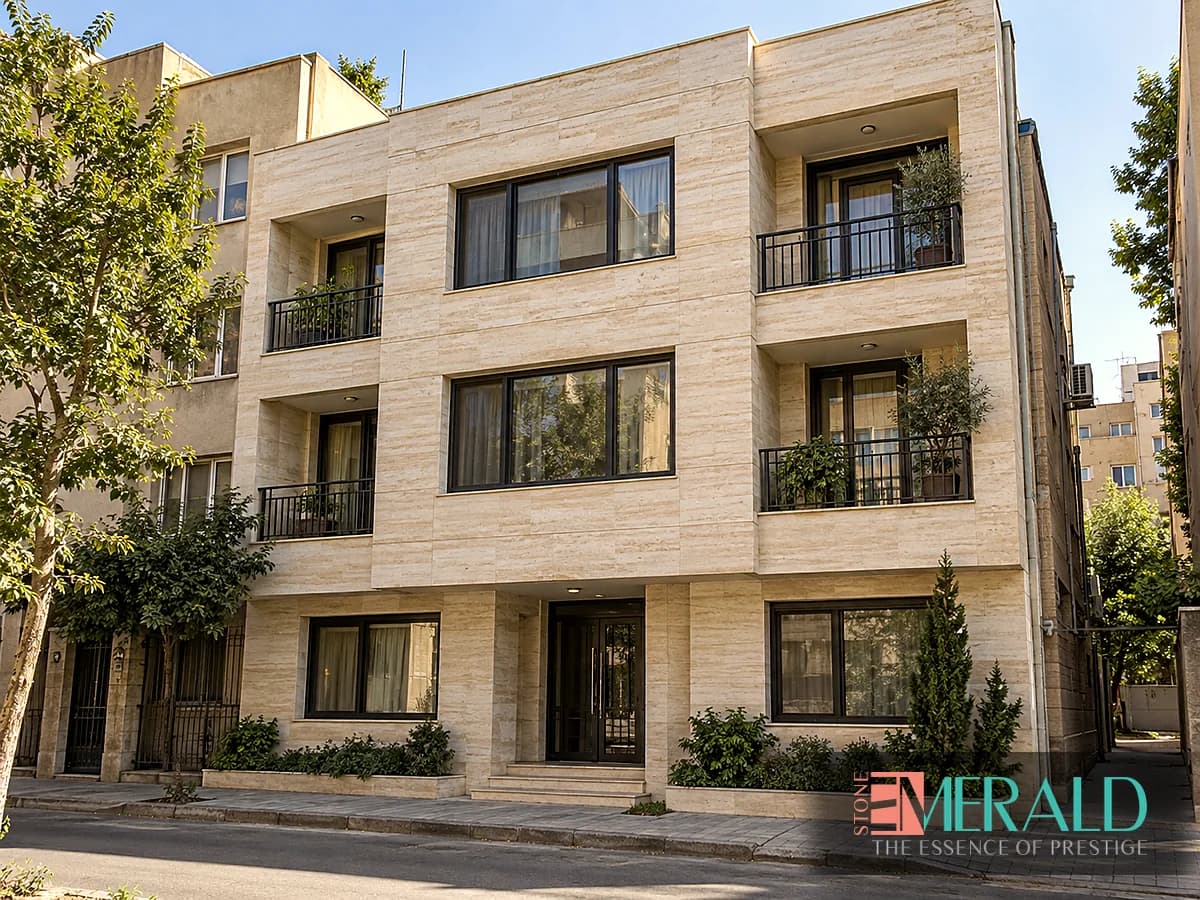
Choose facade travertine by reviewing the actual supply batch, project climate and fixing design together. A single thickness or panel size is not suitable for every building; the project designer must approve the specification. Send the project location, approximate area, preferred colour or reference sample, intended dimensions and required date for an enquiry.
Related guide: Complete travertine stone guide
When to consider travertine
Travertine is an option when natural texture, cream or silver tones and the direction of the stone pattern matter to your design. A quarry name or a commercial grade alone does not establish suitability for a facade.
For exposure to rain, freezing or pollution, request relevant stone test information and review drainage and maintenance details. A good-looking sample or a surface treatment cannot replace this assessment.
Batch consistency, thickness and panel size
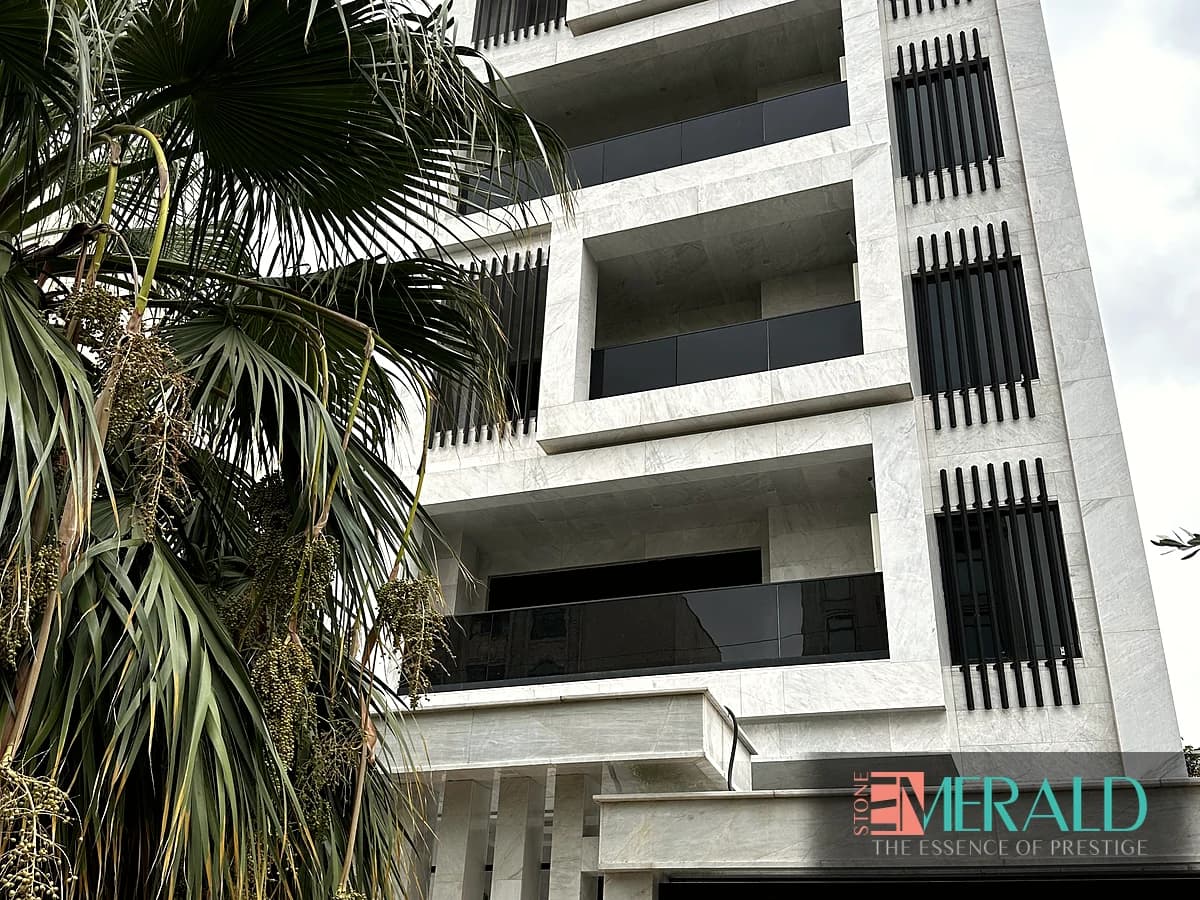
Compare several pieces from the proposed batch. Agree the acceptable colour and pattern range, filling, edge condition and cutting tolerances before ordering. One photograph cannot represent the full delivery.
Panel size, thickness and fixings must suit the stone and the facade design. Final technical specifications belong to the project designer; this guide does not prescribe one thickness for all buildings.
- Keep an approved reference sample.
- Distinguish net facade area from cutting allowance and spare pieces.
- Agree how phased deliveries will be matched.
Compare catalogue options and cut direction
Kashmar Cream Travertine is presented in the Emerald catalogue. Use product photographs to shortlist options, then request information about the batch actually available. Availability, sorting and sizes need confirmation at enquiry. Other trade names, including Crystal Silver, do not by themselves establish a stone's classification or suitability for a facade.
View several vein-cut or cross-cut pieces in the intended layout. A lighter colour or a trade name is not proof of technical quality. Compare prices on the same sorting, size and finish specification.
Installation and total project cost
Resolve the fixing system, substrate, joints and drainage with the design and installation team before purchase. Choose any surface treatment for the specific stone and assembly, rather than from a generic rule.
Separate stone cost from cutting, edge work, layout waste, packing, transport, site handling, installation and maintenance. Compare complete quotations against the same scope.
What to send Emerald for a project enquiry
Our stone selection approach considers the architectural design and project needs. A drawing or reference image helps start a useful discussion even when the specification is incomplete.
Supply availability, lead time and order terms must be confirmed in the quotation. A catalogue entry does not guarantee stock.
- Project location and facade application
- Drawing, approximate area and dimensions if specified
- Preferred stone, colour, cut and finish or a reference image
- Required date, project stage and contact number
| Topic | Compare | Confirm |
|---|---|---|
| Appearance | Several pieces under similar light | Acceptable colour and pattern range |
| Specification | Size, thickness, finish and filling | Approval by the project designer |
| Cost | Stone and ancillary costs separately | Order quantity and included scope |
| Delivery | Available batch and required date | Written schedule and order terms |
Related products
Related projects
Frequently asked questions
What thickness is suitable for a travertine facade?
It depends on panel dimensions, stone properties, fixing design and project conditions. The project designer should approve the final specification; one universal thickness is not sufficient.
Is travertine suitable for wet or freezing climates?
Assess the specific stone, exposure and facade assembly. The material name or a surface treatment alone does not guarantee performance in rain or freezing conditions.
What is needed for a facade quotation?
Send location, approximate quantity, intended dimensions, colour or sample, finish and required date. Compare cutting, delivery and installation separately from the stone price.
Can I approve the colour from one photograph?
A photograph is useful for shortlisting. Compare several pieces from the proposed batch under similar lighting and agree the acceptable colour and pattern range before ordering.
Discuss travertine for your facade
Send the project location, area and drawing or reference image to start a selection and quotation enquiry.
Discuss selection and pricing