
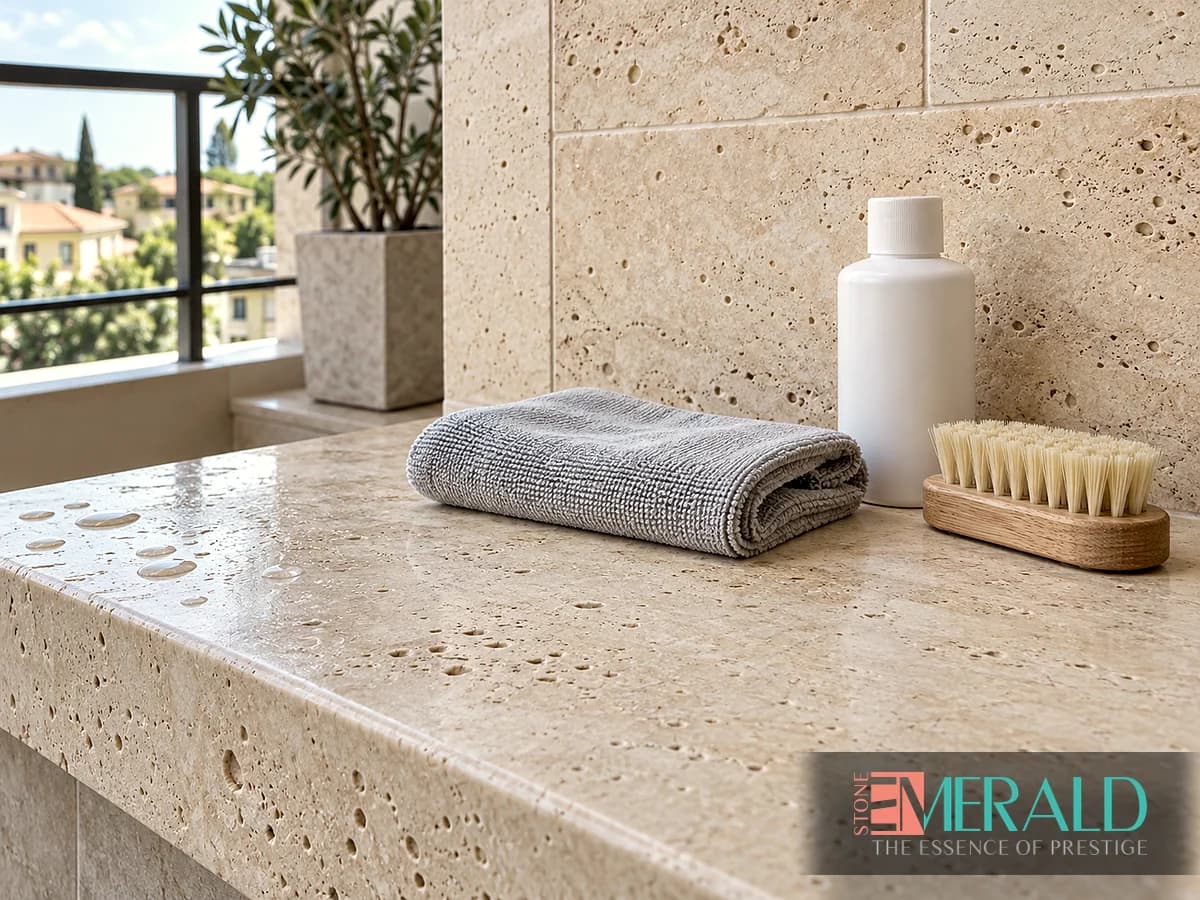
Travertine maintenance rests on resin filling of the natural pores, periodic sealing, and cleaning with pH-neutral products rather than acids or abrasives. Facade sealing should be inspected every three to five years and high-traffic floors every one to two years. Oil stains lift with a stone poultice left on for 24 to 48 hours.
Related guide: Complete travertine stone guide
Travertine resin and sealing
Travertine's natural porosity makes it vulnerable to stains, moisture, and wear without resin or sealing. Factory resin fills micro-voids, creating a smoother, less absorbent surface.
On rain-exposed building facades, post-installation resin and surface sealing are recommended. On high-traffic floors and wet areas such as bathrooms, resin is nearly mandatory.
Re-sealing every 3–5 years on facades and every 1–2 years on high-traffic floors is advised. Sealant quality and correct application matter as much as the stone itself.
Hajiabad white and Kashmar cream facades need more attentive periodic care. Our white and cream travertine guides include supplementary maintenance notes.
Choosing the right stone from the start — first grade with controlled porosity — reduces long-term maintenance cost. Our travertine facade stone guide covers selection criteria.
Factory-applied resin before delivery is standard for lobby floors and rain-exposed facades supplied by Emerald Stone on most project specifications.
Cleaning travertine floors and walls
Daily care requires dust sweeping and washing with warm water and pH-neutral cleaner. Avoid acids such as vinegar and lemon juice, and abrasive pads.
For oil or color stains, use stone-specific poultice — not household cleaners. Applying poultice for 24–48 hours usually draws out the stain.
For floors, stone-safe pads and pH-neutral detergents are recommended. Over-washing with water can weaken sealing.
On lobbies in cream or white travertine, weekly cleaning with neutral cleaner prevents surface dulling over time.
Avoid placing hot cookware directly on travertine surfaces without a trivet. Sudden heat can damage the sealant layer and open pores to staining.
In high-smoke cities such as Tehran, annual washing of white and cream travertine facades prevents premature surface dulling from urban deposits.
- Daily: sweep and neutral cleaner
- Weekly: gentle floor wash
- Seasonal: sealing inspection
- Annual: facade and joint review
Travertine facade maintenance
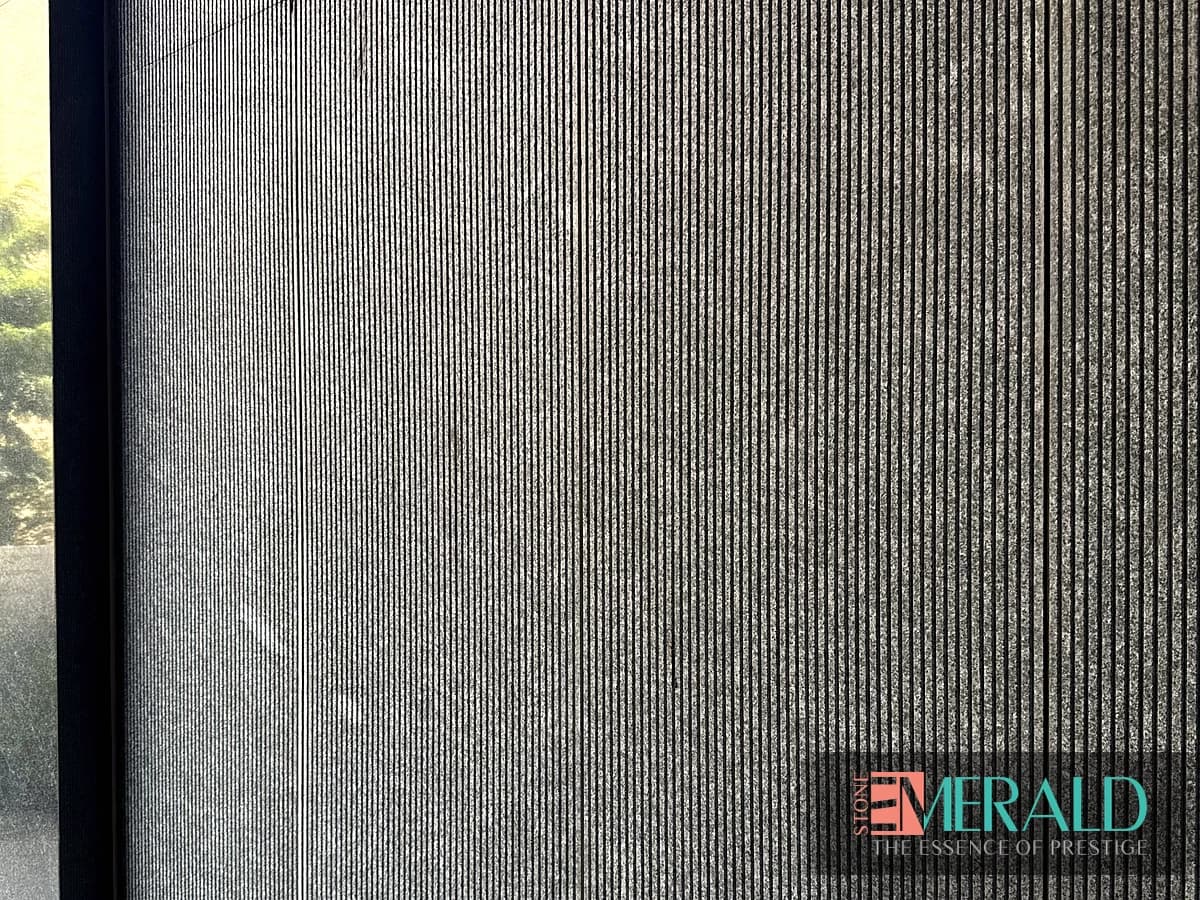
Travertine facades in polluted cities need annual washing. Dust, smoke, and water deposits can dull the surface over time.
Low-pressure washing with water and neutral products by specialists is recommended on tall facades. High pressure can damage joints and sealant.
Annual inspection of joint layout, horizontal drip details, and anchoring condition is preventive maintenance. Joint cracks or piece delamination require immediate review.
Facade execution details appear in our travertine facade stone guide; stone selection is covered on our travertine stone pricing cluster.
North-facing facades in humid climates may need re-sealing every two to three years rather than the standard three-to-five-year cycle.
On crystal silver facades in polluted cities, annual washing with neutral products prevents premature surface dulling. Our silver travertine guide includes supplementary care notes.
Stain removal and surface repair
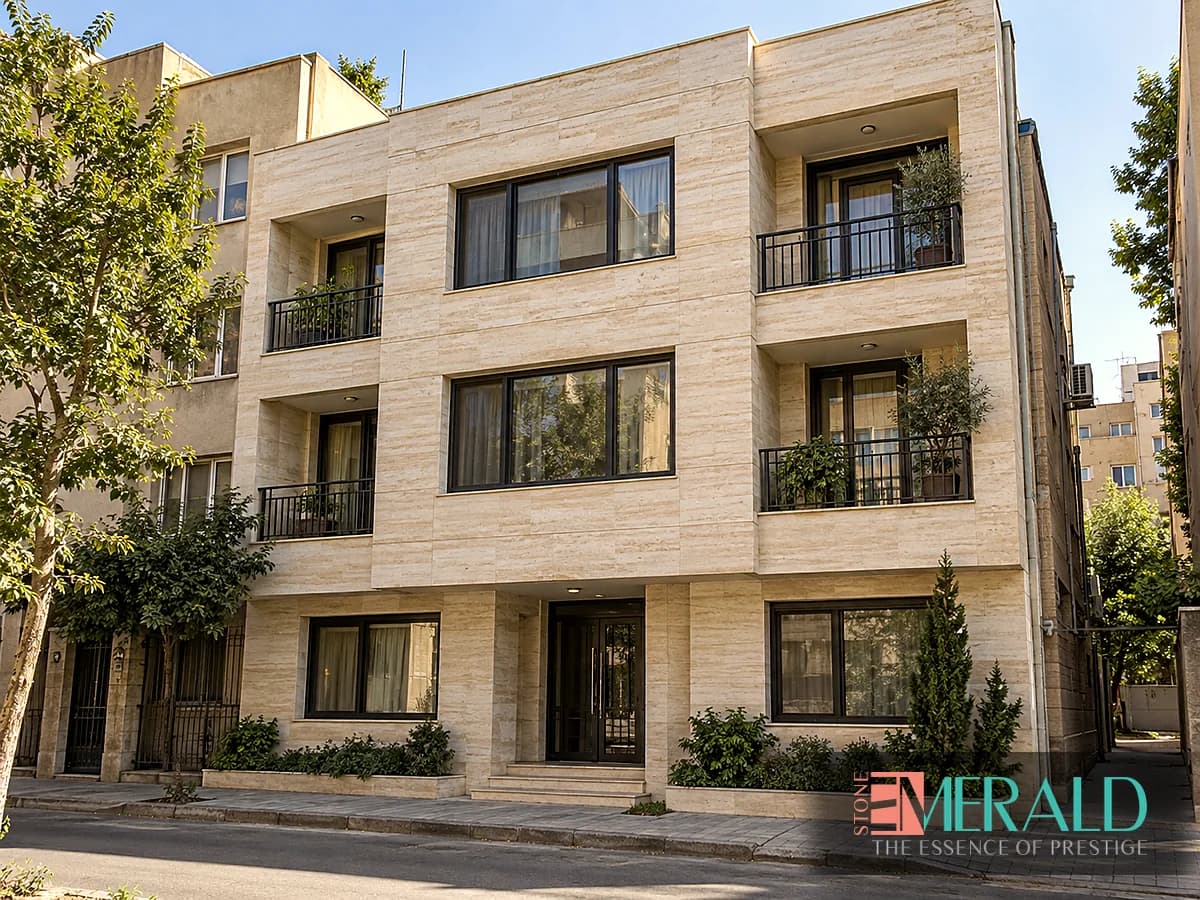
Treat fresh stains quickly with poultice or stone-specific neutral cleaner. Old stains may require re-honing and re-resin treatment.
Small surface cracks can be repaired with resin and honing. Deep cracks or piece delamination need replacement or specialist repair.
Re-sealing after any repair is essential. Emerald Stone provides maintenance protocols and authorized specialist referrals in post-supply consultation.
Crystal silver facade maintenance follows the same protocols as other travertines, though annual inspection is recommended in polluted cities.
Fine thermal expansion cracks on facades can be repaired with resin and honing provided immediate re-sealing follows. Our travertine facade stone guide covers execution standards.
Lobby floors in Kashmar cream or Hajiabad white travertine need more frequent re-sealing than facade panels — typically every one to two years in high-traffic zones.
Emerald Stone maintenance support
At Emerald Stone, travertine maintenance is part of our stone engineering process. After supply, we provide resin, sealing, and cleaning protocols matched to project application.
For facade and lobby projects, we coordinate with the installation contractor on post-install sealing timing and annual inspection schedules.
For travertine facade or floor maintenance consultation, contact Emerald Stone or see the complete travertine stone guide for selection and supply.
Our team has delivered application-specific maintenance protocols on public space facade and residential lobby projects matched to stone color and use.
After stone delivery, Emerald Stone provides application-specific maintenance schedules to the client and installation contractor matched to color and use.
For white and cream facades in polluted cities, an annual washing schedule is included in Emerald Stone's maintenance protocol documentation.
Selecting first-grade stone with controlled porosity before installation significantly reduces long-term maintenance cost over the stone's service life.
For silver and white facades, annual sealing inspection is recommended in humid northern climates.
Emerald Stone links maintenance protocols to the stone color and application specified — cream lobby floors, silver tower facades, and white villa envelopes each receive tailored schedules.
Pre-installation grade selection directly affects maintenance cost over the stone's service life. Our travertine price and facade guides help clients choose appropriately from the start.
Factory resin applied before delivery reduces porosity on lobby floors and rain-exposed facades — a standard Emerald Stone supply specification on most project orders.
Annual facade washing in polluted cities preserves travertine color on white, cream, and silver envelopes alike. Our facade and silver guides include supplementary care context.
Cross-cut travertine lobby floors need gentler daily cleaning than vein-cut facade panels to preserve honed surface texture over time.
| Application | Frequency | Action | Notes |
|---|---|---|---|
| Interior floor | Weekly | Sweep and neutral wash | Avoid acids |
| Building facade | Annual | Wash and sealing check | Specialist for height |
| Bathroom | Seasonal | Resin and joint inspection | High humidity |
| Busy lobby | Monthly | Sweep and neutral cleaner | Re-seal every 1–2 years |
Related products
Related projects
Frequently asked questions
What is travertine resin and why is it needed?
Travertine resin fills pores and voids with epoxy or polymer to create a smoother, less absorbent, stain-resistant surface. It is nearly essential on rain-exposed facades, high-traffic floors, and wet areas. Our travertine facade stone guide covers appropriate stone selection criteria.
Does resin make travertine glossy?
It depends on final finish. Resin with honed or matte finish preserves a matte surface. Polishing over resin can increase gloss, but honed or matte is more common on facades and floors.
How do you remove oil stains from travertine?
Use stone-specific poultice — not household degreasers. Apply poultice to the stain, cover it, and wait 24–48 hours. Then remove and rinse with neutral water.
How often should travertine facades be re-sealed?
Rain-exposed facades should be inspected every 3–5 years. In polluted cities or north-facing envelopes, every 2–3 years may be needed. Signs include rapid water absorption or surface dulling.
How does Emerald Stone help with travertine maintenance?
Emerald Stone provides resin, sealing, and cleaning protocols matched to project application in post-supply consultation. We also coordinate with installation contractors on post-install sealing timing. Our facade and white travertine guides offer useful supplementary context.
Free stone engineering consultation
Emerald Stone's engineering team helps you select the right stone for your project scope, budget, and execution details.
Request free consultation