
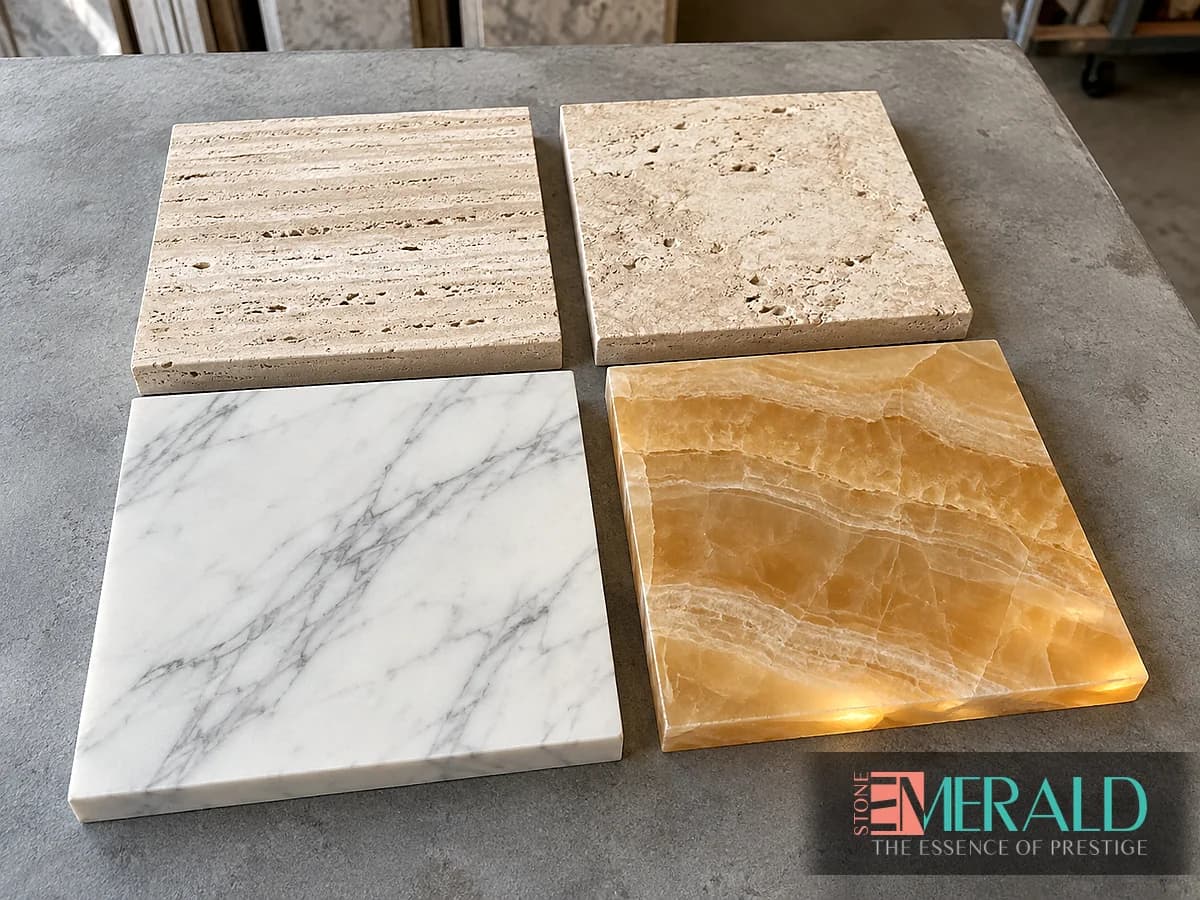
Vein-cut and cross-cut describe the direction a travertine block is sawn. Vein-cut runs perpendicular to the bedding planes, producing linear vertical movement suited to facades, walls and bookmatched panels. Cross-cut runs parallel to the bedding, giving a cloudier, more uniform pattern that reads better on large floors and open halls. Chiseled and tumbled are surface finishes, not cut directions.
Related guide: Complete travertine stone guide
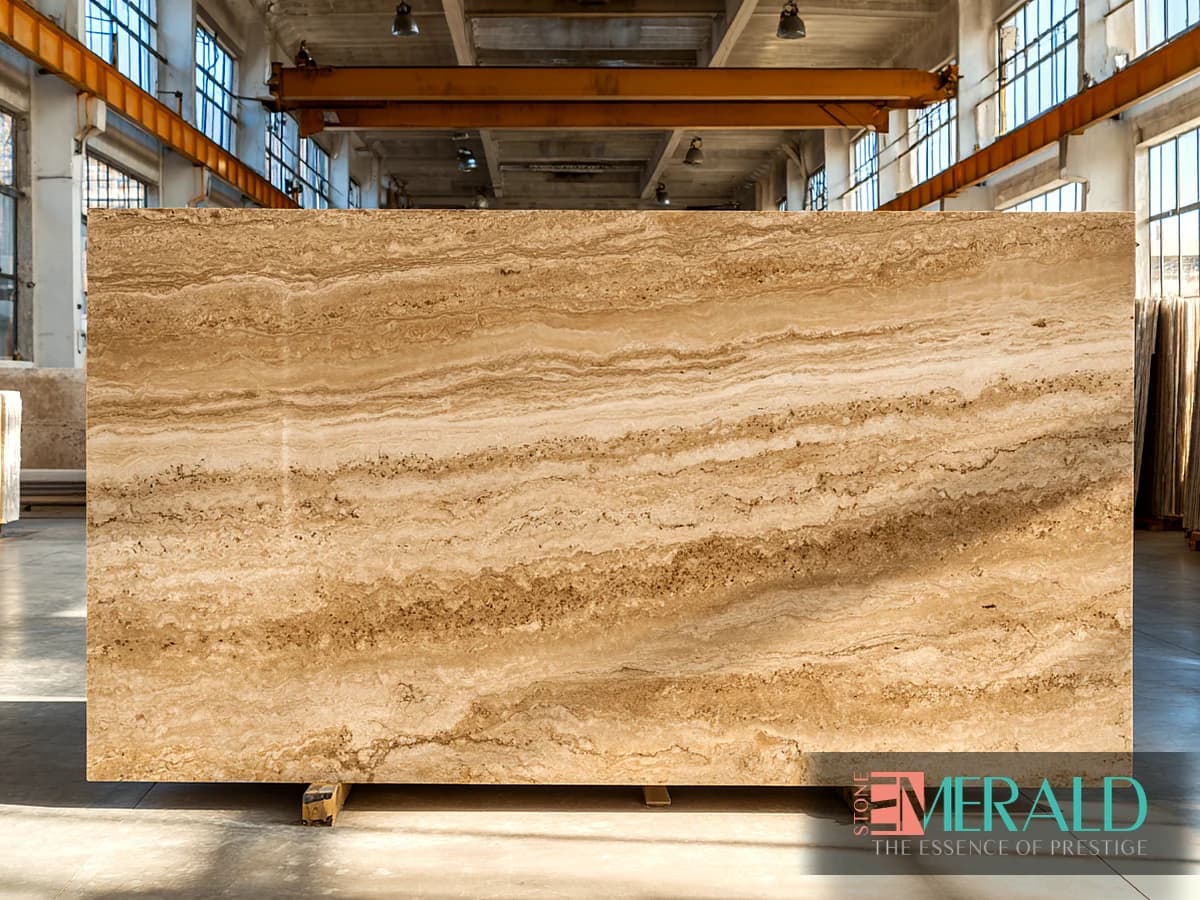
Vein-cut travertine: linear texture for walls and facades
Vein-cut travertine is sliced perpendicular to bedding planes, creating linear vertical movement on the surface. This texture is popular on walls, modern facades, and bookmatched two-slab layouts.
On building envelopes, vein-cut adds visual height and depth; sunlight casts soft shadows across the surface. In narrow spaces, vertical lines make ceilings appear taller.
The downside on large floors is that vertical lines may lack uniformity and show more color variation between pieces. Cross-cut is usually preferred for hall flooring.
On lobby feature walls, bookmatched two-slab vein-cut layouts create dramatic visual impact popular on luxury residential projects.
For building facades, further details appear in our travertine facade stone guide.
White, cream, and silver travertine are all commonly specified vein-cut for walls and facades on Iranian projects.
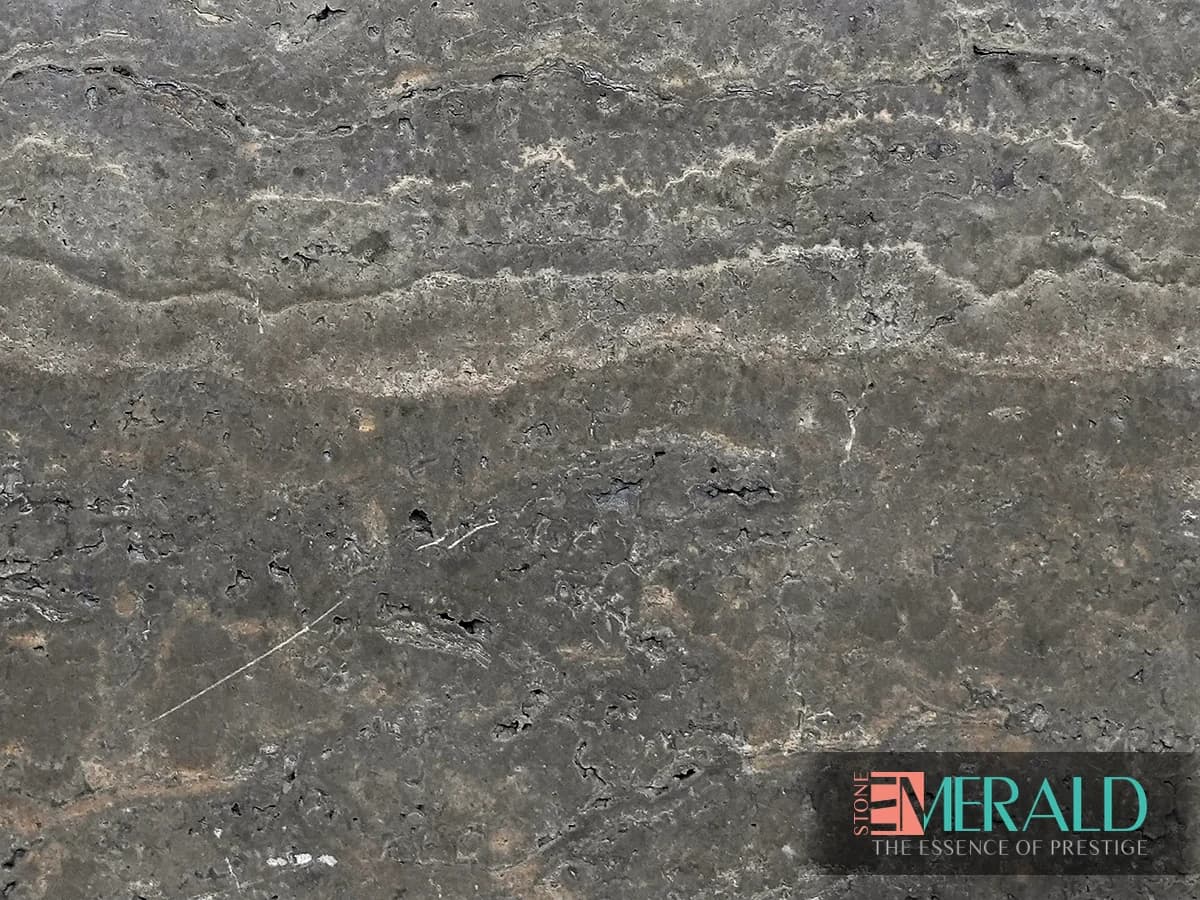
Cross-cut travertine: uniform pattern for floors and halls
Cross-cut travertine is sliced parallel to bedding planes, yielding a cloudier, more uniform surface pattern. It is ideal for reception floors, conference halls, and large open interiors.
In large spaces, cross-cut feels calmer and more cohesive; piece layout is simpler. Color variation between slabs is less visible than with vein-cut.
Cross-cut can also be used on walls and facades, but the visual effect is less dramatic. In minimalist design with flat surfaces, honed cross-cut is sometimes specified.
On modern lobbies in cream or white tones, vein-cut walls paired with cross-cut floors are common. This approach is also recommended in our cream and white travertine guides.
On office projects, vein-cut corridors with cross-cut meeting rooms balance visual movement and calm across different spatial zones effectively.
Cross-cut cream travertine on large reception floors reads more uniformly than vein-cut when viewed from lobby mezzanines or upper gallery levels.
Cut direction vs chiseled and tumbled finishes
Vein-cut and cross-cut describe block cutting direction — distinct from surface finish. Chiseled finish creates a semi-relief texture suited to classic and Roman facades.
Tumbled finish rounds edges and ages the surface for a traditional feel. Both chiseled and tumbled can be applied to either vein-cut or cross-cut material.
Final specification must align cut direction and finish with architectural style, fixing system, and budget. Emerald Stone provides samples of each combination in consultation.
Vein-cut pricing sometimes exceeds cross-cut. Details appear on our travertine stone pricing cluster and travertine vs marble comparison guide.
Resin-treated vein-cut on rain-exposed silver or white facades is standard on Emerald Stone supply specifications. Our maintenance guide covers post-install sealing timing.
Chiseled vein-cut on classic Roman facades creates depth without the high polish that marble demands — a cost-effective alternative reviewed in our travertine vs marble guide.
Bush-hammered vein-cut on semi-open terraces adds slip resistance while preserving the vertical visual movement that architects specify on tower lobby walls and feature facades.
- Vein-cut + honed: modern facade and lobby wall
- Cross-cut + honed: hall and reception floor
- Vein-cut + chiseled: classic and Roman facade
- Cross-cut + tumbled: yard and traditional space
- Vein-cut + resin: rain-exposed facade
- Cross-cut + resin: high-traffic lobby floor
How to choose the right travertine cut
Primary application drives choice: facades and walls usually vein-cut; floors and large spaces usually cross-cut. Modern architecture favors vein-cut; uniform minimalism may prefer cross-cut.
Budget matters too. Vein-cut sometimes commands a premium due to higher demand. Slab size and thickness coordinate with cut type — large vein-cut slabs suit fewer-joint facades.
Viewing actual samples under project lighting before final decision is essential. Catalog images may not accurately show vein-cut versus cross-cut texture differences.
Post-installation surface care, especially on facades, is covered in our travertine maintenance guide and applies regardless of cut direction.
Bush-hammered finish on vein-cut travertine adds slip resistance on semi-open terraces without sacrificing the vertical visual movement of the cut.
On combined projects, vein-cut lobby walls with cross-cut reception floors are a popular pairing also recommended in our cream and white travertine guides.
Travertine cut consultation at Emerald Stone
At Emerald Stone, vein-cut versus cross-cut selection is part of our stone engineering process. We recommend based on facade drawings, space type, and design style.
Both cuts are available from Kashmar, Hajiabad, and other quarries with uniform sorting. On large projects, layout direction and cut orientation are specified on execution drawings.
To compare vein-cut and cross-cut samples or coordinate with your architecture team, contact Emerald Stone or see the complete travertine stone guide.
Our stone engineering team has extensive experience laying out vein-cut and cross-cut on Farvardin Tower and public space facade projects with color consistency.
Emerald Stone presents vein-cut and cross-cut samples from the same production lot in consultation so color and texture differences can be compared under real project conditions.
On combined floor and facade projects, cut direction for each zone is specified on execution drawings before ordering to prevent costly on-site replacement.
Vein-cut pricing sometimes exceeds cross-cut. Details appear on our travertine stone pricing cluster.
Silver and white travertine are most often specified vein-cut on facades; cream suits both cuts depending on architectural palette. See our color-specific guides for context.
| Feature | Vein-cut | Cross-cut | Recommendation |
|---|---|---|---|
| Appearance | Linear, vertical | Cloudy, uniform | — |
| Primary use | Facade and wall | Floor and hall | — |
| Bookmatch | Excellent | Moderate | Feature walls |
| Color uniformity | Moderate | High | Large spaces |
Related products
Related projects
Frequently asked questions
Which travertine cut is best for facades?
Vein-cut with vertical movement is usually specified for building facades because it creates visual depth and a modern character. In minimalist design with flat surfaces, honed cross-cut is also viable. Final choice depends on architectural style and facade drawings. Details appear in our travertine facade stone guide.
Which cut suits travertine flooring better?
Cross-cut is recommended for hall, reception, and large-area floors because its pattern is more uniform and layout is simpler. Vein-cut running lengthwise can work in narrow corridors. On luxury lobbies, vein-cut walls paired with cross-cut floors are a popular combination.
Is vein-cut travertine more expensive than cross-cut?
Sometimes yes — due to higher facade demand and stricter sorting for layout. Price difference also depends on quarry, grade, and thickness. See our travertine price cluster and vein-cut vs cross-cut guide for details.
Are chiseled and tumbled the same as vein-cut and cross-cut?
No — chiseled and tumbled are surface finishes, not cut directions. Either finish can be applied to vein-cut or cross-cut material. Cut direction defines texture orientation; finish defines surface treatment.
Which cut works best for bookmatching?
Vein-cut excels at two-slab bookmatched layouts on feature walls and lobbies, creating dramatic symmetrical veining. Cross-cut is less commonly used for this application.
Free stone engineering consultation
Emerald Stone's engineering team helps you select the right stone for your project scope, budget, and execution details.
Request free consultation