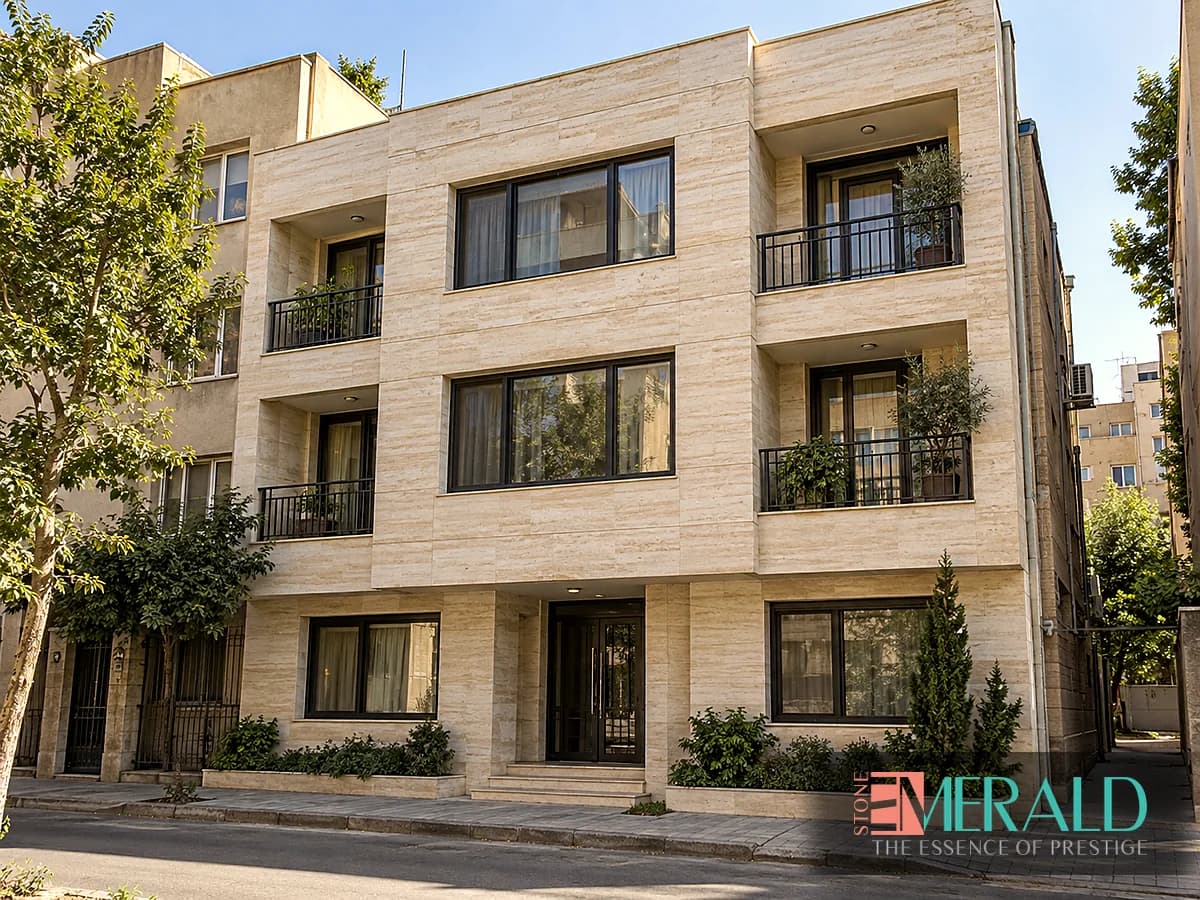
Cream travertine is quarried mainly at Kashmar in Khorasan Razavi, valued for color stability across large production lots on tower and villa facades. Facades use first grade at 2.5 to 3 cm, vein-cut; floors use cross-cut with a honed finish. Abbasabad cream is the more economical alternative for tighter budgets.
Related guide: Complete travertine stone guide
Kashmar cream travertine: specs and advantages
The Kashmar quarry in Khorasan Razavi is the primary source of uniform warm cream travertine. This stone suits residential tower facades and northern coastal villas due to color stability across large production lots.
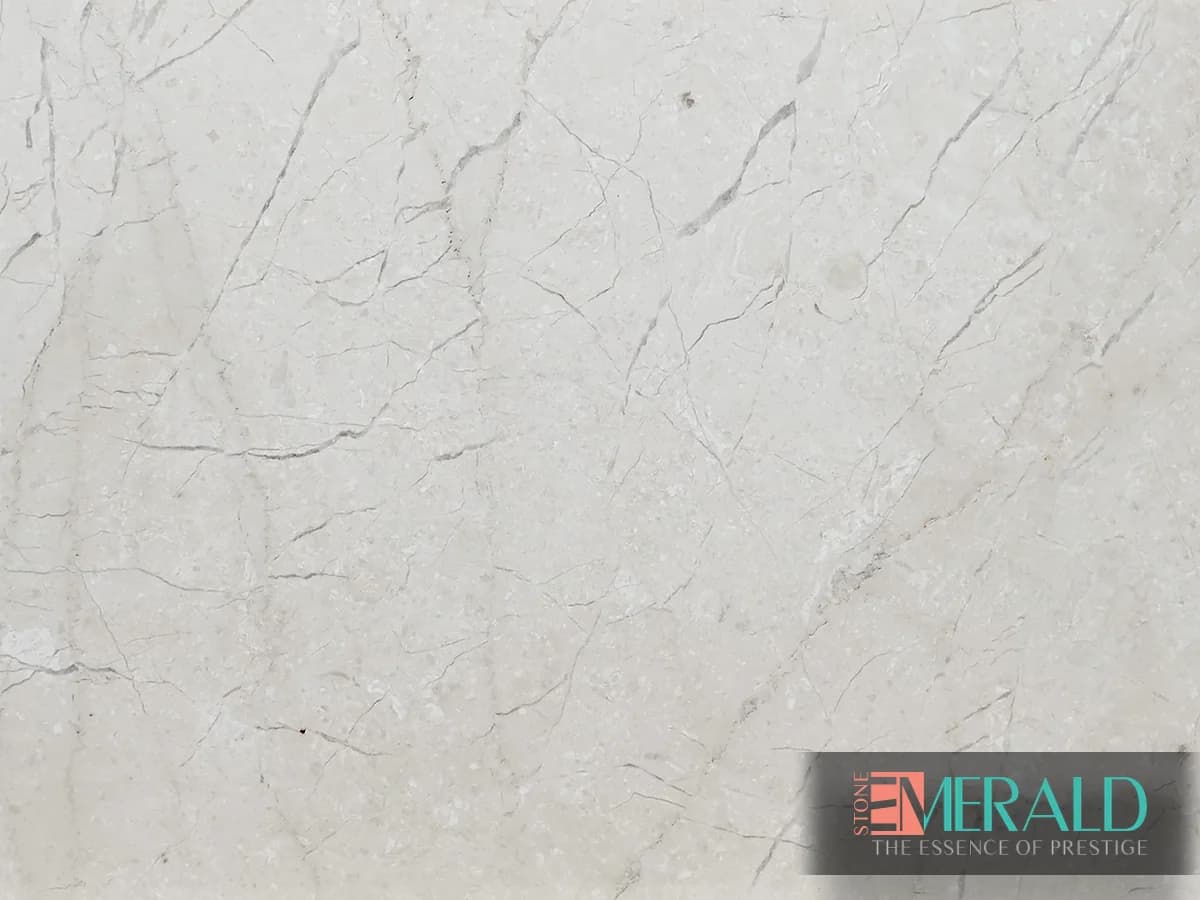
Kashmar cream texture typically shows soft vertical lines with vein-cut direction, creating a premium effect on modern facades and lobby walls. Natural porosity can be controlled with factory resin treatment.
Compared to other regional creams, Kashmar offers better sorting for projects above 200 m². Production-lot control prevents color variation between building floors.
For comparison with Hajiabad white and crystal silver, see each color's specialist guide. Kashmar cream suits warm modern palettes; white suits classic light facades.
Abbasabad cream offers a more economical option for large facades with tighter budgets, but Kashmar sorting excels on luxury tower projects.
First-grade Kashmar cream pricing typically sits in the upper travertine market band. Cost ranges appear on our travertine stone pricing cluster.
On urban facades with modern metal and grey glass, Kashmar cream harmonizes well though silver offers a cooler alternative.
Vein-cut Kashmar cream on tower facades pairs naturally with cross-cut cream flooring in lobbies — a combination detailed in our vein-cut vs cross-cut travertine guide.
Cream travertine vs white and silver
Cream travertine adds more warmth and depth than Hajiabad white, creating a cozier atmosphere. For projects where pure white feels cold, Kashmar cream is a popular alternative.
Versus crystal silver, Kashmar cream feels more interior and less industrial. Silver suits urban modern facades with metal and grey glass; cream fits residential towers and villas with a warmer character.
Choice among these three colors must align with the building palette, lighting, and architectural style. Emerald Stone presents samples of all three side by side in consultation.
Many architects specify Kashmar cream when Dehbid marble lobby pricing exceeds budget but a warm premium character is still required. Our travertine vs marble guide explains this common tower combination.
Medium compressive strength is adequate for facades and low-traffic floors. In busy lobbies, resin treatment and first grade are recommended.
For maintenance planning on cream facades, see our travertine maintenance guide. Periodic sealing preserves the warm tone that distinguishes Kashmar cream from cooler silver options.
When comparing travertine vs marble for a tower lobby, Kashmar cream walls with Dehbid marble flooring is a proven cost-balanced combination reviewed in our travertine vs marble guide.
Cream travertine in facades and floors
Building facades, lobby walls, low-traffic reception floors, and premium interiors are primary uses for cream travertine. On projects like Farvardin Tower, Kashmar cream paired with linear lighting has proven highly successful.
For flooring, cross-cut with honed or matte finish is recommended. Cream reads more uniformly than vein-cut on large surfaces and feels comfortable underfoot.
On facades, 2.5–3 cm thickness with first grade and proper sealing is the execution standard. Anchoring system and facade drawing coordination are reviewed before supply.
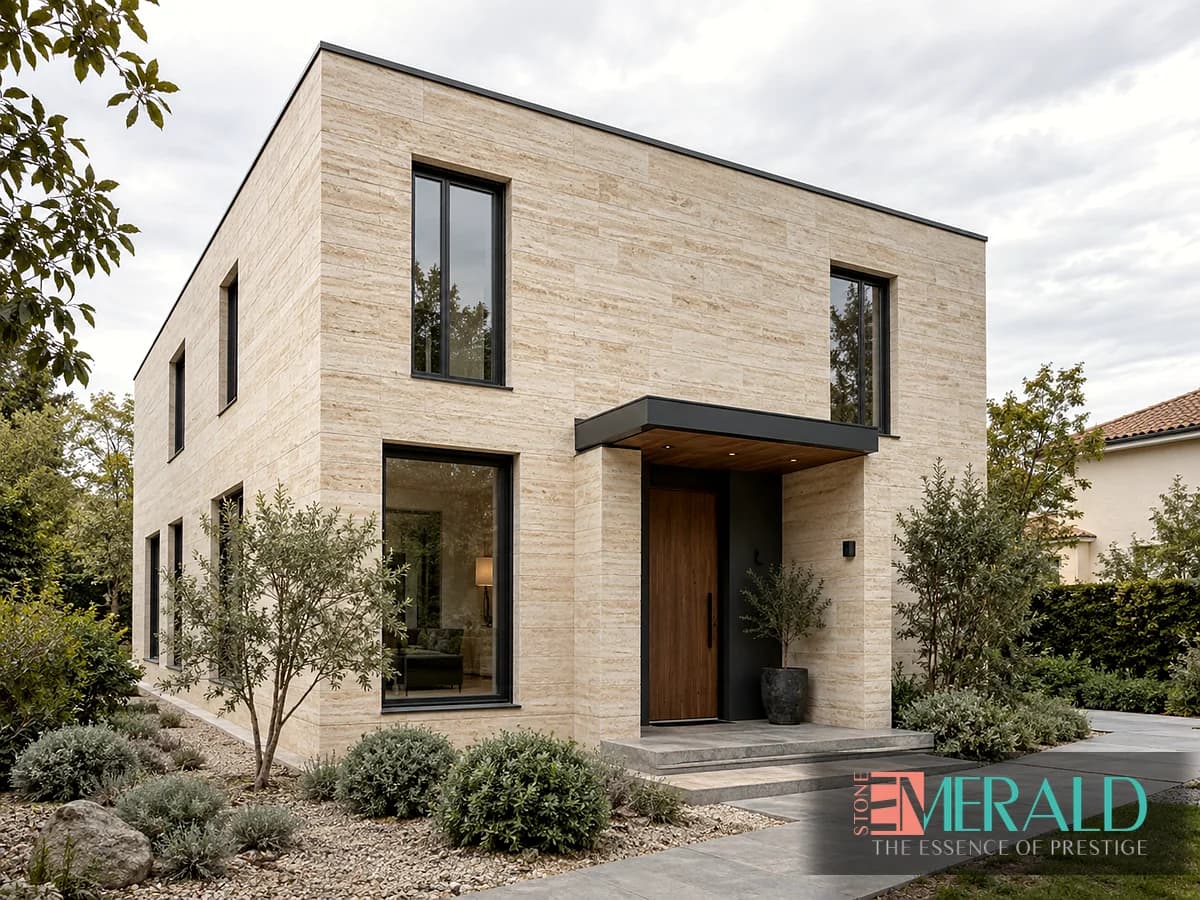
On northern coastal villas, Kashmar cream paired with dark wood and large glass creates a warm modern visual compatible with humid seaside climate, provided sealing is executed correctly.
Facade execution details appear in our travertine facade stone guide; maintenance protocols are in our travertine maintenance guide.
On public space facade projects, Kashmar cream at 2.5–3 cm thickness with ventilated fixing systems has demonstrated stable performance over multiple construction seasons.
For cut direction on cream tower facades, vein-cut is standard; cross-cut suits lobby floors. Our cut guide explains how to specify both in a single project order.
- Residential tower facade: Kashmar cream with vein-cut
- Coastal villa: paired with wood and glass
- Lobby: large slabs with honed finish
- Reception floor: cross-cut with resin treatment
Technical specs and grade selection
Kashmar cream water absorption falls within typical Iranian travertine range and suits interiors and sealed exteriors. Medium compressive strength is adequate for facades and low-traffic floors.
First grade with uniform color and minimal surface cracks is essential on large facades. Second grade may suit interior walls or partially covered surfaces.
Slab viewing and on-site sampling before purchase is recommended. Cream tone can appear different under sunset light versus artificial interior lighting.
Periodic maintenance and sealing preserve cream color on facades. Full protocols appear in our travertine maintenance guide.
Kashmar cream in residential tower lobbies paired with linear lighting creates a warm modern visual combination.
Cream travertine supply at Emerald Stone
Kashmar cream travertine is a core catalog product at Emerald Stone. We supply with production-lot sorting, pre-loading quality control, and warehouse viewing options.
For tower and complex projects, phased delivery and production-lot reservation maintain color consistency across all construction phases.
For Kashmar cream pricing or comparison with white and silver options, contact our consultation team or see the complete travertine stone guide.
Emerald Stone has extensive experience supplying Kashmar cream on Farvardin Tower and similar complexes with color consistency across all floors, applied through our sorting process.
First-time Kashmar cream buyers can compare samples alongside Hajiabad white and crystal silver at Emerald Stone's warehouse before committing to full order volume.
Our team coordinates Kashmar cream slab delivery with facade installation schedules to maintain color consistency across all building floors.
For Kashmar cream pricing and sample viewing, contact Emerald Stone or see our travertine stone pricing cluster.
| Product | Quarry | Color | Application |
|---|---|---|---|
| Kashmar cream | Kashmar | Warm cream | Facade and lobby |
| Abbasabad cream | Abbasabad | Light cream | Economy facade |
| Atashkooh cream | Atashkooh | Beige cream | Floor and yard |
Related products
Related projects
Frequently asked questions
Is Kashmar cream travertine good for facades?
Yes — Kashmar cream is among Iran's most popular facade stones. Uniform color, controllable sorting, and ventilated facade compatibility make it ideal for towers and villas. First grade at 2.5–3 cm thickness is recommended. Execution details appear in our travertine facade stone guide.
What materials pair well with cream travertine?
Black or bronze metal, grey glass, dark wood, and darker stones create highly successful combinations with Kashmar cream on facades and lobbies. In interior decor, cream and beige furniture harmonizes well with this stone.
What does Kashmar cream travertine cost?
Pricing depends on grade, thickness, cut type, and order volume. First-grade Kashmar cream typically sits in the upper travertine market band. See our travertine price cluster or contact Emerald Stone for 2025 ranges.
Vein-cut or cross-cut for cream travertine facades?
Vein-cut with vertical lines is usually chosen for facades and walls. Cross-cut is more uniform for hall floors and large open spaces. Details are in our vein-cut vs cross-cut travertine guide.
How does Kashmar cream differ from Hajiabad white?
Kashmar is warmer and more uniform; Hajiabad is whiter. Kashmar suits warm modern palettes; Hajiabad suits classic white facades. Both work well on building envelopes.
Free stone engineering consultation
Emerald Stone's engineering team helps you select the right stone for your project scope, budget, and execution details.
Request free consultation