
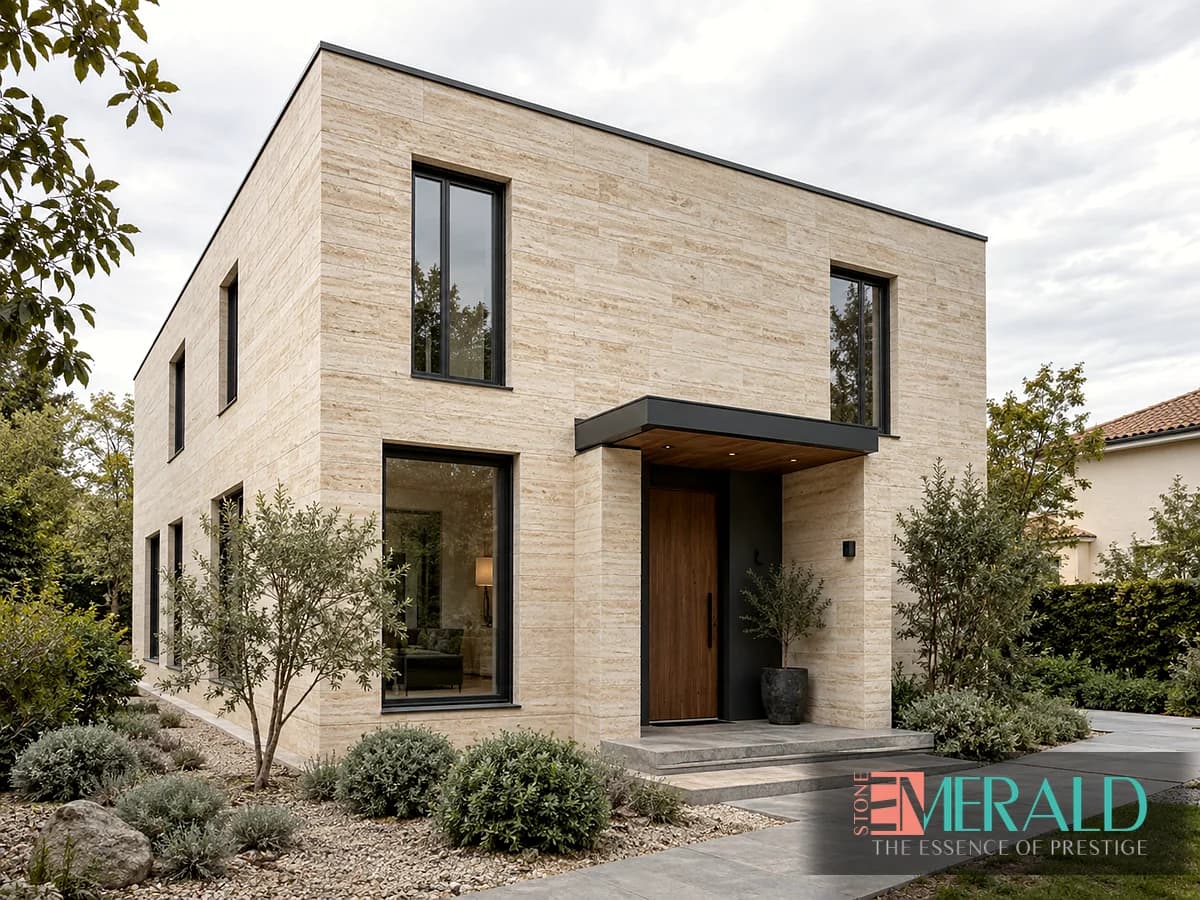
Villa facade stone follows the site climate. On humid, salt-exposed northern coastal villas, low-absorption stone such as sandblasted granite or sealed Kashmar cream travertine with a matte finish performs best. In desert and dry temperate zones, light stone with a matte finish limits surface overheating. Annual joint inspection and resealing are required.
Related guide: Building facade stone guide
Villa facade stone in northern Iran
Coastal northern villas face high humidity, heavy rainfall, and salt air. Low-absorption stone with matte finish and professional jointing is essential.
Kashmar cream travertine with proper sealing and sandblasted granite are popular northern villa facade choices. Light stone tones harmonize with green surroundings.
Moisture management includes horizontal drips, rainscreen cavity drainage, and periodic joint inspection. Design must prevent water pooling at facade terminations.
Our travertine and granite guides help compare moisture-resistant options. Stone facades face daily moisture cycling; lower-absorption stone with matte finish delivers more stable performance against rain, freeze-thaw, and urban pollution. Define numeric tolerances for fissures, pits, tone variation, and batch uniformity in the supply contract so delivery disputes drop and installation schedules stay on track.
- Kashmar cream travertine with appropriate sealing suits coastal villa facades
- Sandblasted granite offers high resistance to moisture and abrasion
- Honed and matte finishes reduce rain slipperiness on facade surfaces
- Annual joint inspection and resealing are villa facade maintenance requirements
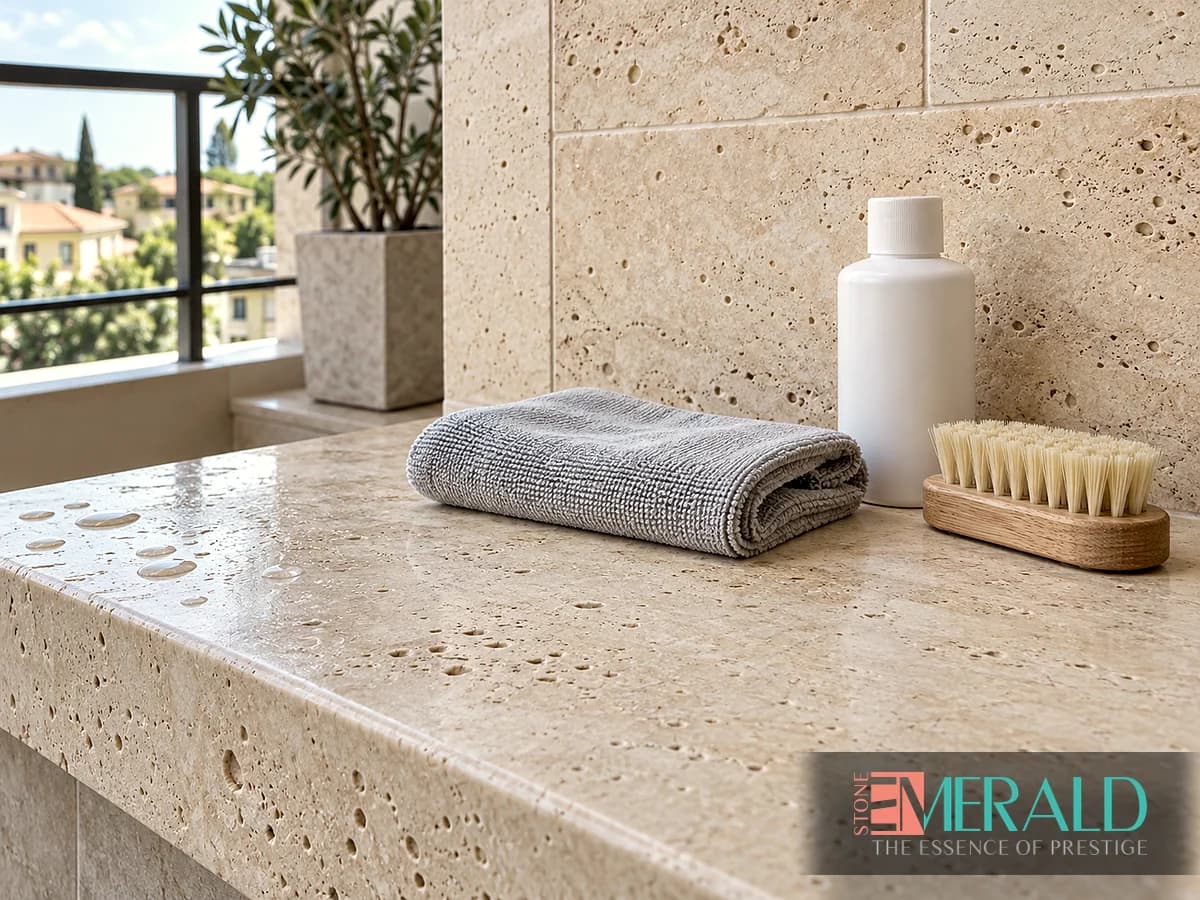
Modern villa facades with stone
Modern villa facades feature large-format slabs, clean horizontal lines, and stone combined with glass and thermowood. Crystal silver and cream travertine are most requested.
On modern villas, stone covers main facade areas; timber or metal appears in accent bands. Minimal joints and precise installation carry high visual weight.
Tehran and Karaj villa communities often use neutral white, cream, and grey palettes. Uniform sorting matters when neighbouring villas build simultaneously.
Our modern facade guide covers format and material combination detail. Expansion joints, horizontal drip details, and window perimeter sealing are the three zones where most stone facade failures begin — detail them fully on execution drawings. Slab thickness must align with substrate design, fixing system, wind load, or traffic level; extra thickness without structural planning only raises cutting, freight, and anchor cost without real durability gain.
- Low water absorption on facade stone prevents freeze-thaw damage and joint moisture ingress
- Wind load calculation before thickness selection is mandatory on tall facade envelopes
- Slab viewing in project daylight prevents costly colour mis-specification on site
- Documenting batch technical specs in the supply contract reduces delivery disputes
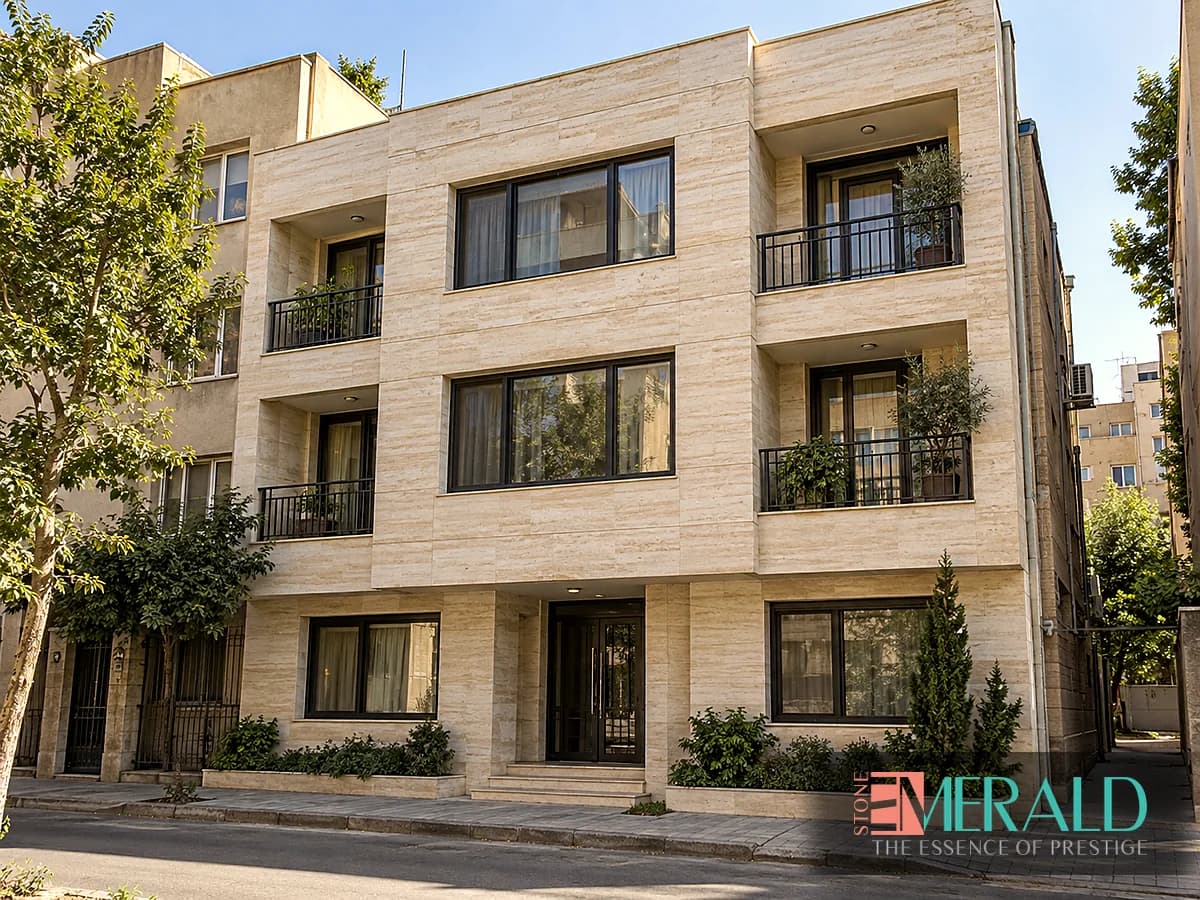
Villa facade stone in desert and temperate climates
In desert and dry temperate climates, intense sun and wide temperature swings are main challenges. Light stone with matte finish reduces surface overheating.
Cream and white travertine and Dehbid marble suit desert and Yazd-style villas. Granite works well at entries and high-traffic villa zones.
In areas with cold nights, freeze-thaw resistance matters. Appropriate grade selection and expansion joints are execution essentials.
Stone facades face daily moisture cycling; lower-absorption stone with matte finish delivers more stable performance against rain, freeze-thaw, and urban pollution. Travertine balances aesthetics, weight, and workability for most Iranian residential and commercial facades; our travertine guide is the complementary reference. On phased projects, keep a reference batch in stock so later phases match quarry, grade, and finish — large facades and lobbies look professionally uniform when batches are planned.
- Expansion joints every 6–8 metres prevent thermal movement cracking on stone facades
- Window perimeter and head sealing are the most common water ingress points on stone cladding
- Honed or sandblasted finishes outperform polished surfaces on exterior facade zones
- Supplier and installer coordination ensures fixing quality and long-term facade durability
Budget and economical villa facade stone
Villas typically have less facade area than towers but moulding detail may raise labour share. First-grade travertine with standard installation offers the best cost-aesthetics balance.
To control budget, first-grade stone on street facades and second grade on courtyard elevations can work — color harmony between grades must be verified in advance.
Our facade pricing cluster explains cost drivers. Emerald Stone provides villa-specific quotations.
Expansion joints, horizontal drip details, and window perimeter sealing are the three zones where most stone facade failures begin — detail them fully on execution drawings. Granite is the safer choice in cold and coastal climates due to very low absorption and high hardness; our granite guide covers domestic varieties including Natanz. Install slabs following an approved layout drawing so joints do not fall across main circulation axes or primary sightlines in the space.
- Low water absorption on facade stone prevents freeze-thaw damage and joint moisture ingress
- Wind load calculation before thickness selection is mandatory on tall facade envelopes
- Slab viewing in project daylight prevents costly colour mis-specification on site
- Documenting batch technical specs in the supply contract reduces delivery disputes
Emerald Stone approach to villa facades
On villa projects, Emerald Stone offers climate-matched stone selection advisory, Kashmar cream and crystal silver supply, and execution team coordination.
Contact Emerald Stone for free stone engineering consultation and villa facade stone selection.
Travertine balances aesthetics, weight, and workability for most Iranian residential and commercial facades; our travertine guide is the complementary reference.
Granite is the safer choice in cold and coastal climates due to very low absorption and high hardness; our granite guide covers domestic varieties including Natanz.
Before final order, review stone samples on site alongside other facade or floor finishes; daylight angle and temperature shift color and texture noticeably, preventing costly specification mistakes.
Define numeric tolerances for fissures, pits, tone variation, and batch uniformity in the supply contract so delivery disputes drop and installation schedules stay on track. Before final order, review stone samples on site alongside other facade or floor finishes; daylight angle and temperature shift color and texture noticeably, preventing costly specification mistakes.
- Expansion joints every 6–8 metres prevent thermal movement cracking on stone facades
- Window perimeter and head sealing are the most common water ingress points on stone cladding
- Honed or sandblasted finishes outperform polished surfaces on exterior facade zones
- Supplier and installer coordination ensures fixing quality and long-term facade durability
| Region | Recommended stone | Finish | Execution note |
|---|---|---|---|
| Region | Technical value | Application note | Emerald note |
| Region | Mid range | Residential project | Suitable |
| Region | Upper range | Commercial project | With supervision |
Related products
Related projects
Frequently asked questions
What is the best stone for villa facades?
Cream and white travertine with chiseled or honed finish suits most Iranian residential villas. On northern coastal villas, low-absorption granite performs better. In mountain villas, stone with high freeze-thaw resistance is recommended. Final choice must align with villa architecture and local climate.
How does a modern villa facade differ from a classic one?
Modern villa facades use large slabs, minimal joints, and stone combined with glass and timber. Classic villa facades feature stone mouldings, cornices, and decorative pilasters. Modern installs faster; classic delivers more authentic character. Both styles are common on northern and desert villas.
Is there a recommended stone for villa facades in northern Iran?
In coastal northern zones with humidity and salt air, granite or first-grade travertine with professional sealing is recommended. Matte or sandblasted finish reduces rain streaking. Periodic facade washing and joint resealing are maintenance requirements in this climate. For a precise decision, visit slabs on site and request the batch technical report.
What does stone cladding cost for a villa facade?
Villa facade cost depends on area, stone type, style (modern or classic), and site access. Villas with stone moulding carry higher installation cost. Stone typically represents 40–50% of total cost. Contact Emerald Stone for a villa-specific estimate. For a precise decision, visit slabs on site and request the batch technical report.
How does Emerald Stone support villa facade projects?
Emerald Stone analyses villa use and proposes two or three stone options matched to climate and architecture. Slab viewing, uniform sorting, and installer coordination are available. Kashmar cream travertine and Dehbid marble are among the most requested villa facade stones.
Free stone engineering consultation
Emerald Stone's engineering team helps you select the right stone for your project scope, budget, and execution details.
Request free consultation