
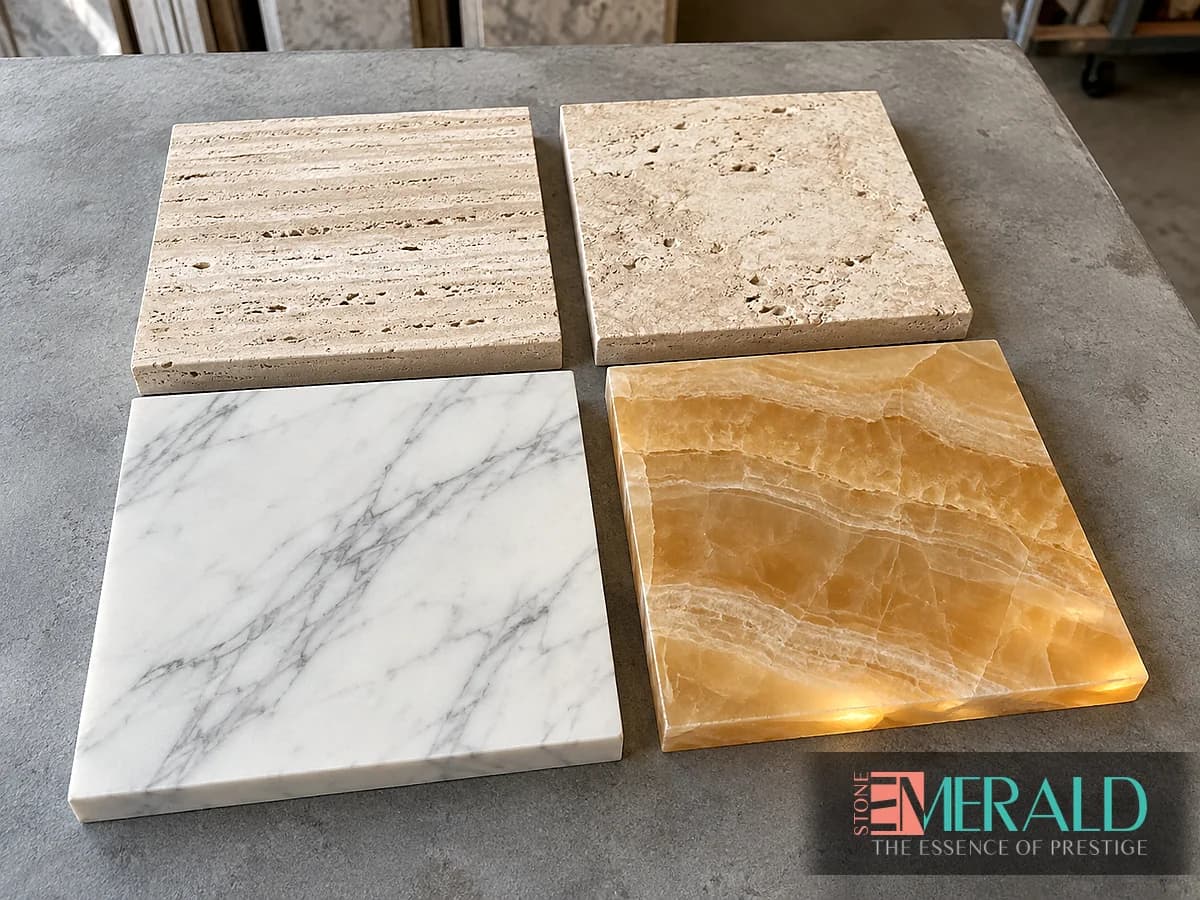
For Iranian facades, first-grade travertine at 1–3% water absorption gives the best balance of appearance, weight, cost and installability, making it the default for most residential and commercial buildings. Granite, at 0.1–0.3% absorption, is the most durable choice in cold, coastal and high-traffic conditions. Marble looks the most luxurious but needs regular maintenance outdoors.
Related guide: Building facade stone guide
General ranking of facade stones
Travertine offers the best balance of aesthetics, cost, weight, and installability for most residential and commercial facades in Iran. Granite is the most durable against moisture, freeze-thaw, and abrasion. Marble delivers the most luxurious appearance but needs more care outdoors.
No stone wins in every condition. In cold, wet northern climates, granite or sealed travertine performs better. In desert zones with intense sun, light colors and matte finishes reduce surface overheating.
For detailed comparison, Emerald Stone's travertine, granite, and marble guides are supplementary resources. Our travertine facade cluster covers specialist facade options.
At Emerald Stone, the 'best' stone recommendation always follows project analysis — never a single fixed answer for all buildings. Stone facades face daily moisture cycling; lower-absorption stone with matte finish delivers more stable performance against rain, freeze-thaw, and urban pollution. Before final order, review stone samples on site alongside other facade or floor finishes; daylight angle and temperature shift color and texture noticeably, preventing costly specification mistakes.
- First-grade travertine with proper sealing suits most residential facade specifications
- Natanz granite is the durable choice for harsh climates and high-traffic facades
- Dehbid marble suits luxury facades with professional waterproofing and maintenance
- Uniform sorting matters equally for performance and appearance across all stone types
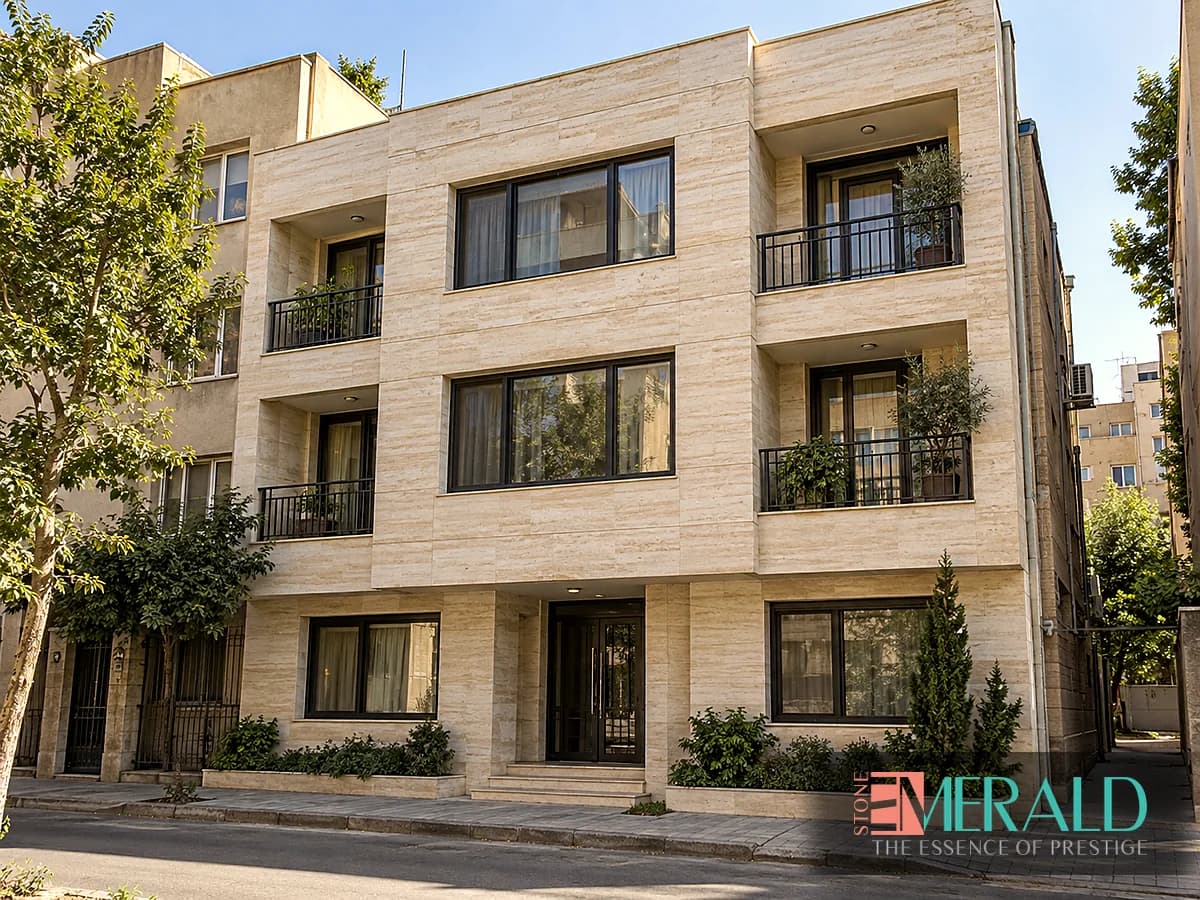
Facade stone selection by climate
In cold regions with frequent freeze-thaw cycles, low water absorption is the top priority. Granite and controlled-porosity first-grade travertine suit best. Polished marble in these zones needs tighter jointing.
In coastal zones with humidity and salt air, low-absorption stone and matte finishes are recommended. Periodic facade washing and joint resealing are maintenance requirements.
In polluted cities, stone surfaces may accumulate deposits. Sandblasted or bush-hammered finishes show staining less than polished. Granite resists environmental acids better than marble.
Our building facade stone guide covers general selection parameters in the technical criteria section. Expansion joints, horizontal drip details, and window perimeter sealing are the three zones where most stone facade failures begin — detail them fully on execution drawings. Define numeric tolerances for fissures, pits, tone variation, and batch uniformity in the supply contract so delivery disputes drop and installation schedules stay on track.
- Low water absorption on facade stone prevents freeze-thaw damage and joint moisture ingress
- Wind load calculation before thickness selection is mandatory on tall facade envelopes
- Slab viewing in project daylight prevents costly colour mis-specification on site
- Documenting batch technical specs in the supply contract reduces delivery disputes
Most durable and water-resistant facade stone
Granite at 0.1–0.3% water absorption is the most moisture-resistant common facade stone. Natanz and Chayan granite are widely used Iranian options.
Travertine at 1–3% absorption delivers acceptable performance with proper grade and professional sealing. Lower cost and strong aesthetics make it attractive for many projects.
Marble absorbs less water than travertine but is more sensitive to scratching and environmental acids. Excellent for luxury facades with regular maintenance.
Our facade pricing cluster explains cost drivers for each option. Travertine balances aesthetics, weight, and workability for most Iranian residential and commercial facades; our travertine guide is the complementary reference. Slab thickness must align with substrate design, fixing system, wind load, or traffic level; extra thickness without structural planning only raises cutting, freight, and anchor cost without real durability gain.
- Expansion joints every 6–8 metres prevent thermal movement cracking on stone facades
- Window perimeter and head sealing are the most common water ingress points on stone cladding
- Honed or sandblasted finishes outperform polished surfaces on exterior facade zones
- Supplier and installer coordination ensures fixing quality and long-term facade durability
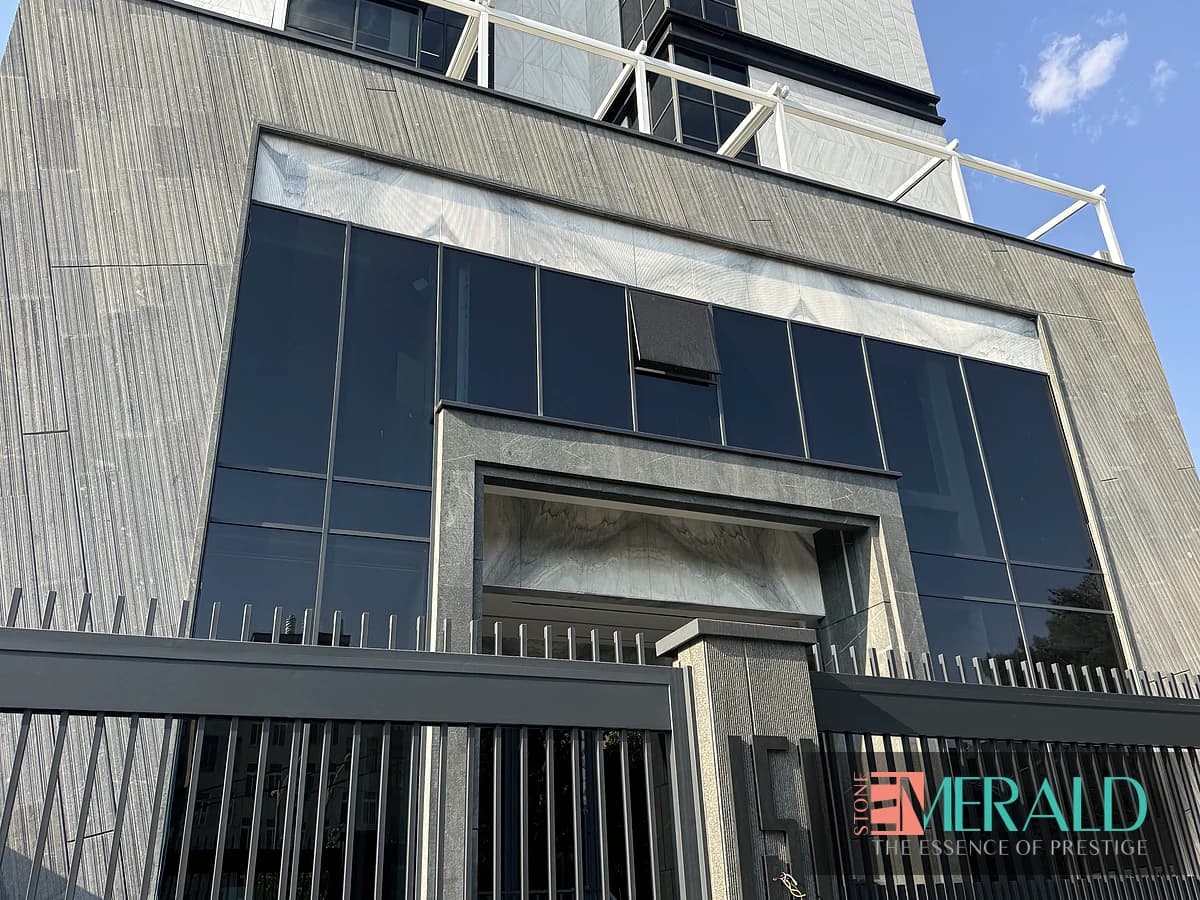
Quick picks by project type
Luxury residential: Kashmar cream travertine or Dehbid honed marble. Commercial tower: crystal silver or black granite rainscreen. Coastal villa: sandblasted granite or sealed travertine.
Budget-conscious: second-grade travertine with acceptable sorting and standard installation. Moulded facade: cream travertine with chiseled finish — see our Roman facade guide.
Emerald Stone proposes two to three options with technical and price comparison per project. Public space facade and Farvardin Tower reference our supply quality.
Stone facades face daily moisture cycling; lower-absorption stone with matte finish delivers more stable performance against rain, freeze-thaw, and urban pollution. Granite is the safer choice in cold and coastal climates due to very low absorption and high hardness; our granite guide covers domestic varieties including Natanz.
- Low water absorption on facade stone prevents freeze-thaw damage and joint moisture ingress
- Wind load calculation before thickness selection is mandatory on tall facade envelopes
- Slab viewing in project daylight prevents costly colour mis-specification on site
- Documenting batch technical specs in the supply contract reduces delivery disputes
Emerald Stone approach to best facade stone
At Emerald Stone, the 'best' stone is the one that achieves the architect's vision with minimal execution and maintenance risk. Our engineering team impartially compares travertine, granite, and marble.
Contact us for free stone engineering consultation and a project-specific recommendation.
Expansion joints, horizontal drip details, and window perimeter sealing are the three zones where most stone facade failures begin — detail them fully on execution drawings.
Travertine balances aesthetics, weight, and workability for most Iranian residential and commercial facades; our travertine guide is the complementary reference.
Granite is the safer choice in cold and coastal climates due to very low absorption and high hardness; our granite guide covers domestic varieties including Natanz.
Before final order, review stone samples on site alongside other facade or floor finishes; daylight angle and temperature shift color and texture noticeably, preventing costly specification mistakes.
- Expansion joints every 6–8 metres prevent thermal movement cracking on stone facades
- Window perimeter and head sealing are the most common water ingress points on stone cladding
- Honed or sandblasted finishes outperform polished surfaces on exterior facade zones
- Supplier and installer coordination ensures fixing quality and long-term facade durability
| Stone | Durability | Water absorption | Relative price |
|---|---|---|---|
| Stone | Technical value | Application note | Emerald note |
| Stone | Mid range | Residential project | Suitable |
| Stone | Upper range | Commercial project | With supervision |
Related products
Related projects
Frequently asked questions
What is the most durable stone for building facades?
Granite with 0.1–0.3% water absorption is the most durable common facade stone against moisture, freeze-thaw, and abrasion. Natanz and Chinese granite are widely used Iranian options. In harsh climates and high-traffic envelopes, granite outperforms travertine and marble long term.
Is travertine or granite better for facades?
Travertine offers the best balance of aesthetics, cost, and installability for most residential facades. Granite performs better in cold, coastal, and high-durability projects. Choice between them depends on climate, building height, fixing system, and budget. No single stone wins in every condition.
Is marble recommended for exterior facades?
Marble suits luxury facades with uniform texture and natural polish but demands more care outdoors. Matte or honed finish, professional jointing, and periodic sealing are essential. In industrial or high-pollution zones, granite or sealed travertine is more practical. For a precise decision, visit slabs on site and request the batch technical report.
How do I choose the best facade stone for my project?
Define climate, building height, fixing system, and budget first. Then compare two or three stone options with technical reports. Viewing slabs in the project's natural daylight prevents costly mistakes. At Emerald Stone, application analysis precedes every stone recommendation. For a precise decision, visit slabs on site and request the batch technical report.
Which facade stone has the lowest water absorption?
Granite is the least absorbent common facade stone. Travertine at 1–3% absorption performs acceptably with proper grade and professional sealing. Marble absorbs less than travertine but is more sensitive to environmental acids. Review batch laboratory reports before ordering. For a precise decision, visit slabs on site and request the batch technical report.
Free stone engineering consultation
Emerald Stone's engineering team helps you select the right stone for your project scope, budget, and execution details.
Request free consultation