
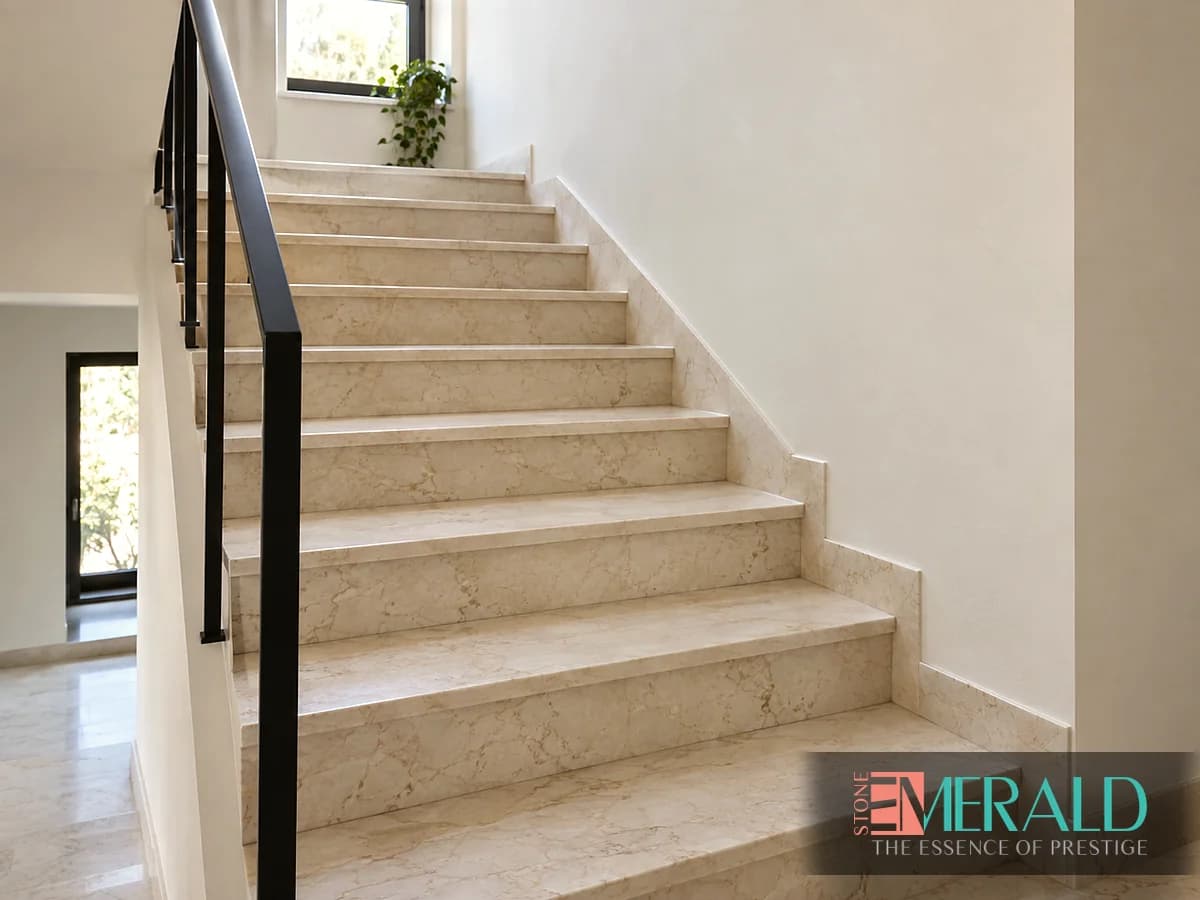
Marble stair stone works when three things are specified together: thickness of 2 to 3 cm so treads resist concentrated load, an anti-slip nosing of ridged metal edging or linear grooves, and a quarry matched to traffic. Dehbid suits luxury residential flights, Aligoudarz commercial and fire escape stairs. Reseal every two to three years.
Related guide: Complete marble stone guide
Why marble suits staircase applications
Medium-to-high compressive strength and a range of finish options make marble a dependable, widely used choice for interior staircases in residential, office, and commercial buildings alike across the country and well beyond its borders.
Unlike wood, which has a more limited service life against moisture and wear, marble stair stone with proper care can last decades without significant deformation or erosion, remaining beautiful throughout that entire lifespan of frequent daily use.
Marble's color range, from Dehbid's light cream through Aligoudarz's grey to Black Lady's black, gives a designer full freedom to coordinate the staircase with a project's interior architectural style, from classic to fully contemporary and modern.
Beyond strength and beauty, marble's hard, impermeable surface also resists mold growth and odor absorption noticeably better than soft flooring like carpet or wood in damp spaces such as entrance staircases or basement stairwells prone to humidity.
Safety and slip resistance on stair stone
A fully polished finish, common for lobby floors, is not recommended alone for stair treads, since it can become quite slippery when wet or dusty; an anti-slip strip along the stair nosing is therefore essential and simply cannot be skipped on any project.
This anti-slip strip is typically a metal edge with fine ridges, or parallel grooves cut directly into the stone often called a linear groove finish, providing necessary friction without harming the staircase's overall appearance or visual appeal in any meaningful way.
In public and commercial projects with heavy foot traffic, building safety codes for slope, riser height, and nosing must be considered alongside the choice of stone finish to prevent potential accidents on the stairs entirely and reliably.
For exterior or semi-open stairs exposed to rain and snow, a brushed or deeper grooved finish is recommended, since it creates far more friction than a simple polished finish under wet conditions and noticeably reduces the risk of slips and falls. In public projects such as schools or hospitals with stricter safety codes, choosing a contrasting color for the stair nosing alongside the anti-slip strip also improves visibility for visually impaired visitors and older adults.
Best marble options for stairs
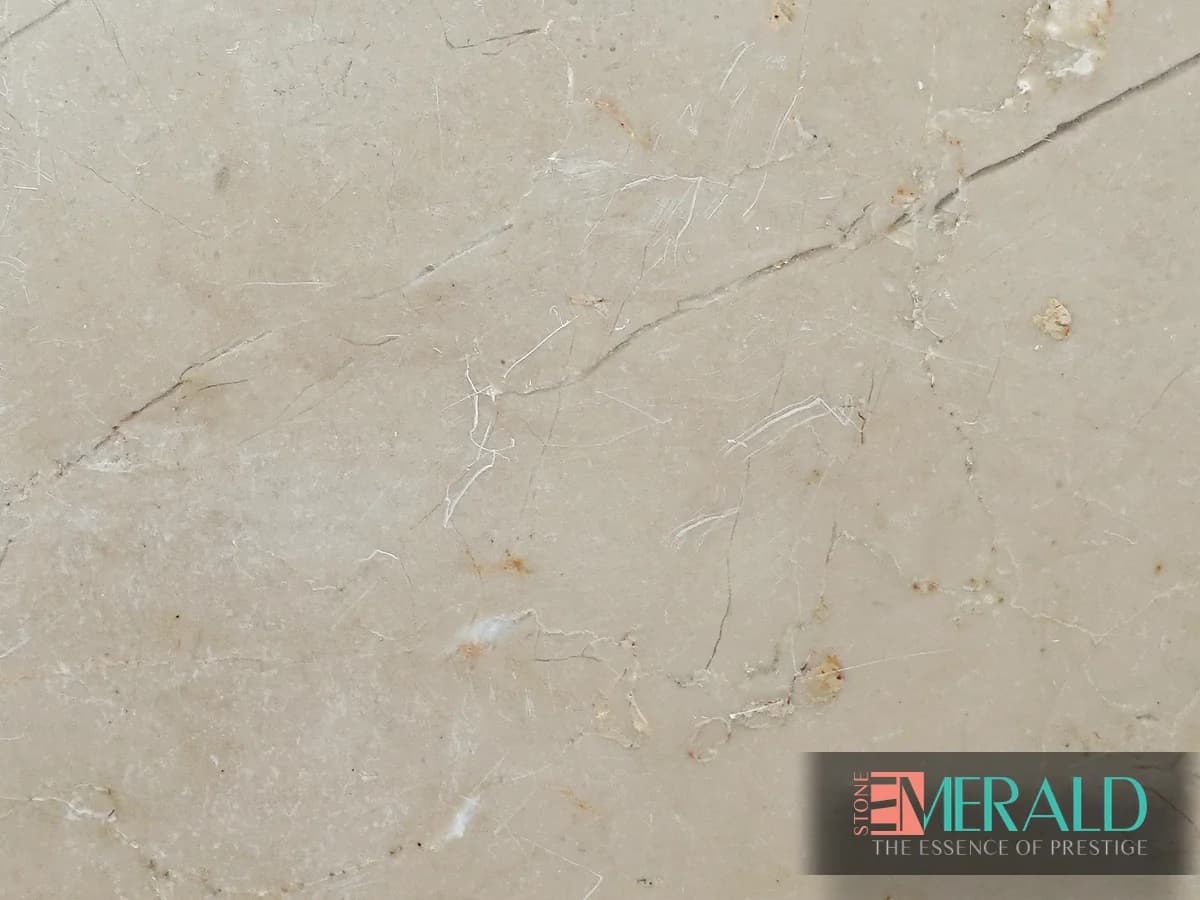
Dehbid and Dehbid Shayan, with their warm cream tone and classic look, are among the most requested choices for luxury residential staircases and are often paired with bronze or gold edging for an even more luxurious overall feel.
Aligoudarz is a more economical choice for commercial projects and high-traffic buildings, thanks to its solid strength and competitive pricing, suiting main staircases and fire escape stairs without demanding complex, expensive, and time-consuming ongoing upkeep.
For a signature staircase in a lobby or showcase space, pairing Dehbid stair treads with Black Lady or Gisou on the railing or side wall creates a distinctive, luxury design that captures every single visitor's attention.
In villa projects with a two-flight or curved staircase, choosing a stone with uniform veining like Aligoudarz or standard Dehbid usually gives a better visual result than heavily veined stones like Black Lady, since matching vein patterns across complex surfaces is far more difficult. For emergency fire escape stairs in commercial buildings, second-grade Aligoudarz with a deeper grooved finish is commonly chosen instead, since the top priority there is safety and structural strength rather than luxury appearance.
Installation and maintenance notes for stone stairs
Slab thickness for stairs is typically recommended between 2 and 3 cm so the stone withstands concentrated foot load and nosing stress without cracking over time; thinner slabs should only be considered for low-traffic stairs on genuinely limited-budget projects.
Precise jointing between the tread and riser, along with proper adhesive and mortar selection, prevents delamination and a hollow, clicking sound underfoot over the long term, ensuring genuinely solid execution quality throughout the entire staircase.
Regular maintenance, periodic cleaning, inspecting the anti-slip strip, and resealing every two to three years, preserves the stone staircase's appearance and safety over time and meaningfully extends its useful overall service life expectancy.
In projects with extremely high-traffic staircases, such as shopping centers or large office buildings, seasonal inspection of the anti-slip strip and replacing it before it wears through completely is one of the most important preventive measures available for reducing slip-related incident risk.
Stair stone supply at Emerald Stone
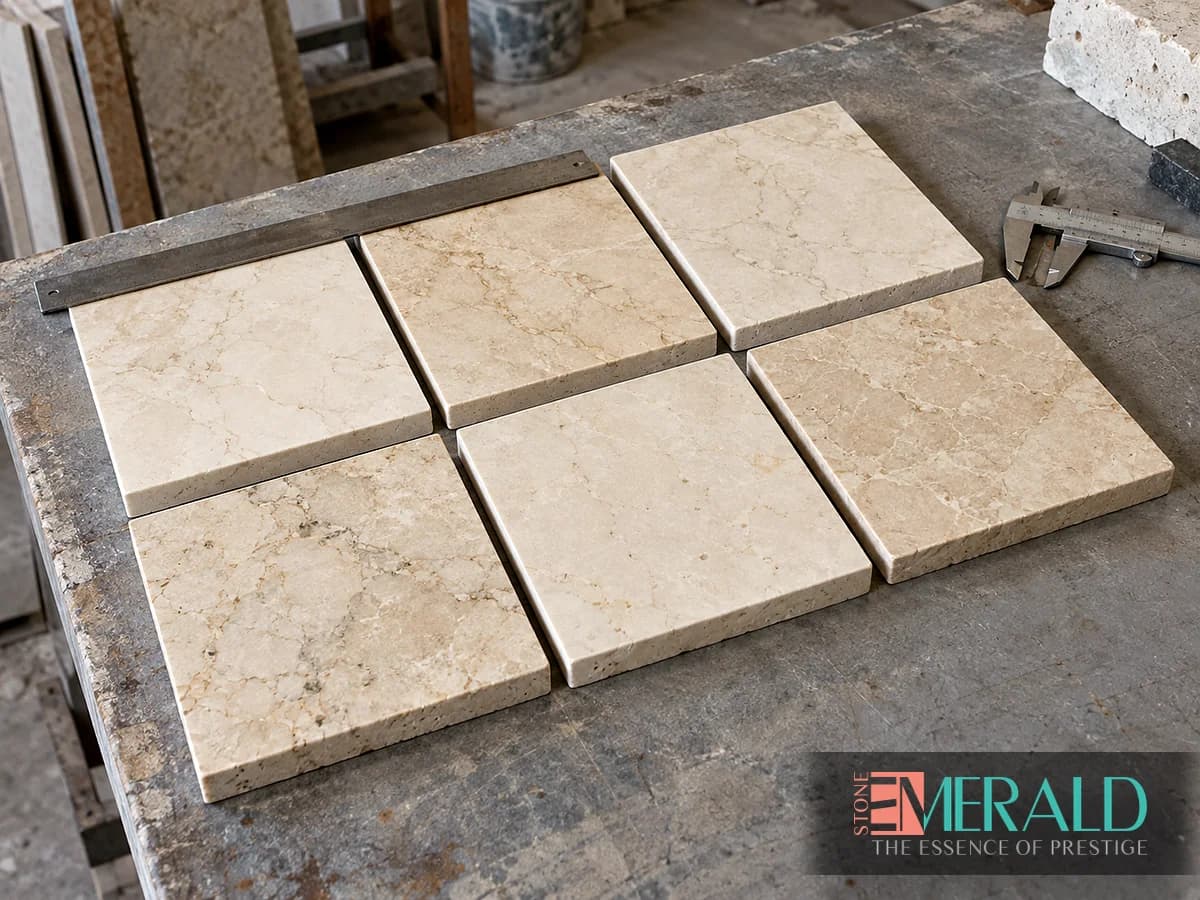
For staircase projects, Emerald Stone provides complete, free technical consultation, from selecting the right marble type for the project's style to recommending finish and anti-slip details, so the final result is both beautiful and genuinely safe for everyday use.
For large-volume projects like residential towers or commercial complexes, we also coordinate closely with the contractor's execution drawings to supply stair slabs in the exact thickness and dimensions required precisely on schedule.
For guidance choosing marble stair stone or a project quote, contact Emerald Stone's engineering team for a fast, practical response tailored to your staircase. Our technical team also advises on finish selection matched to the stair's location, whether interior, semi-open, or exterior, and, where needed, custom nosing cuts to align with the project's railing or metal edging.
For multi-story buildings with several similar staircases, Emerald Stone also evaluates unified supply from a single production lot across every floor, preserving consistent color and texture throughout the building; this attention to detail across dozens of floors is exactly why architects trust Emerald Stone with their most demanding vertical circulation projects.
| Type | Strength | Recommended stair use |
|---|---|---|
| Dehbid Shayan | Medium–high | Luxury residential stairs |
| Aligoudarz | High | High-traffic commercial stairs |
| Black Lady | Medium–high | Signature railing and nosing |
Related products
Related projects
Frequently asked questions
What is the best marble for stair stone?
Dehbid Shayan suits luxury residential stairs with a classic look, while Aligoudarz is recommended for high-traffic commercial stairs thanks to its strength and competitive price. The final choice depends on project style, budget, and expected daily foot traffic, and is best confirmed with a consultant.
Is marble stair stone slippery?
A fully polished finish without safety measures can be slippery, but with a metal anti-slip strip or grooved edge on the nosing, slip risk is significantly reduced and the stairs remain safe for daily use, even in contact with water.
What is the right thickness for stair stone?
For typical interior stairs, 2 to 3 cm is recommended so the slab withstands concentrated foot load and nosing stress without cracking over time. Thinner slabs can be considered for low-traffic stairs or projects with a noticeably tighter overall budget.
What does maintaining marble stair stone involve?
Regular cleaning with a neutral detergent, periodic inspection of the anti-slip strip, and resealing every two to three years are the key maintenance steps for preserving the stone staircase's appearance and safety over time, especially on high-traffic, heavily used stairs.
Free stone engineering consultation
Emerald Stone's engineering team helps you select the right stone for your project scope, budget, and execution details.
Request free consultation