
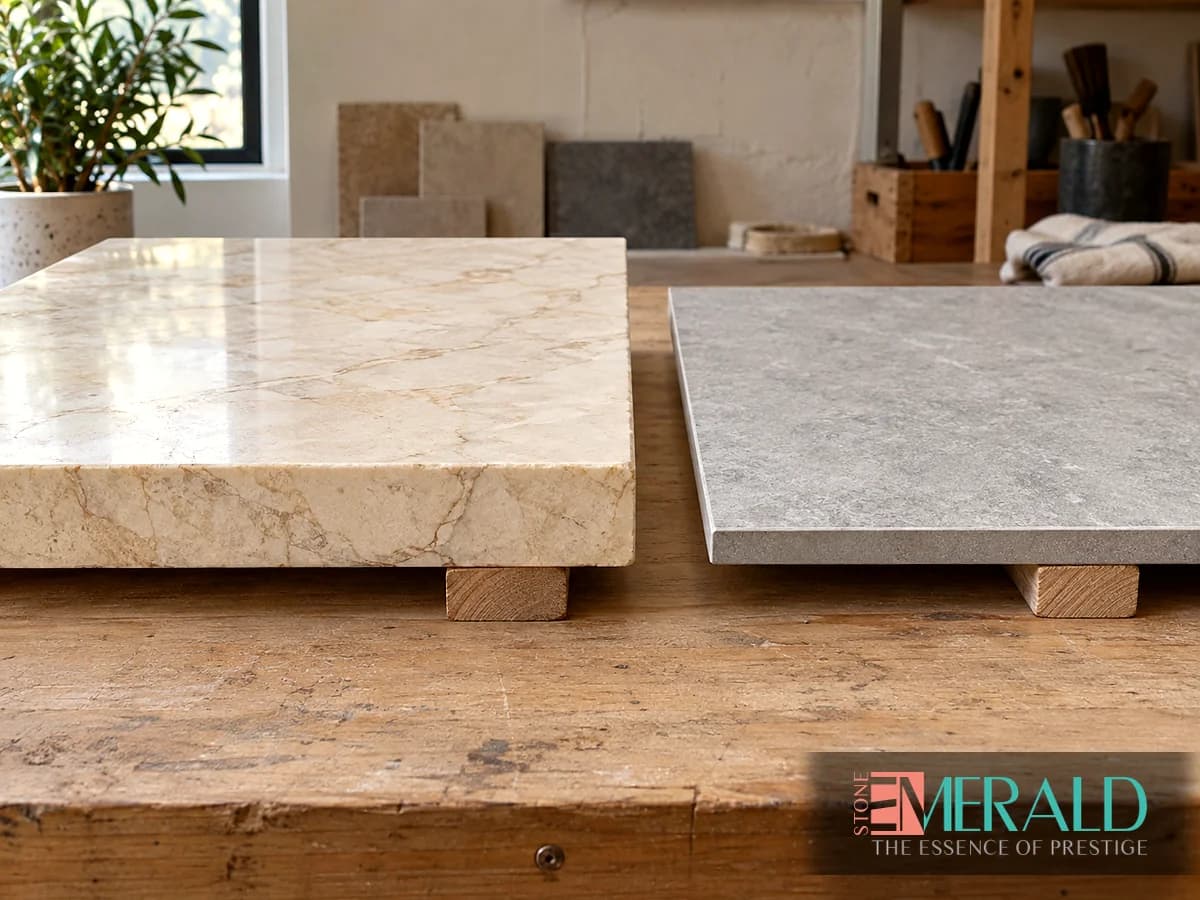
Natural stone is the better floor for luxury residential and long-life projects: scratches come out with re-honing, whereas a deep crack in ceramic usually means replacing the tile. Stone costs roughly 50 to 100 percent more than comparable porcelain and needs periodic sealing, so porcelain remains the practical answer on tight budgets and heavy commercial traffic.
Related guide: Stone flooring guide
Durability and lifespan: stone vs ceramic
Natural stone with high hardness lasts decades and can be refinished. Surface scratches on stone can be removed through re-honing.
Quality ceramic and porcelain also last long but deep cracks or breaks usually mean full tile replacement. Local repair is possible but not always invisible.
In high-traffic commercial zones, granite and porcelain are both strong options. In luxury residential, stone's refinishing advantage matters.
Floor stone must match actual traffic levels; living rooms see moderate use but corridors and yards need harder stone and slip-resistant finishes. Before final order, review stone samples on site alongside other facade or floor finishes; daylight angle and temperature shift color and texture noticeably, preventing costly specification mistakes. After installation, choose sealers matched to climate and traffic; exterior and high-traffic zones need documented maintenance cycles from handover day onward.
- Natural stone regains fresh appearance through refinishing and extended service life
- Porcelain ceramic offers high abrasion resistance against daily floor traffic
- Deep ceramic cracks usually require replacing the damaged tile entirely
- Real durability of both depends on installation quality and sub-base preparation
Property value and upfront cost
Natural stone typically raises perceived property value more than ceramic. Luxury buyers distinguish natural stone as a premium differentiator.
Ceramic has lower upfront cost and faster installation. For budget-limited or rental projects, ceramic is more logical.
Total cost of ownership includes maintenance and repair. Stone may cost more initially but less replacement expense long-term through refinishing.
Floor substrate demands level, dry concrete and expansion joints; installing stone on uneven surfaces causes lippage, cracking, and corner breakage within months. Floor stone must match actual traffic levels; living rooms see moderate use but corridors and yards need harder stone and slip-resistant finishes. Define numeric tolerances for fissures, pits, tone variation, and batch uniformity in the supply contract so delivery disputes drop and installation schedules stay on track.
- Two centimetre thickness is standard for residential interior floors with normal traffic
- Level dry substrate is prerequisite for stone floor installation without lippage or cracking
- Honed or matte finish is safer than polished for most interior floor applications
- Expansion joints at wall junctions prevent corner lifting on stone floor installations
Aesthetics and visual uniqueness
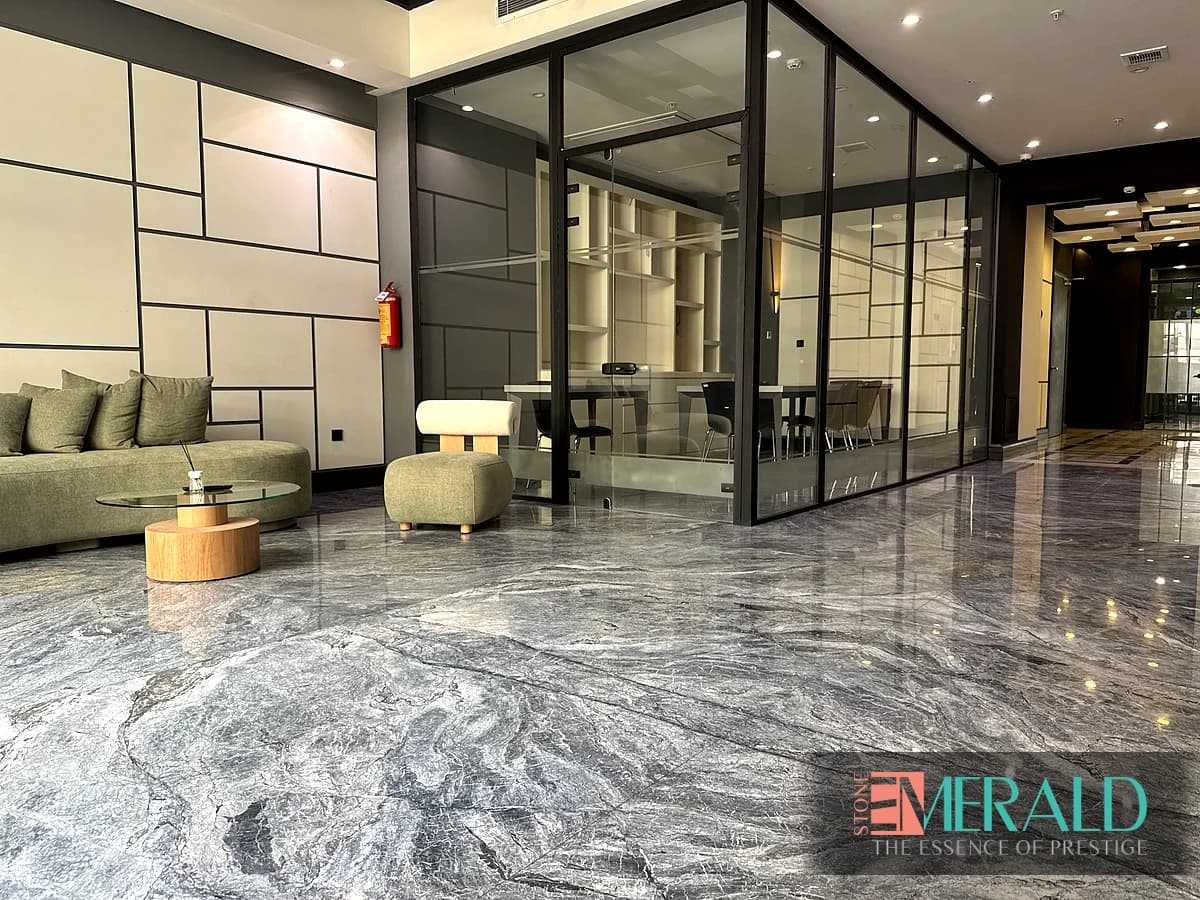
Natural stone has unique veining and texture — no two stone floors are identical. This uniqueness is a luxury design advantage.
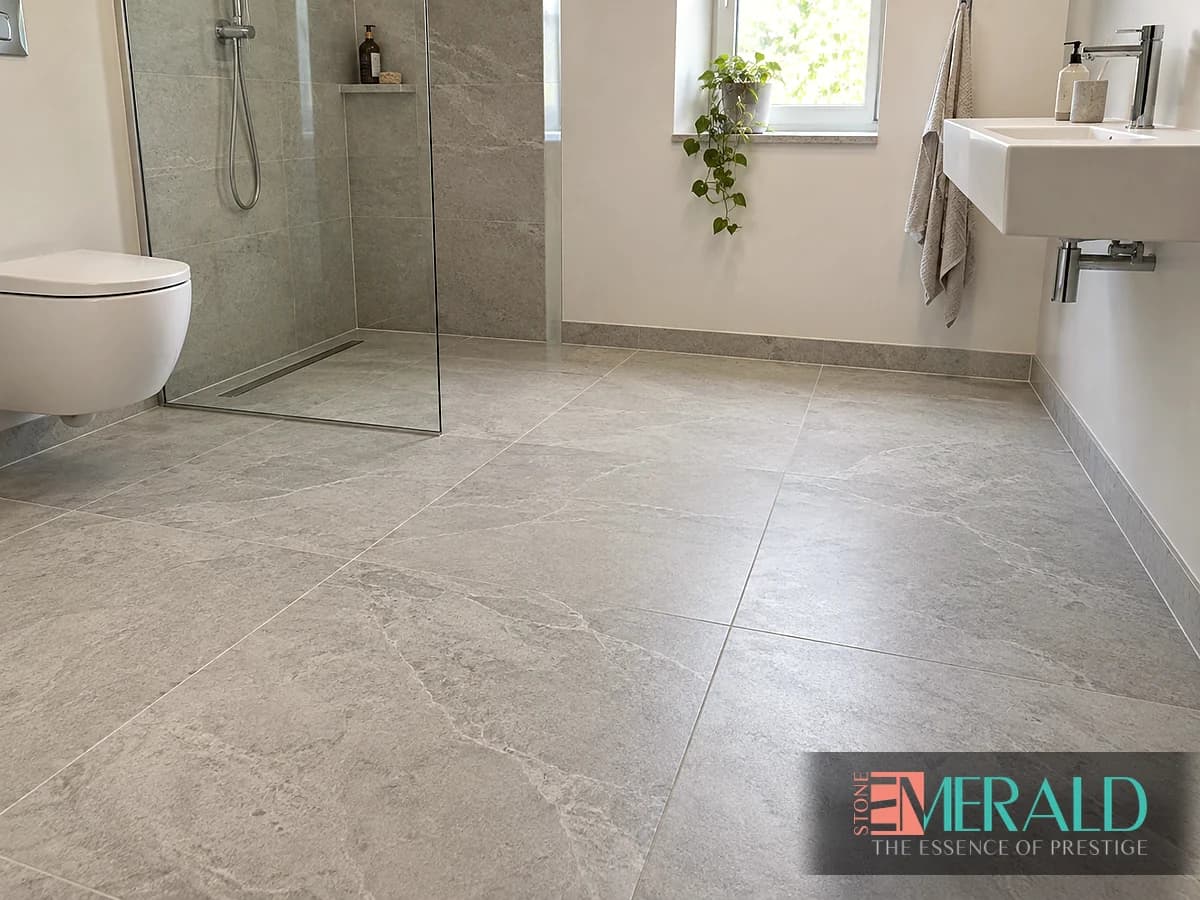
Ceramic offers uniform, repeatable patterns. Where color and pattern consistency matters, ceramic gives more control.
Both light and dark stone suit contemporary architecture. Ceramic with digital printing can simulate almost any design.
Dehbid and Aligoudarz marble dominate luxury interior floors; our marble guide compares quarries and grading in depth. Floor substrate demands level, dry concrete and expansion joints; installing stone on uneven surfaces causes lippage, cracking, and corner breakage within months. Slab thickness must align with substrate design, fixing system, wind load, or traffic level; extra thickness without structural planning only raises cutting, freight, and anchor cost without real durability gain.
- Underfloor heating compatibility must be specified in execution drawings before installation
- Periodic sealing in wet zones noticeably extends natural stone floor service life
- Consistent colour sorting matters visually on large-scale floor stone projects
- Batch technical reports clarify travertine, marble, and granite choices per room zone
Maintenance and cleaning
Stone needs periodic sealing in wet zones. Cleaning uses pH-neutral detergent. Acidic cleaners damage marble.
Ceramic has simpler daily maintenance; grout between tiles is the main weak point. Dirty grout ruins floor appearance.
In kitchens and bathrooms, both need proper jointing. Granite and porcelain perform well in wet areas.
Natanz granite is a core Emerald Stone recommendation for yards, parking, and building entries due to abrasion resistance and low water absorption. Dehbid and Aligoudarz marble dominate luxury interior floors; our marble guide compares quarries and grading in depth. On phased projects, keep a reference batch in stock so later phases match quarry, grade, and finish — large facades and lobbies look professionally uniform when batches are planned.
- Two centimetre thickness is standard for residential interior floors with normal traffic
- Level dry substrate is prerequisite for stone floor installation without lippage or cracking
- Honed or matte finish is safer than polished for most interior floor applications
- Expansion joints at wall junctions prevent corner lifting on stone floor installations
Emerald Stone approach to stone vs ceramic
Emerald Stone specialises in natural stone and impartially explains stone advantages and limits versus ceramic in technical consultation.
If your goal is a luxury floor with long life and unique appearance, stone is the better option. Contact us for free stone engineering consultation.
Before final order, review stone samples on site alongside other facade or floor finishes; daylight angle and temperature shift color and texture noticeably, preventing costly specification mistakes.
Define numeric tolerances for fissures, pits, tone variation, and batch uniformity in the supply contract so delivery disputes drop and installation schedules stay on track.
Slab thickness must align with substrate design, fixing system, wind load, or traffic level; extra thickness without structural planning only raises cutting, freight, and anchor cost without real durability gain.
On phased projects, keep a reference batch in stock so later phases match quarry, grade, and finish — large facades and lobbies look professionally uniform when batches are planned. Natanz granite is a core Emerald Stone recommendation for yards, parking, and building entries due to abrasion resistance and low water absorption. Install slabs following an approved layout drawing so joints do not fall across main circulation axes or primary sightlines in the space.
- Underfloor heating compatibility must be specified in execution drawings before installation
- Periodic sealing in wet zones noticeably extends natural stone floor service life
- Consistent colour sorting matters visually on large-scale floor stone projects
- Batch technical reports clarify travertine, marble, and granite choices per room zone
| Criterion | Natural stone | Ceramic/porcelain |
|---|---|---|
| Criterion | Technical value | Application note |
| Criterion | Mid range | Residential project |
| Criterion | Upper range | Commercial project |
Related products
Related projects
Frequently asked questions
Is stone or ceramic better for floors?
Natural stone offers unique appearance, higher durability, and added property value. Ceramic has lower upfront cost and faster installation but may need replacement sooner. For luxury spaces and long-life projects, stone is usually the better choice. For tight budgets and heavy commercial traffic, porcelain is more practical.
What is the main durability difference between stone and ceramic?
Natural stone lasts decades with proper honing and maintenance and can be repaired. Broken ceramic tiles usually require full replacement. Stone resists surface abrasion better but needs periodic sealing. Ceramic resists stains but edges may chip under heavy traffic. For a precise decision, visit slabs on site and request the batch technical report.
How much more does stone flooring cost than ceramic?
Natural stone typically costs 50–100% more than comparable quality porcelain. Part of the difference comes from cutting, freight, and specialist installation. Added property value and longer service life offset the initial premium. Compare both options at your project area.
Can stone and ceramic be combined in one project?
Yes — stone in main living zones and ceramic in bathrooms and kitchens is a common approach. Colour and level coordination between materials is a design requirement. Expansion joints at material transitions are essential. This combination helps control budget. For a precise decision, visit slabs on site and request the batch technical report.
Is stone floor maintenance harder than ceramic?
Stone needs periodic sealing and mild cleaning products. Ceramic has simpler daily maintenance but grout joints may need repair. Both materials last long with proper care. Choice should reflect traffic level and maintenance preference. For a precise decision, visit slabs on site and request the batch technical report.
Free stone engineering consultation
Emerald Stone's engineering team helps you select the right stone for your project scope, budget, and execution details.
Request free consultation