
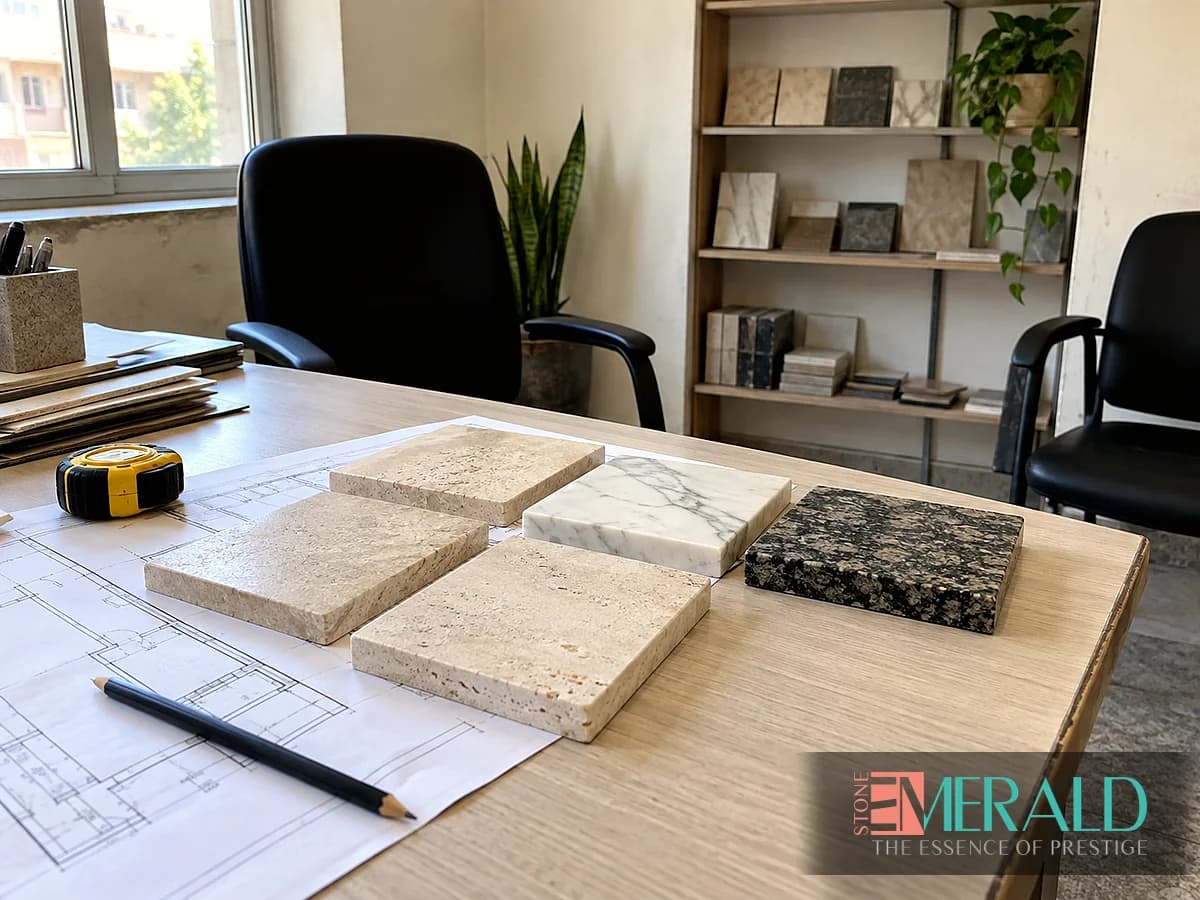
Total stone floor cost splits into the slab itself, at roughly 50 to 60 percent, with installation and substrate work taking the remainder. First-grade uniform sorting typically costs 20 to 40 percent more than second grade, each extra millimetre of thickness adds about 10 to 15 percent, and areas above 100 square metres earn better terms.
Related guide: Stone flooring guide
Stone floor cost breakdown
Total stone floor cost includes stone price, installation, sub-base preparation, adhesive or mortar, and jointing. Stone typically represents 50–60%; installation accounts for the remainder.
Stone price depends on quarry, grade, thickness, finish, and order volume. First-grade Dehbid marble usually exceeds second-grade travertine.
Installation cost depends on layout complexity, substrate condition, and geography. Bookmatch and diagonal layout raise cutting and installation cost.
Floor stone must match actual traffic levels; living rooms see moderate use but corridors and yards need harder stone and slip-resistant finishes. Before final order, review stone samples on site alongside other facade or floor finishes; daylight angle and temperature shift color and texture noticeably, preventing costly specification mistakes. Install slabs following an approved layout drawing so joints do not fall across main circulation axes or primary sightlines in the space.
- Two centimetre thickness is standard for residential interior floors with normal traffic
- Level dry substrate is prerequisite for stone floor installation without lippage or cracking
- Honed or matte finish is safer than polished for most interior floor applications
- Expansion joints at wall junctions prevent corner lifting on stone floor installations
Floor stone price drivers
Stone type: first-grade marble and granite typically exceed travertine. Thickness: each extra millimetre adds roughly 10–15% to stone price.
Finish: polished and bookmatch cost more to process. Area: projects above 100 m² usually achieve better terms.
Freight and warehousing also affect final price. Our building stone price guide is Emerald Stone's central pricing hub.
Floor substrate demands level, dry concrete and expansion joints; installing stone on uneven surfaces causes lippage, cracking, and corner breakage within months. Floor stone must match actual traffic levels; living rooms see moderate use but corridors and yards need harder stone and slip-resistant finishes. Define numeric tolerances for fissures, pits, tone variation, and batch uniformity in the supply contract so delivery disputes drop and installation schedules stay on track. After installation, choose sealers matched to climate and traffic; exterior and high-traffic zones need documented maintenance cycles from handover day onward.
- First-grade uniform sorting is typically 20–40% costlier than second grade
- 3 cm thickness increases stone cost versus 2 cm standard slabs
- Polished finish costs more to process than honed surfaces
- High order volume typically reduces per-square-metre stone price
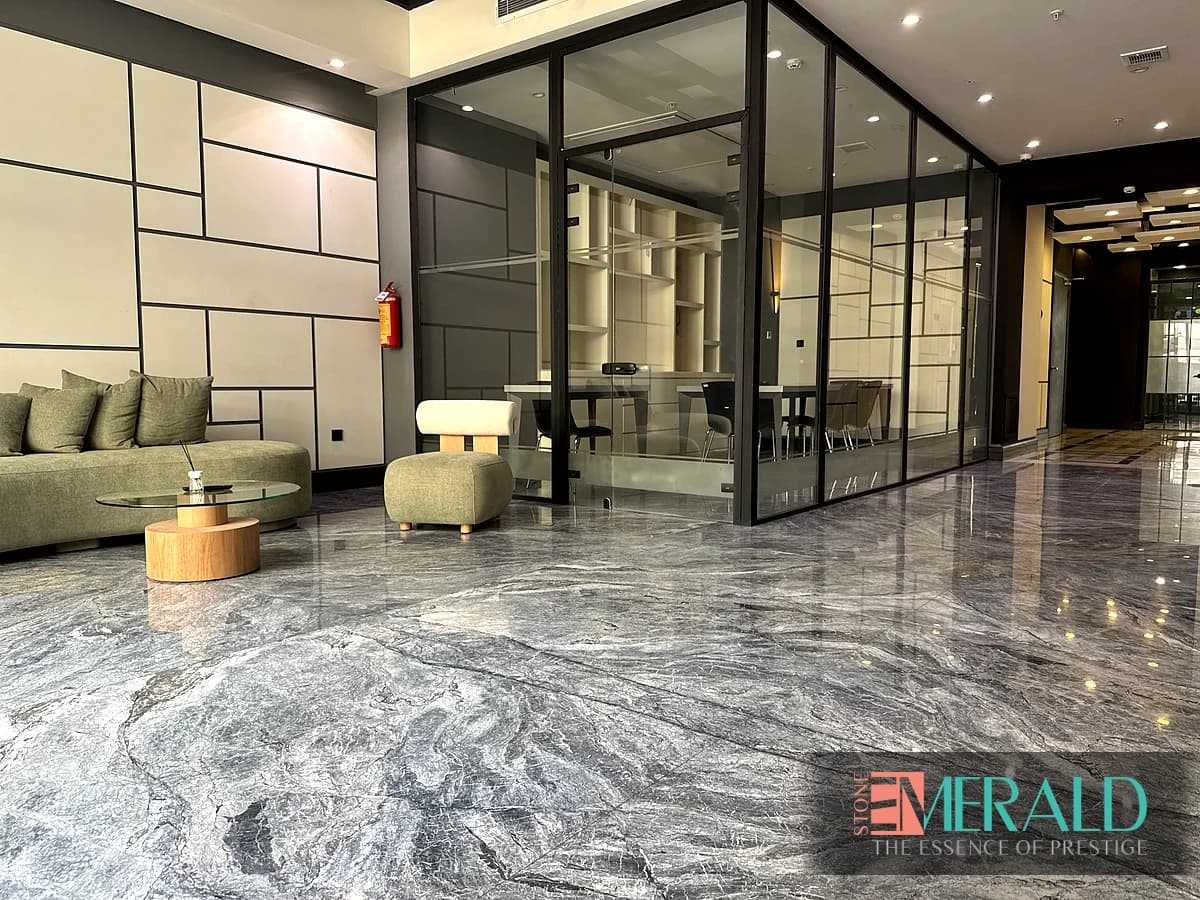
Approximate floor stone price ranges
Market fluctuation prevents fixed universal pricing. Generally, Dehbid marble sits in the highest band, cream travertine in the mid band, and second-grade travertine in the economical band.
Granite varies by type and color. Natanz granite sits in the mid to high band.
Complete Emerald Stone's contact form for current project-specific pricing.
Dehbid and Aligoudarz marble dominate luxury interior floors; our marble guide compares quarries and grading in depth. Floor substrate demands level, dry concrete and expansion joints; installing stone on uneven surfaces causes lippage, cracking, and corner breakage within months. Slab thickness must align with substrate design, fixing system, wind load, or traffic level; extra thickness without structural planning only raises cutting, freight, and anchor cost without real durability gain.
- Underfloor heating compatibility must be specified in execution drawings before installation
- Periodic sealing in wet zones noticeably extends natural stone floor service life
- Consistent colour sorting matters visually on large-scale floor stone projects
- Batch technical reports clarify travertine, marble, and granite choices per room zone
Floor stone price inquiry
Inquiries should include area, space type (living room, yard, bathroom), desired thickness, and project location for accurate estimates.
Emerald Stone quotes stone supply separately from installation cost. Free technical consultation includes comparative stone options.
Natanz granite is a core Emerald Stone recommendation for yards, parking, and building entries due to abrasion resistance and low water absorption.
Before final order, review stone samples on site alongside other facade or floor finishes; daylight angle and temperature shift color and texture noticeably, preventing costly specification mistakes. Dehbid and Aligoudarz marble dominate luxury interior floors; our marble guide compares quarries and grading in depth. On phased projects, keep a reference batch in stock so later phases match quarry, grade, and finish — large facades and lobbies look professionally uniform when batches are planned.
- Two centimetre thickness is standard for residential interior floors with normal traffic
- Level dry substrate is prerequisite for stone floor installation without lippage or cracking
- Honed or matte finish is safer than polished for most interior floor applications
- Expansion joints at wall junctions prevent corner lifting on stone floor installations
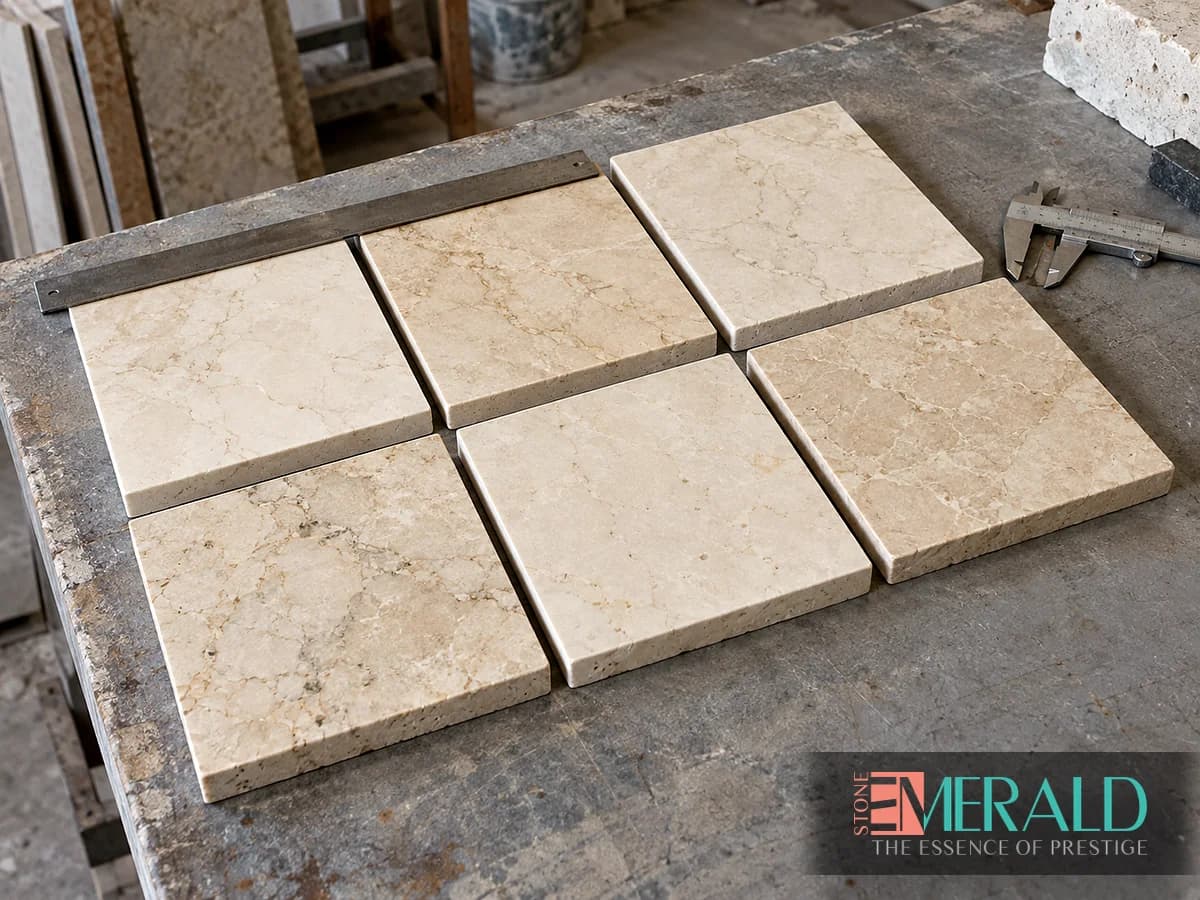
Emerald Stone floor pricing approach
Transparent cost estimation is part of Emerald Stone's stone engineering service. We help clients understand realistic stone costs and drivers before commitment.
Contact Emerald Stone for living room, yard, or lobby floor stone pricing.
Define numeric tolerances for fissures, pits, tone variation, and batch uniformity in the supply contract so delivery disputes drop and installation schedules stay on track.
Slab thickness must align with substrate design, fixing system, wind load, or traffic level; extra thickness without structural planning only raises cutting, freight, and anchor cost without real durability gain.
On phased projects, keep a reference batch in stock so later phases match quarry, grade, and finish — large facades and lobbies look professionally uniform when batches are planned.
Install slabs following an approved layout drawing so joints do not fall across main circulation axes or primary sightlines in the space. Natanz granite is a core Emerald Stone recommendation for yards, parking, and building entries due to abrasion resistance and low water absorption.
- Underfloor heating compatibility must be specified in execution drawings before installation
- Periodic sealing in wet zones noticeably extends natural stone floor service life
- Consistent colour sorting matters visually on large-scale floor stone projects
- Batch technical reports clarify travertine, marble, and granite choices per room zone
| Stone type | Grade | Relative band | Application |
|---|---|---|---|
| Stone type | Technical value | Application note | Emerald note |
| Stone type | Mid range | Residential project | Suitable |
| Stone type | Upper range | Commercial project | With supervision |
Related products
Related projects
Frequently asked questions
What does floor stone cost per square metre?
Floor stone price depends on type, grade, thickness, area, and finish. First-grade Dehbid marble is among the most expensive; cream travertine is more economical. Installation and substrate typically represent 30–40% of total cost. Contact Emerald Stone for current pricing.
Which factors most affect floor stone pricing?
Stone type and grade, thickness, surface finish, project area, and freight are the main price drivers. Rare or distinctive stones cost more. Larger areas usually reduce per-metre price. Book-matching and complex layouts increase cutting cost. For a precise decision, visit slabs on site and request the batch technical report.
Does cheaper floor stone mean lower quality?
Lower-cost stone may mean weaker grade, more fissures, colour variation, or higher porosity. These traits raise maintenance cost and replacement risk. Buying with batch technical reports and slab viewing prevents costly mistakes. Unit price alone should not drive decisions.
What does floor stone installation cost?
Installation cost depends on stone type, layout complexity, substrate condition, and location. Harder stone like granite costs more to install. Poor substrate adds surface correction cost before fixing. Specify lippage and joint tolerances in the installation contract. For a precise decision, visit slabs on site and request the batch technical report.
How do I request a floor stone price quote from Emerald Stone?
Send room type, area, preferred stone, and substrate condition via our contact form. Emerald Stone's technical team provides comparative options with cost estimates. Warehouse slab viewing is available to confirm colour and texture. Initial consultation is free. For a precise decision, visit slabs on site and request the batch technical report.
Free stone engineering consultation
Emerald Stone's engineering team helps you select the right stone for your project scope, budget, and execution details.
Request free consultation