
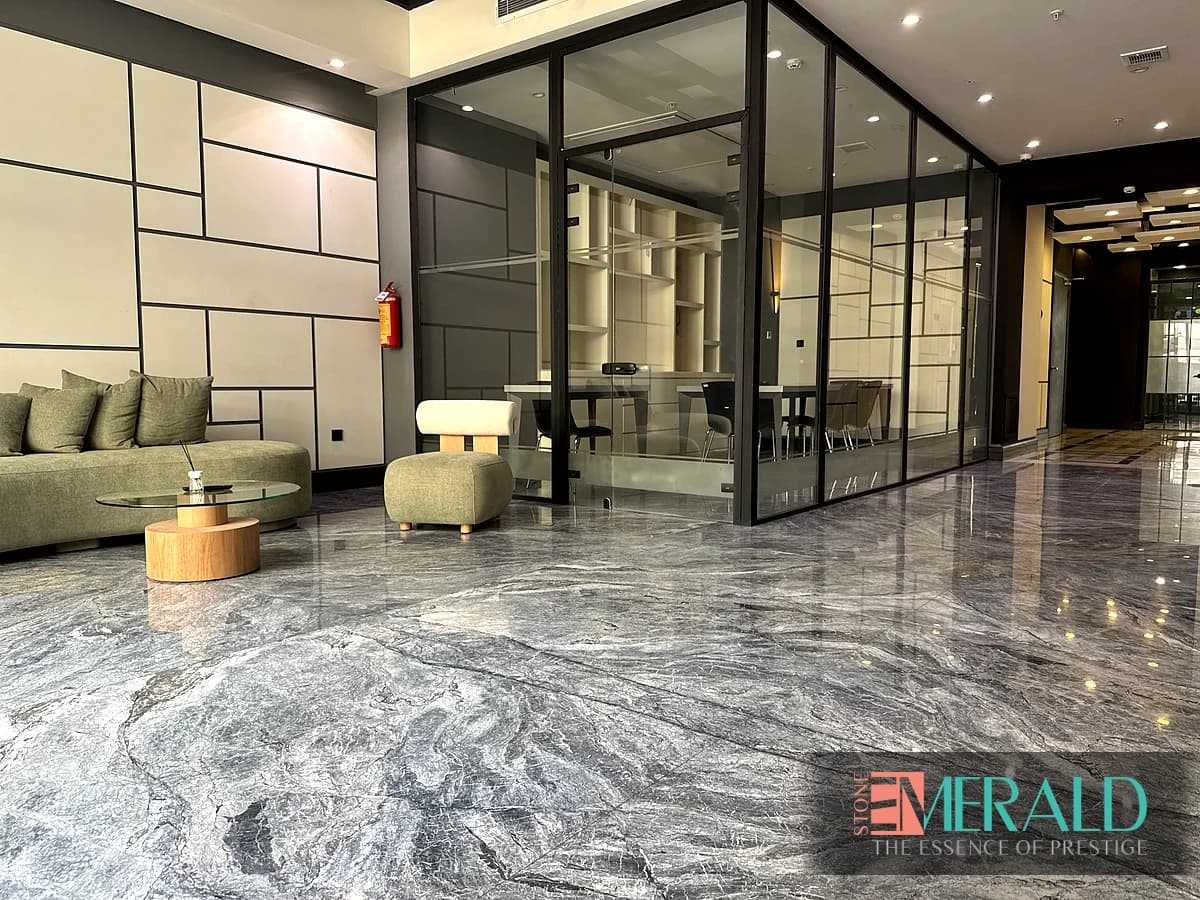
Living room floor stone in Iran is usually chosen from cream and gold Dehbid or Aligoudarz marble, warmer and more economical cream travertine, or honed granite where children and heavy traffic are a factor. Honed finish is standard; polished belongs only in very low-traffic dry zones. Light tones make the room read larger.
Related guide: Stone flooring guide
Best stones for living room floors
Dehbid and Aligoudarz marble in cream and gold tones are Iran's most popular living room floor stones. Uniform texture and natural polish create a luxury feel.
Cream cross-cut travertine with honed finish is warmer and more economical. On large spaces, travertine's cloudier pattern looks more uniform.
Honed granite suits families with high traffic and children. High hardness and low absorption simplify maintenance.
Our marble and travertine guides provide detailed stone comparison. Floor stone must match actual traffic levels; living rooms see moderate use but corridors and yards need harder stone and slip-resistant finishes. Before final order, review stone samples on site alongside other facade or floor finishes; daylight angle and temperature shift color and texture noticeably, preventing costly specification mistakes. After installation, choose sealers matched to climate and traffic; exterior and high-traffic zones need documented maintenance cycles from handover day onward.
- Dehbid cream marble suits luxury living rooms with low to medium traffic
- Kashmar cream travertine is a warm, economical choice for large living rooms
- Honed matte finish reduces slip and shows less dust than polished surfaces
- Light floor stone makes living rooms feel larger and brighter
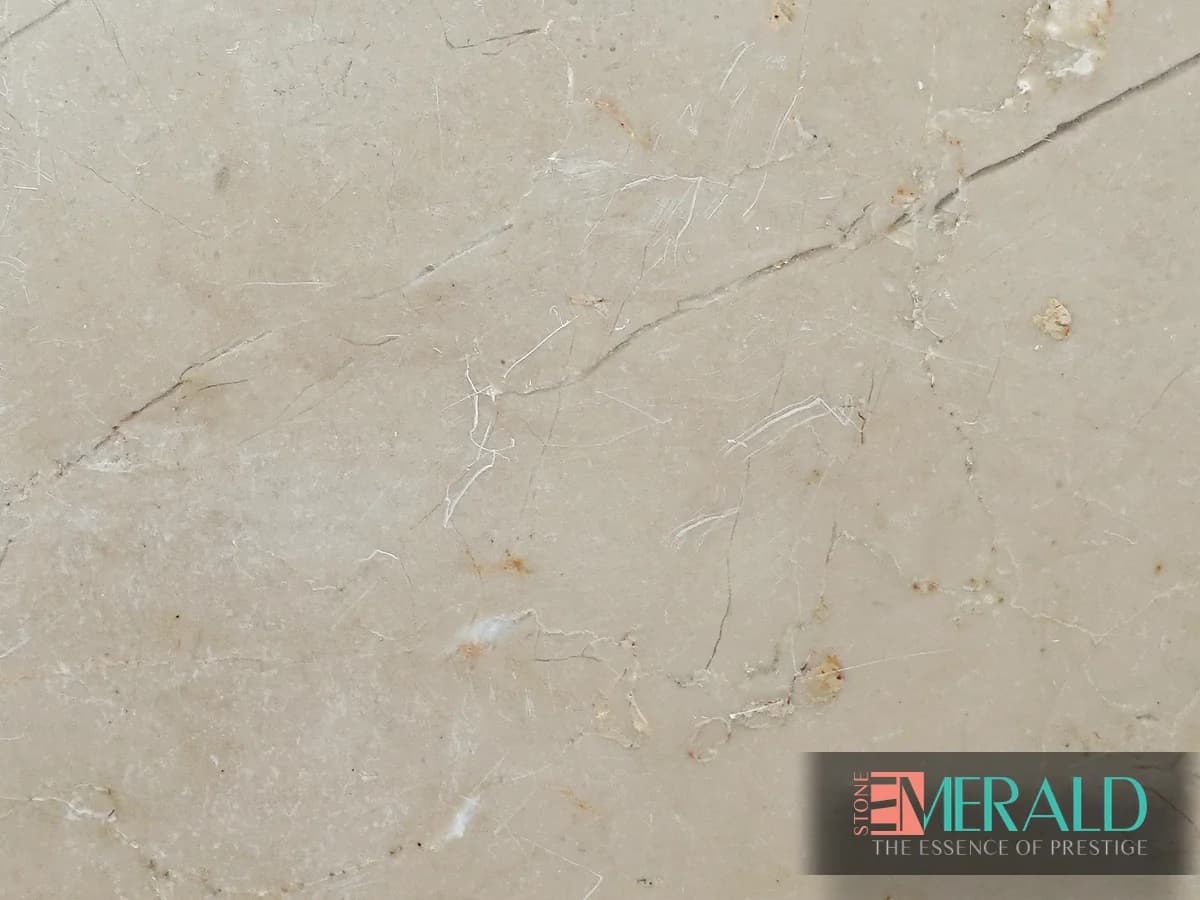
Suitable living room floor finish
Honed or matte finish is standard for living room floors. It reduces slip and shows scratches less than polished.
Polished finish only suits very low-traffic, dry zones. In reception areas with guest traffic, honed is more practical.
Post-installation honing and sealing extend stone life. On marble, periodic sealing prevents staining.
Floor stone must match actual traffic levels; living rooms see moderate use but corridors and yards need harder stone and slip-resistant finishes. Floor substrate demands level, dry concrete and expansion joints; installing stone on uneven surfaces causes lippage, cracking, and corner breakage within months. Define numeric tolerances for fissures, pits, tone variation, and batch uniformity in the supply contract so delivery disputes drop and installation schedules stay on track.
- Two centimetre thickness is standard for residential interior floors with normal traffic
- Level dry substrate is prerequisite for stone floor installation without lippage or cracking
- Honed or matte finish is safer than polished for most interior floor applications
- Expansion joints at wall junctions prevent corner lifting on stone floor installations
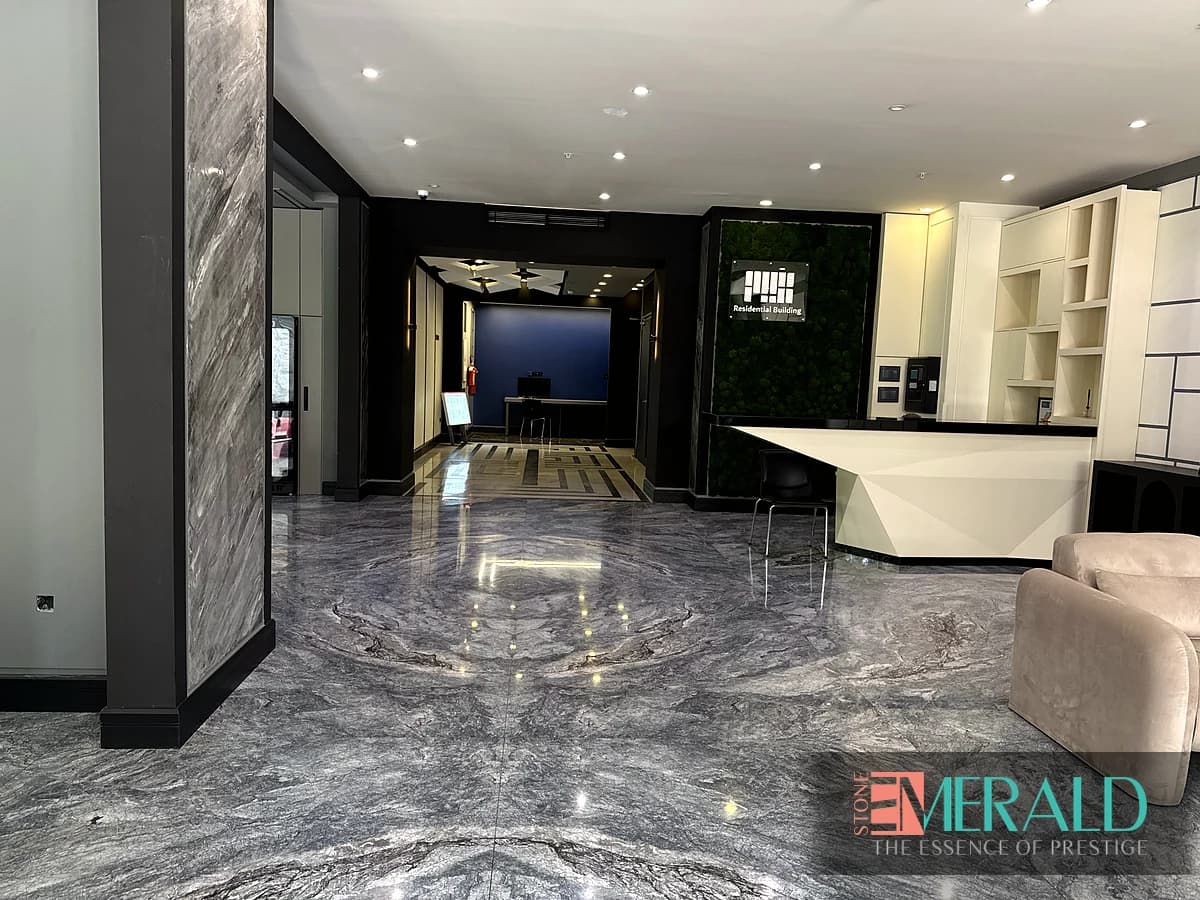
Living room floor layout and design
Large pieces with minimal joints create a unified appearance. In rectangular rooms, layout parallel to the longer wall makes space feel larger.
Diagonal layout can suit special spaces but increases cutting waste. Bookmatch creates striking visual effect in luxury living rooms.
Coordinating floor stone color with walls, furniture, and curtains matters greatly. On-site stone sampling before order is essential.
Floor substrate demands level, dry concrete and expansion joints; installing stone on uneven surfaces causes lippage, cracking, and corner breakage within months. Dehbid and Aligoudarz marble dominate luxury interior floors; our marble guide compares quarries and grading in depth. Slab thickness must align with substrate design, fixing system, wind load, or traffic level; extra thickness without structural planning only raises cutting, freight, and anchor cost without real durability gain.
- Underfloor heating compatibility must be specified in execution drawings before installation
- Periodic sealing in wet zones noticeably extends natural stone floor service life
- Consistent colour sorting matters visually on large-scale floor stone projects
- Batch technical reports clarify travertine, marble, and granite choices per room zone
Floor stone and underfloor heating
Stone conducts heat and works fully with underfloor heating systems. It stores and releases warmth gradually — an energy advantage.
Stone thickness affects heating efficiency; 2 cm suits typical systems. Lighter stone reflects warmth better.
Dehbid and Aligoudarz marble dominate luxury interior floors; our marble guide compares quarries and grading in depth.
Natanz granite is a core Emerald Stone recommendation for yards, parking, and building entries due to abrasion resistance and low water absorption. On phased projects, keep a reference batch in stock so later phases match quarry, grade, and finish — large facades and lobbies look professionally uniform when batches are planned.
- Two centimetre thickness is standard for residential interior floors with normal traffic
- Level dry substrate is prerequisite for stone floor installation without lippage or cracking
- Honed or matte finish is safer than polished for most interior floor applications
- Expansion joints at wall junctions prevent corner lifting on stone floor installations
Emerald Stone living room floor approach
Emerald Stone supplies Dehbid, Aligoudarz, and cream travertine with uniform sorting for living room projects. Free technical consultation includes finish and thickness recommendation.
Contact our engineering team to view slabs and select living room floor stone.
Before final order, review stone samples on site alongside other facade or floor finishes; daylight angle and temperature shift color and texture noticeably, preventing costly specification mistakes.
Define numeric tolerances for fissures, pits, tone variation, and batch uniformity in the supply contract so delivery disputes drop and installation schedules stay on track.
Slab thickness must align with substrate design, fixing system, wind load, or traffic level; extra thickness without structural planning only raises cutting, freight, and anchor cost without real durability gain.
On phased projects, keep a reference batch in stock so later phases match quarry, grade, and finish — large facades and lobbies look professionally uniform when batches are planned. Natanz granite is a core Emerald Stone recommendation for yards, parking, and building entries due to abrasion resistance and low water absorption. Install slabs following an approved layout drawing so joints do not fall across main circulation axes or primary sightlines in the space.
- Underfloor heating compatibility must be specified in execution drawings before installation
- Periodic sealing in wet zones noticeably extends natural stone floor service life
- Consistent colour sorting matters visually on large-scale floor stone projects
- Batch technical reports clarify travertine, marble, and granite choices per room zone
| Stone | Color | Traffic | Finish | Advantage |
|---|---|---|---|---|
| Dehbid | Cream | Low to medium | Honed | Luxury and uniform |
| Aligoudarz | Gold–cream | Low to medium | Honed | Warm and natural |
| Cream travertine | Light cream | Medium | Honed | Economical |
| Granite | Varied | High | Honed | Durable and low-maintenance |
Related products
Related projects
Frequently asked questions
What is the best floor stone for living rooms?
Dehbid and Aligoudarz marble in cream and gold tones are the most popular living room floors in Iran. Honed cream travertine is warmer and more economical. Honed granite suits families with higher traffic. Light stone colours make living rooms appear larger.
What finish suits living room floor stone?
Honed or matte finish is standard for living room floors. It reduces slip risk and shows scratches less than polished surfaces. Polished finish only suits very low-traffic zones. Honing and sealing after installation extend stone life. For a precise decision, visit slabs on site and request the batch technical report.
Does living room floor stone need special maintenance?
Living room floors with daily traffic need regular cleaning with mild products. On marble, periodic sealing prevents drink stains. Avoid acidic and abrasive cleaners. Entry mats reduce sand and dust tracking into the space. For a precise decision, visit slabs on site and request the batch technical report.
How should living room floor stone be laid out?
Large pieces with minimal joints create a unified appearance. In rectangular rooms, laying parallel to the longer wall makes the space feel larger. Book-matching creates striking visuals in luxury rooms. Layout drawings must be approved before final cutting. For a precise decision, visit slabs on site and request the batch technical report.
What does living room floor stone cost?
Price depends on stone type, grade, thickness, and area. First-grade Dehbid marble costs more than cream travertine but looks more luxurious. Installation and substrate typically represent 30–40% of total cost. Contact Emerald Stone for a precise quote. For a precise decision, visit slabs on site and request the batch technical report.
Free stone engineering consultation
Emerald Stone's engineering team helps you select the right stone for your project scope, budget, and execution details.
Request free consultation