
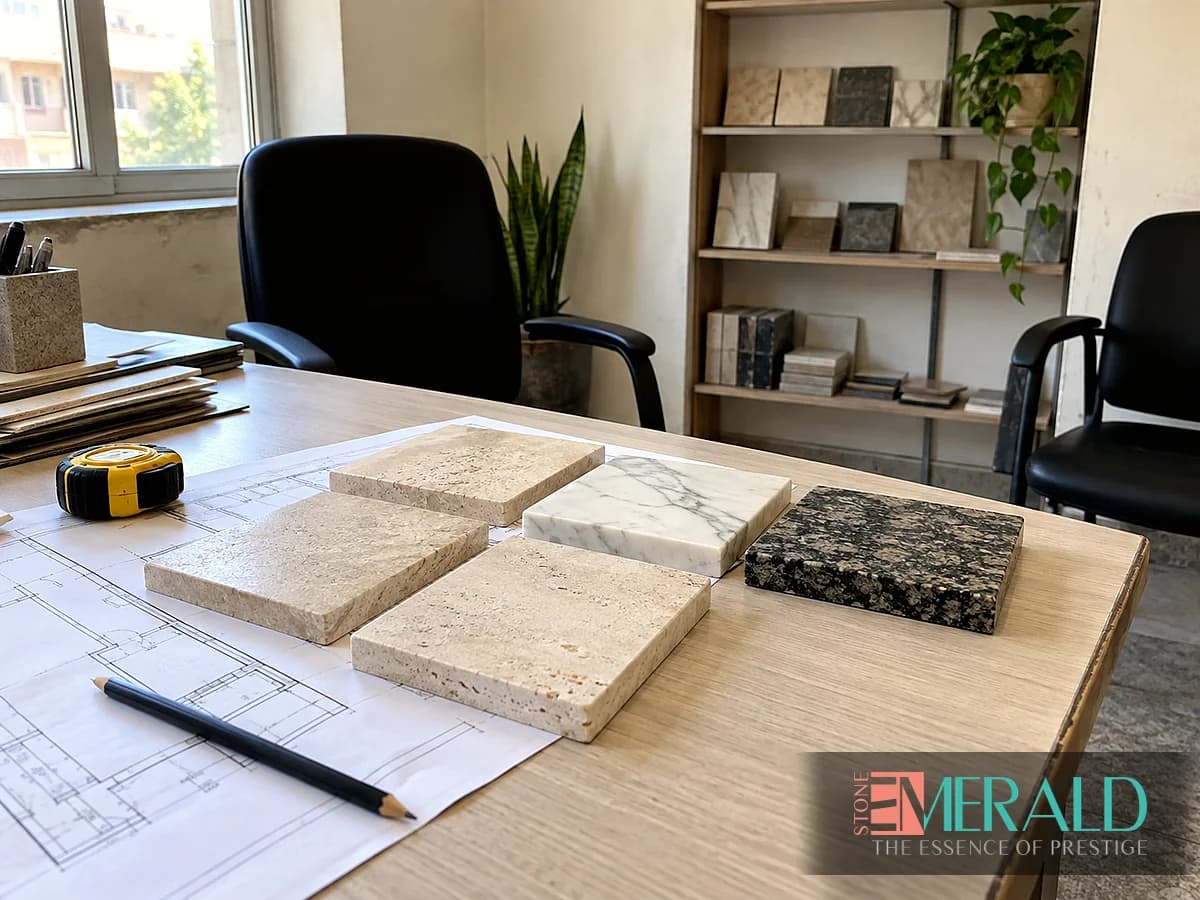
On a typical stone facade, material accounts for 40–50% of cost and installation 30–40%, with anchors, mortar, insulation and freight making up the rest. Moving from 2 cm to 3 cm thickness adds roughly 30–50% to the stone price, and a ventilated rainscreen costs 30–50% more than mortar-bonded cladding.
Related guide: Building facade stone guide
Stone facade cost breakdown
On a typical stone facade project, stone represents 40–50%, installation 30–40%, and anchors, mortar, insulation, and freight account for the remainder. These ratios are approximate and vary by project.
Stone price depends on quarry, grade, thickness, cut type, and finish. First-grade travertine typically costs more than second grade. Granite's hardness may raise processing cost.
Installation cost depends on facade complexity, corner and projection count, building height, and site access. Roman moulded facades cost far more to install than simple modern cladding.
Emerald Stone provides project quotes separating stone supply and execution advisory. Stone facades face daily moisture cycling; lower-absorption stone with matte finish delivers more stable performance against rain, freeze-thaw, and urban pollution. Define numeric tolerances for fissures, pits, tone variation, and batch uniformity in the supply contract so delivery disputes drop and installation schedules stay on track.
- Low water absorption on facade stone prevents freeze-thaw damage and joint moisture ingress
- Wind load calculation before thickness selection is mandatory on tall facade envelopes
- Slab viewing in project daylight prevents costly colour mis-specification on site
- Documenting batch technical specs in the supply contract reduces delivery disputes
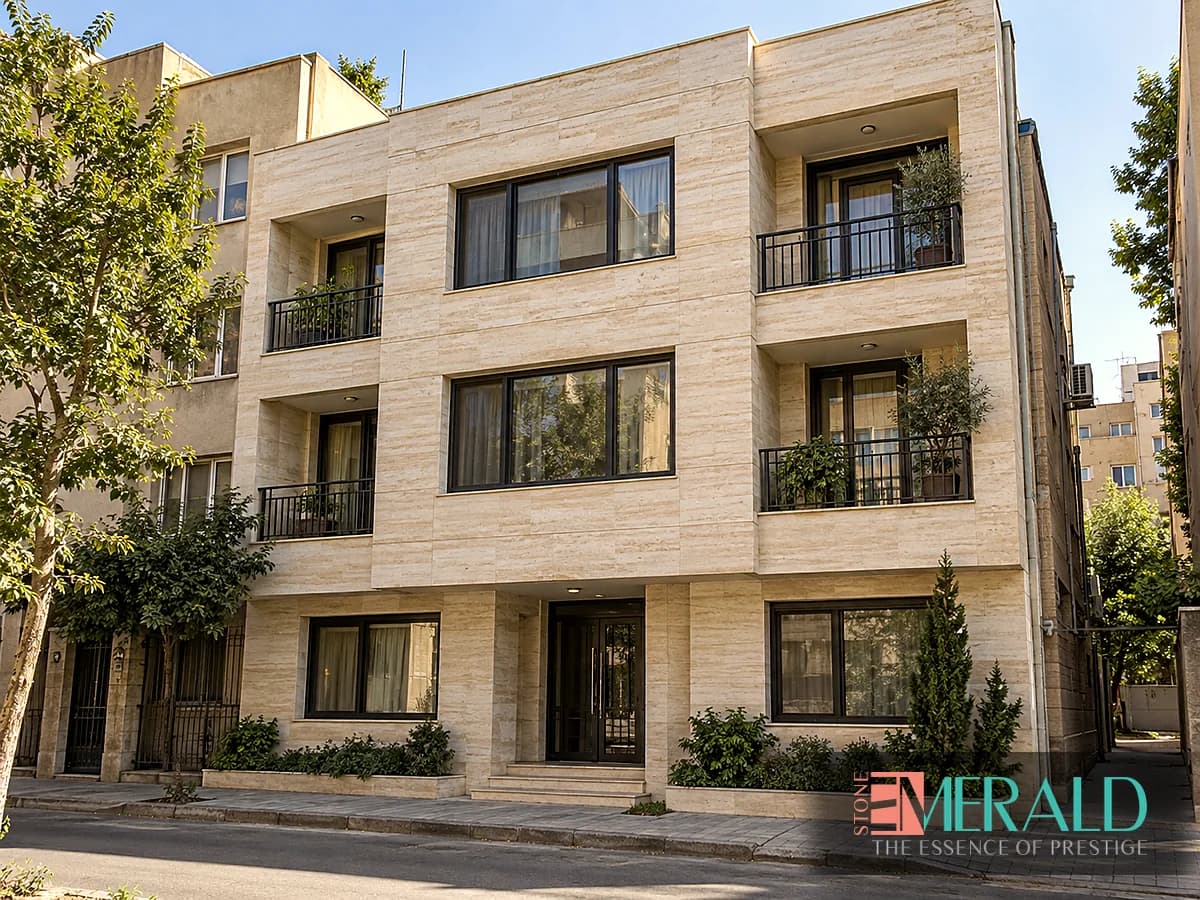
Cost drivers per facade square metre
Stone type is the first factor: first-grade granite and marble usually exceed travertine. Three-centimetre thickness adds roughly 30–50% versus 2 cm.
Fixing system has direct impact: ventilated rainscreens with stainless anchors cost more than mortar-bonded cladding. Building height raises crane, scaffold, and safety expense.
Project area matters: above 500 m², bulk supply may reduce stone price. On small projects, fixed freight and prep costs represent a larger share.
Our building stone price guide is Emerald Stone's central pricing hub linking to specialist stone price pages. Expansion joints, horizontal drip details, and window perimeter sealing are the three zones where most stone facade failures begin — detail them fully on execution drawings. Slab thickness must align with substrate design, fixing system, wind load, or traffic level; extra thickness without structural planning only raises cutting, freight, and anchor cost without real durability gain.
- Stone type and grade are the primary material cost drivers on facade projects
- Moulding complexity and special piece counts sharply increase installation cost
- Building height and site access directly affect crane and scaffold expense
- High order volume typically improves stone supply pricing conditions
Approximate facade pricing ranges
Due to exchange rate fluctuation, freight, and regional labour differences, fixed universal pricing is impossible. Generally, first-grade residential travertine facades sit in a more economical band than tower granite rainscreens.
Roman moulded facades may cost 20–40% more than modern cladding of the same area. Local stone selection and reduced cutting waste help control cost.
For current project-specific ranges, complete Emerald Stone's contact form. Our engineering team recommends optimal options after reviewing area, stone type, and fixing system.
Stone facades face daily moisture cycling; lower-absorption stone with matte finish delivers more stable performance against rain, freeze-thaw, and urban pollution. Travertine balances aesthetics, weight, and workability for most Iranian residential and commercial facades; our travertine guide is the complementary reference.
- Expansion joints every 6–8 metres prevent thermal movement cracking on stone facades
- Window perimeter and head sealing are the most common water ingress points on stone cladding
- Honed or sandblasted finishes outperform polished surfaces on exterior facade zones
- Supplier and installer coordination ensures fixing quality and long-term facade durability
Price inquiry and project quotation
Emerald Stone quotes stone supply separately and offers execution technical advisory. Clients can receive several stone options with comparative cost estimates before final selection.
Inquiries should include facade drawings, approximate area, building type, and project location. Site visits are recommended on large projects.
Expansion joints, horizontal drip details, and window perimeter sealing are the three zones where most stone facade failures begin — detail them fully on execution drawings.
Travertine balances aesthetics, weight, and workability for most Iranian residential and commercial facades; our travertine guide is the complementary reference. Granite is the safer choice in cold and coastal climates due to very low absorption and high hardness; our granite guide covers domestic varieties including Natanz.
- Low water absorption on facade stone prevents freeze-thaw damage and joint moisture ingress
- Wind load calculation before thickness selection is mandatory on tall facade envelopes
- Slab viewing in project daylight prevents costly colour mis-specification on site
- Documenting batch technical specs in the supply contract reduces delivery disputes
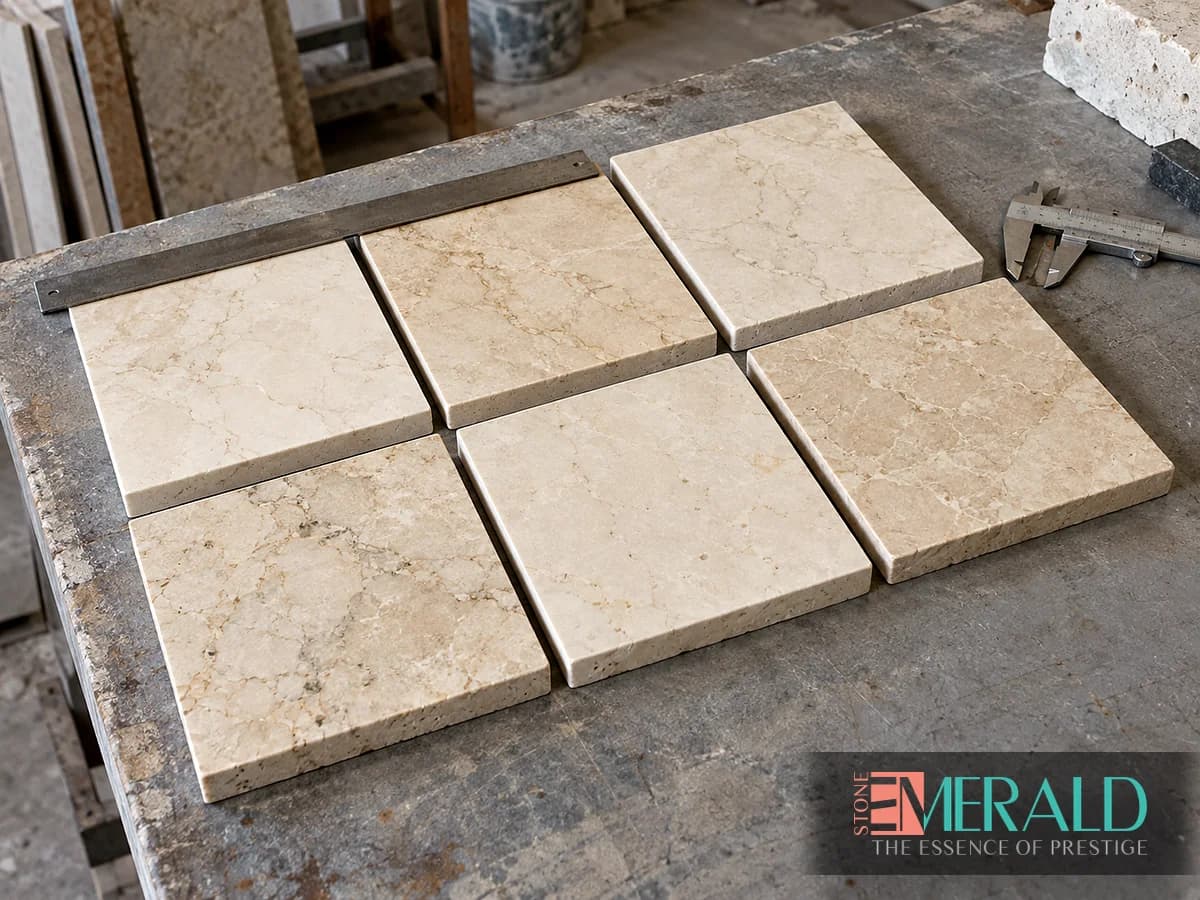
Emerald Stone approach to facade costing
Transparent cost estimation is part of Emerald Stone's stone engineering service. We help clients understand realistic stone, installation, and risk costs before commitment.
Contact us today for facade stone pricing and free stone engineering consultation.
Granite is the safer choice in cold and coastal climates due to very low absorption and high hardness; our granite guide covers domestic varieties including Natanz.
Before final order, review stone samples on site alongside other facade or floor finishes; daylight angle and temperature shift color and texture noticeably, preventing costly specification mistakes.
Define numeric tolerances for fissures, pits, tone variation, and batch uniformity in the supply contract so delivery disputes drop and installation schedules stay on track.
Slab thickness must align with substrate design, fixing system, wind load, or traffic level; extra thickness without structural planning only raises cutting, freight, and anchor cost without real durability gain. Before final order, review stone samples on site alongside other facade or floor finishes; daylight angle and temperature shift color and texture noticeably, preventing costly specification mistakes.
- Expansion joints every 6–8 metres prevent thermal movement cracking on stone facades
- Window perimeter and head sealing are the most common water ingress points on stone cladding
- Honed or sandblasted finishes outperform polished surfaces on exterior facade zones
- Supplier and installer coordination ensures fixing quality and long-term facade durability
| Cost component | Approximate share | Main drivers |
|---|---|---|
| Cost component | Technical value | Application note |
| Cost component | Mid range | Residential project |
| Cost component | Upper range | Commercial project |
Related products
Related projects
Frequently asked questions
What does stone facade cladding cost per square metre?
Facade cost depends on stone type, grade, fixing system, building height, and moulding complexity. Stone typically represents 40–50% of total cost; installation and subsystems account for the rest. Roman facades and tall rainscreen projects carry higher labour cost. Contact Emerald Stone for a project-specific estimate.
Which factors most affect facade stone pricing?
Stone type and grade, fixing system (mortar vs rainscreen), building height, corner and projection count, and moulding complexity drive cost most. Precise sorting and first grade may raise material cost but cut future repair expense. Difficult site access also increases crane and freight charges.
Is cheaper stone always more economical?
No — lower-cost stone may mean weaker grade, poor sorting, or higher porosity, raising maintenance and replacement cost later. Total cost of ownership includes supply, installation, maintenance, and potential repair. Engineered selection is usually cheaper long term than buying on unit price alone.
How much more does a rainscreen facade cost than mortar cladding?
Ventilated rainscreens with mechanical anchors typically cost 30–50% more than mortar-bonded cladding. The difference comes from substrate, anchors, insulation, and specialist installation. On tall towers, rainscreens are essential for safety and durability. System choice must be fixed at design stage.
How do I request a facade price quote from Emerald Stone?
Send facade area, preferred stone type, fixing system, and architectural drawings via our contact form. Emerald Stone's technical team provides two or three comparative stone options with cost estimates. Separate quotes for stone supply and execution consultation are available. Initial consultation is free.
Free stone engineering consultation
Emerald Stone's engineering team helps you select the right stone for your project scope, budget, and execution details.
Request free consultation